

| Last Frost Date (US avg. reference) | Mid-April to mid-May depending on zone (USDA Plant Hardiness Zone Map) |
| First Fall Frost (US avg. reference) | Late September to mid-November depending on zone (USDA Plant Hardiness Zone Map) |
| Best time to sow cool-season crops | 4-6 weeks before last frost in spring; 6-8 weeks before first frost in fall |
| Bulb planting window | September through November (spring-blooming bulbs) |
| Recommended mulch depth | 2-3 inches around plants to retain moisture and suppress weeds |
| Compost readiness | Typically 2-6 months for hot composting; 6-12 months for cold composting |
How to Use a Seasonal Garden Calendar
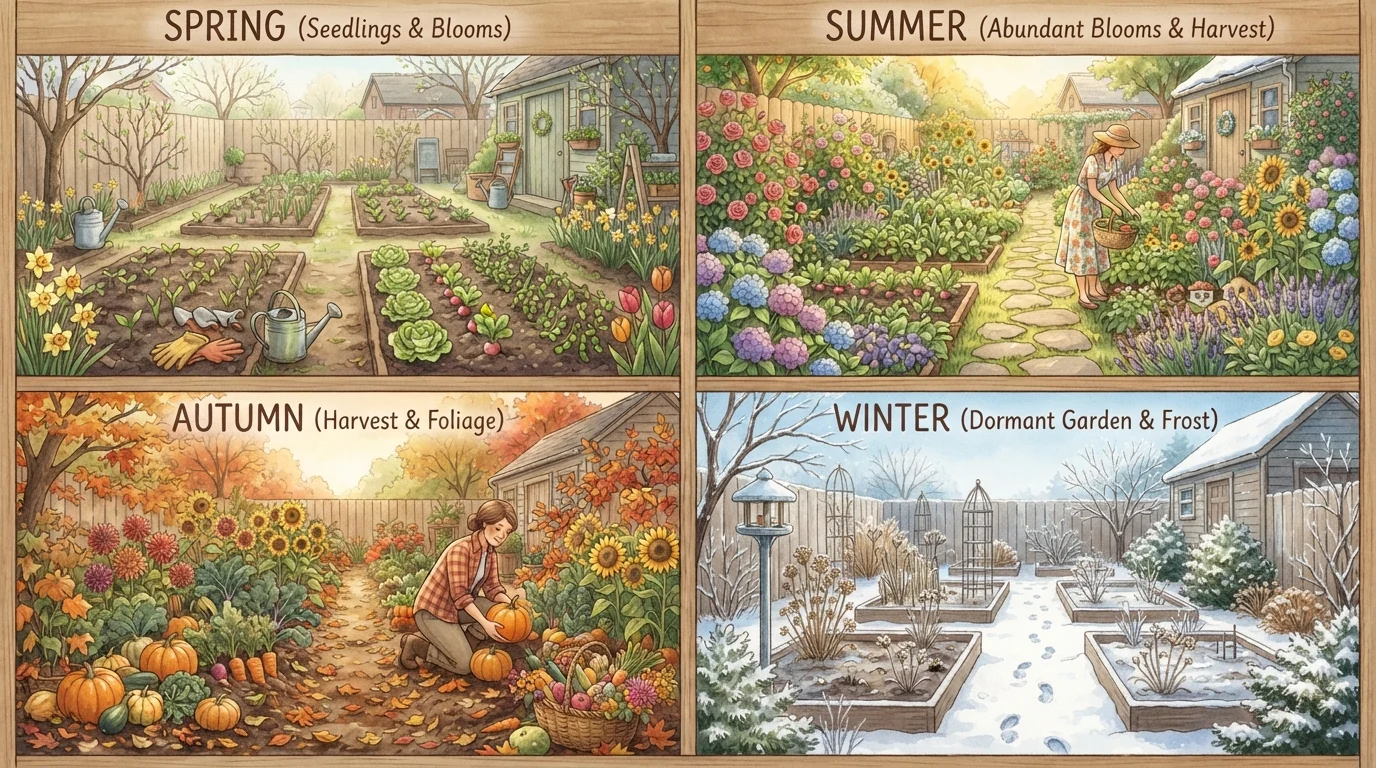
A garden calendar works best as a flexible reference, not a rigid schedule. Climate, microclimate, and your specific plants all influence timing. The groupings below follow the general US growing calendar - if you garden in a warmer USDA hardiness zone, shift tasks earlier; in colder zones, push them later.
If you're starting fresh, the pre-season garden readiness checklist is a useful first stop before diving into any season's tasks. For a full foundation, Starting a Garden From Zero walks through every basic decision from plot selection to first planting.
| Last Frost Date (US avg. reference) | Mid-April to mid-May depending on zone (USDA Plant Hardiness Zone Map) |
| First Fall Frost (US avg. reference) | Late September to mid-November depending on zone (USDA Plant Hardiness Zone Map) |
| Best time to sow cool-season crops | 4-6 weeks before last frost in spring; 6-8 weeks before first frost in fall |
| Bulb planting window | September through November (spring-blooming bulbs) |
| Recommended mulch depth | 2-3 inches around plants to retain moisture and suppress weeds |
| Compost readiness | Typically 2-6 months for hot composting; 6-12 months for cold composting |
Spring (March-May): Sow, Prep, and Plant
Spring is the busiest season in the garden. Soil preparation should come first - turn compost into beds and let the ground warm before sowing directly outdoors. A good rule of thumb: if the soil feels cold and clumps stick together, it's too early for most seeds.
4-6 weeks
Lead time for starting seeds indoors before transplanting
Most vegetable and annual flower seedlings need this window to reach transplant size - starting too late means missing the prime planting window.
2-3 inches
Ideal mulch depth for moisture retention
Applying mulch at this depth reduces soil moisture evaporation and suppresses weed growth, reducing watering frequency through summer.
1 inch/week
General water needs for most vegetable gardens
This is a widely used baseline - actual needs vary by crop, soil type, temperature, and whether rainfall supplements irrigation.
- March: Start cool-season crops (lettuce, spinach, peas) indoors or under cover. Prune roses and summer-flowering shrubs. Check perennial beds for new growth and clear away dead foliage.
- April: Direct-sow hardy annuals outdoors once frost risk drops. Divide overcrowded perennials. Apply a slow-release fertilizer to lawns and ornamental beds. Understanding annuals versus perennials helps you plan which beds need replanting each year versus which will return on their own.
- May: Transplant tender seedlings after the last frost date for your area. Mulch beds to retain moisture. Begin regular watering routines - see Watering Well for depth and frequency guidance.
Summer (June-August): Maintain, Feed, and Harvest
Summer is about sustaining momentum. Plants are in active growth, which means consistent watering and feeding become essential. Heat stress can set in quickly, particularly in containers - container plants may need watering daily during hot spells.
- June: Deadhead flowering plants regularly to extend bloom. Side-dress vegetable beds with compost or a balanced fertilizer. Stake tall plants before they flop.
- July: Harvest frequently - beans, zucchini, and cucumbers become tough and seedy if left too long. Watch for pests and diseases; early intervention is more effective than late. If you're working with limited space, small-space edible growing offers practical strategies for maximizing compact plots.
- August: Sow a second round of quick-maturing crops - radishes, arugula, and bush beans - for a fall harvest. Begin reducing nitrogen feeding for perennials to encourage them to harden before autumn.
Deadheading
Removing spent or faded flowers from a plant before they set seed. This encourages the plant to produce more blooms rather than directing energy into seed production.
Hardening off
The process of gradually exposing indoor-grown seedlings to outdoor conditions over 7-14 days. This acclimates them to wind, temperature fluctuation, and direct sunlight before transplanting.
Side-dressing
Applying fertilizer or compost to the soil surface around established plants during the growing season, rather than working it in at planting time.
Crop rotation
Moving plant families to different bed locations each growing season. This helps reduce soil-borne disease buildup and prevents nutrient depletion in any one spot.
Dormancy
A period of reduced metabolic activity in plants, typically triggered by cold temperatures or drought. Pruning during dormancy - before new growth begins - is less stressful for most trees and shrubs.
Fall and Winter (September-February): Wind Down and Prepare
Fall tasks done well make the following spring significantly easier. Think of autumn as investing in next year's garden. Winter, while quiet above ground, is a good time for planning, tool care, and soil improvement.
- September-October: Plant spring-flowering bulbs (tulips, daffodils, alliums) before the ground freezes. Cut back spent perennials - though leaving some seed heads through winter provides food for birds. Apply a top-dressing of compost to beds. Check sun exposure patterns now when deciduous trees still have leaves - this changes dramatically in winter.
- November: Protect tender plants with mulch or burlap. Clean and oil tools before storing. Turn the compost pile one final time.
- December-February: Order seed catalogs and plan crop rotations. Sharpen pruning tools. On milder days, prune dormant fruit trees and deciduous shrubs. For broader seasonal home prep, the seasonal home maintenance checklist covers tasks beyond the garden that run on a similar cycle.
Your Local Cooperative Extension Is a Reliable Resource
USDA Cooperative Extension offices publish free, region-specific planting calendars tailored to local frost dates and growing conditions. These are maintained by land-grant universities and are generally more accurate for your area than national generalizations. Search for your state's extension service online to find locally verified planting guides.