

Key Takeaways
- Sunlight is the single most important factor when picking a garden location.
- Testing your soil before planting saves time, money, and frustration later.
- Starting small with easy crops builds confidence and reduces early failure.
- Consistent watering and weeding matter far more than any special product.
- Every garden is a learning process - one season's mistakes teach next year's wins.
Start here
Choosing Your Garden Spot
Next
Understanding Your Soil
Then
Deciding What to Grow
When you're ready
Planting Your First Seeds
Ongoing
Keeping Your Garden Going
Choosing Your Garden Spot
Location determines almost everything about how your garden performs. Before buying a single seed, spend a few days observing your outdoor space at different times of day. You're looking for three things: sunlight, drainage, and convenience.
Sunlight is non-negotiable. Most food crops need six or more hours of direct sun daily. A spot that looks bright in the morning may be shaded by a fence or tree by afternoon. Watch it for a full day before deciding.
Drainage matters just as much. Avoid low-lying areas where water pools after rain - roots sitting in waterlogged soil will rot. If your only option is a poorly draining spot, raised beds filled with purchased mix solve this problem neatly.
Convenience is underrated. A garden close to your back door gets tended. One tucked at the far edge of the yard gets forgotten. Put it somewhere you'll walk past daily. If you have very limited outdoor space, our guide on growing food in small spaces shows what's possible even on a balcony or windowsill.
Start Smaller Than You Think
A four-by-eight-foot bed is genuinely enough for a first garden. Beginners consistently underestimate how much time even a small garden requires. Starting small lets you learn the basics, build confidence, and enjoy your results - rather than feeling overwhelmed by maintenance you didn't anticipate.
Understanding Your Soil
Soil is your garden's foundation. Poor soil produces struggling plants regardless of how diligently you water and weed. The good news: most soil problems are fixable with a little work upfront.
Soil pH
A measure of how acidic or alkaline your soil is, rated on a scale from 0 to 14. Most vegetables grow best in the slightly acidic to neutral range of 6.0 to 7.0.
Compost
Decomposed organic material - kitchen scraps, leaves, grass clippings - that enriches soil with nutrients and improves its structure. It's the most universally useful soil amendment for home gardeners.
Direct Sowing
Planting seeds directly into the garden bed outdoors rather than starting them in trays indoors first. Many crops, like carrots and beans, grow best when sown directly.
Thinning
Removing some seedlings so the remaining ones have enough space to develop fully. Overcrowded plants compete and underperform, so thinning is an important - not wasteful - step.
Last Frost Date
The approximate date in spring after which freezing temperatures are unlikely in your area. Warm-season crops should not be planted outdoors before this date.
Organic Matter
Material derived from living things - compost, aged manure, leaf mold - that improves soil texture, drainage, and nutrient availability when mixed in.
Start with an inexpensive soil test kit available at garden centers or through your local cooperative extension service. These tests reveal your soil's pH and basic nutrient levels. Most vegetables prefer a pH between 6.0 and 7.0. Outside that range, nutrients become harder for plants to absorb even when they're physically present.
To improve soil, work in organic matter - compost is the most practical choice. A two- to three-inch layer of finished compost dug into the top eight to ten inches of soil improves drainage in clay, adds water retention in sand, and feeds soil biology in either case. You don't need to achieve perfection in year one. Each season you add organic matter, the soil gets better.
Before you break ground each season, use a preparation checklist to make sure nothing falls through the cracks. Our pre-season garden readiness checklist walks you through exactly what to audit before planting time.
Deciding What to Grow
One of the most common beginner mistakes is planting too much variety too soon. Resist the urge. A focused first garden - four to six types of plants - is far easier to manage and more likely to succeed than an ambitious sprawl.
Choose plants that match three criteria: your climate, your available sunlight, and what you'll actually eat or use. Growing a crop you don't like just because it's supposed to be easy makes the whole effort feel pointless.
Good starter crops include:
- Lettuce and salad greens - fast-growing, tolerate partial shade, harvest repeatedly
- Radishes - ready in as little as 25 days, great for impatient first-timers
- Green beans (bush type) - prolific and low-maintenance
- Zucchini - nearly foolproof and productive
- Herbs like basil or chives - compact, useful in the kitchen, very forgiving
Check the back of every seed packet for your expected frost dates. Planting too early in cool soil wastes seeds and time. Our seasonal garden calendar gives month-by-month guidance on timing across the growing season.
Don't Skip Your Frost Dates
Planting warm-season crops like tomatoes or squash before your last expected frost date can kill seedlings overnight. The USDA Plant Hardiness Zone Map and your local cooperative extension office are reliable sources for your area's average frost dates. Always verify locally - microclimates within neighborhoods can vary significantly.
Planting Your First Seeds
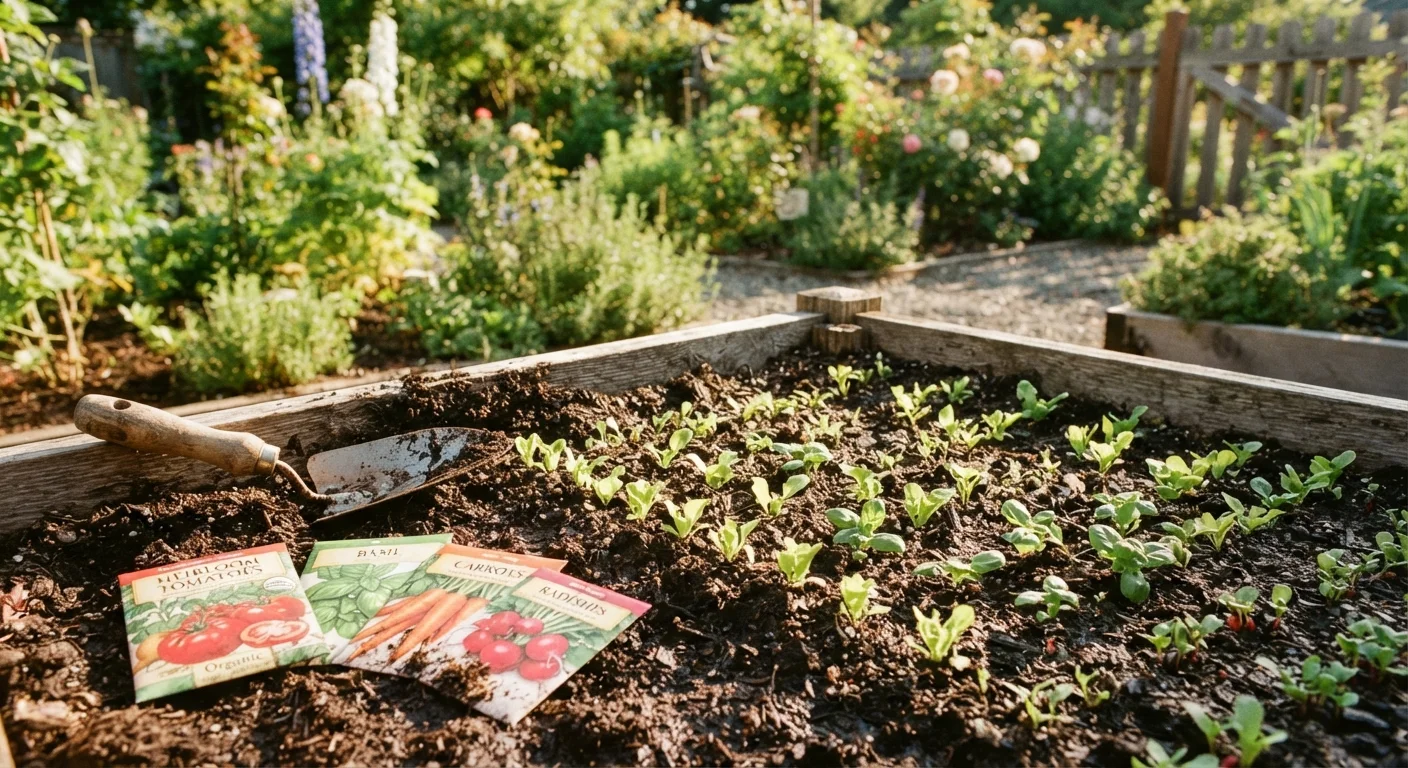
Seed packets contain all the essential information you need: planting depth, spacing, days to germination, and days to harvest. Read them. They're written specifically to answer the questions most beginners ask.
For direct sowing outdoors, use a stick or your finger to create a shallow furrow at the recommended depth. Drop in seeds at the suggested spacing - or slightly closer and thin later. Cover lightly, firm the soil gently, and water with a fine spray so you don't wash seeds out of place.
Some crops benefit from being started indoors four to eight weeks before your last frost date. Tomatoes, peppers, and eggplant are the most common examples. If you want to try this, our seed starting indoors guide walks through the full process from tray to transplant.
Label every row or container as you plant. Memory is unreliable and seedlings look nearly identical in their first weeks. A simple wooden stick and a permanent marker is all you need.
Thinning Isn't Failure
Many beginners feel reluctant to thin seedlings - it feels wasteful to pull out plants that just grew. But overcrowded seedlings compete for water, nutrients, and light, and they all perform worse as a result. Follow the spacing recommendations on your seed packet and thin without guilt. The remaining plants will reward you.
Keeping Your Garden Going
A garden in motion needs three things consistently: water, weeding, and attention. None of these require expertise - they require habit.
Water: Aim for one inch per week from rain or supplemental watering. Water at the base of plants, not the leaves, to reduce disease risk. Morning watering is preferable because foliage dries during the day.
Weeding: Pull weeds when they're small and the soil is moist. A weed allowed to flower and set seed creates dozens of future problems. A short weekly session beats an occasional marathon.
Observation: Walk through your garden regularly. Look for yellowing leaves, unusual spots, or signs of pest damage. Catching problems early makes them far easier to address. Keep a simple notebook or phone note recording what you planted, what worked, and what didn't - this becomes invaluable reference material for next season.
Gardening, like any practical skill, rewards consistency over intensity. A garden tended a little every few days will almost always outperform one that gets sporadic bursts of attention. If you enjoy the process of getting organized and building systems - in the garden or anywhere around the home - you might also appreciate how the same mindset applies to other projects, like the approach in our home decluttering guide.