

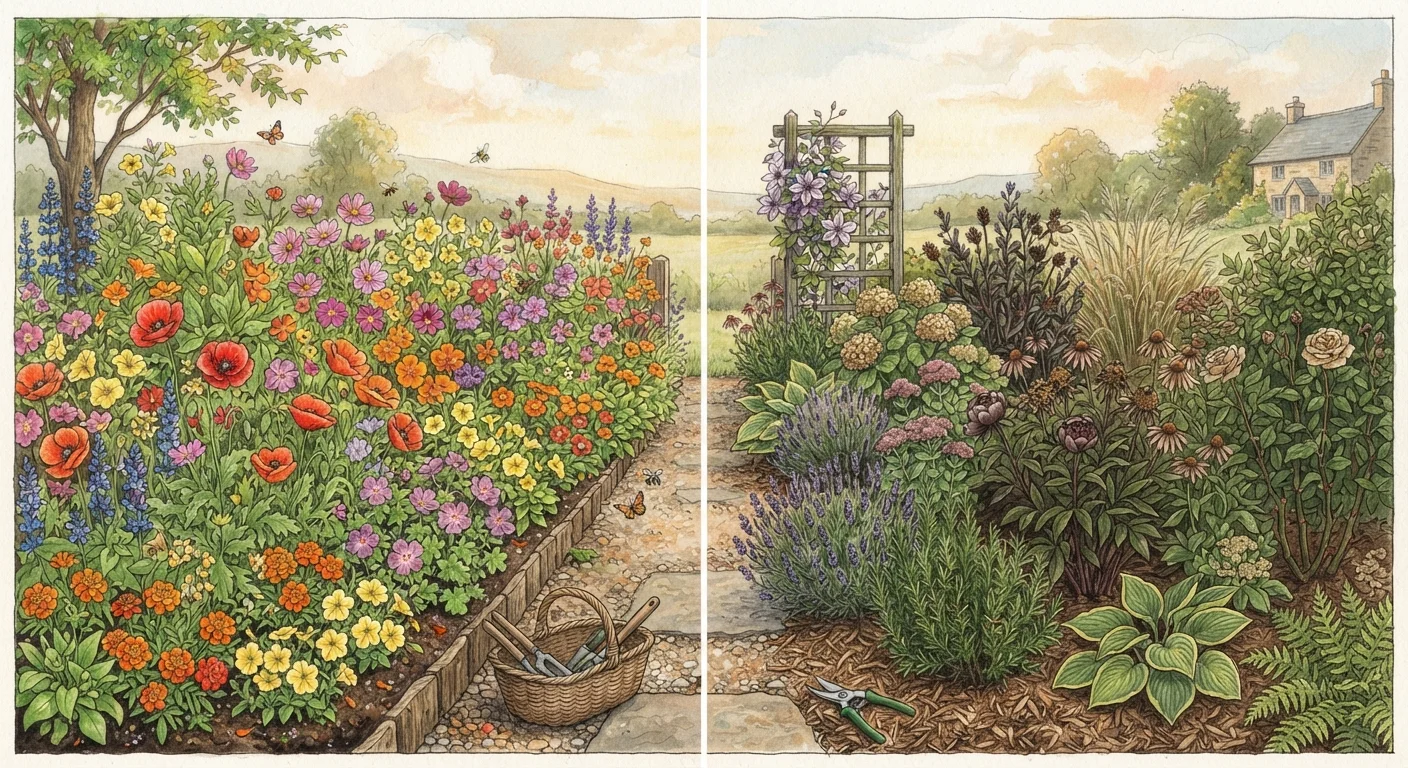
Key Takeaways
- Annuals bloom heavily for one season; perennials return year after year from established roots.
- Annuals typically offer more continuous color but require replanting every year.
- Perennials usually cost more upfront but spread and multiply over time, lowering long-run costs.
- Mixing both types gives you reliable structure plus seasonal flexibility.
- Plant hardiness zone determines which perennials will reliably overwinter in your area.
Annuals vs. Perennials
Annual plants complete their entire life cycle - sprouting, flowering, setting seed, and dying - within a single growing season. Perennial plants, by contrast, live for three or more years, dying back in winter (in most climates) and re-emerging the following spring from the same root system.
Biennials form a third category: they grow foliage in year one, flower and set seed in year two, then die. Common examples include foxglove and hollyhock.
How Each Type Lives and Grows
The core difference between annuals and perennials comes down to their life cycle, and understanding this shapes every planting decision you make.
Annuals are built for speed. They put all their energy into producing flowers and seeds in a single season before dying off. Because they're racing to reproduce, they tend to bloom prolifically and for longer stretches - often from late spring until frost. Once cold kills the plant, it's gone, and you start fresh next year.
Perennials invest differently. In their first year, they often focus energy on root development rather than showy blooms - experienced gardeners describe this as "sleep, creep, leap": a young perennial sleeps in year one, creeps in year two, and leaps into full performance by year three. But once established, the same plant returns reliably each season from its root system, spreading and strengthening over time.
Knowing this helps you set realistic expectations. If you want a riot of color the first summer, lean on annuals. If you're building a garden that gets better every year with less replanting labor, perennials are your foundation.
Planning Your Garden With Both in Mind
Experienced gardeners rarely choose one type exclusively - they use both strategically. A common approach is to establish a perennial backbone and fill gaps with annuals for seasonal color.
Start With a Zone Check
Before buying any perennial, confirm it is rated for your USDA hardiness zone. A plant that overwinters beautifully in Georgia may not survive a Minnesota winter. Most nursery tags and seed packets list the hardiness zone range clearly. When in doubt, ask a staff member at your local extension office or garden center.
Your local climate plays a major role in which perennials will survive. The USDA Plant Hardiness Zone Map divides the country into zones based on average minimum winter temperatures. A perennial listed as "hardy to Zone 5" won't reliably overwinter in a Zone 4 garden. Always check the zone rating before purchasing. A seasonal garden calendar can help you time planting for each type correctly.
When mixing plant types, also consider sunlight carefully. Perennials that thrive in shade may sit directly beneath a tree that shades out your sun-loving annuals. See our guide to garden sunlight categories to match plants to your actual conditions before you buy.
3-5 years
Time for perennials to reach full maturity
Most perennial plants take several growing seasons to establish robust root systems and deliver peak flowering performance.
2-3x
Division potential of mature perennial clumps
Many perennials can be divided every few years, multiplying a single plant into several at no additional cost.
For container gardeners, both types can work well in pots, though perennials need extra attention in winter. Container gardening trade-offs covers what to expect when growing either type in a confined space.
Cost, Effort, and Long-Term Value
Annuals typically cost less per plant at the nursery, but you buy them every year. Perennials cost more upfront - sometimes significantly - but a single plant can spread and be divided into multiple plants over time, eventually filling large areas for free.
Labor also differs. Annuals require pulling out spent plants each fall and replanting every spring. Perennials need occasional division every three to five years to prevent overcrowding, but otherwise largely manage themselves once established. Good watering habits benefit both types. Watering timing and depth matters especially during a perennial's root-establishment phase in its first year.
Neither type is definitively "better" - the right balance depends on your budget, time, and aesthetic goals. Many gardeners find that starting with a modest number of long-lived perennials and adding annuals for color gives them the flexibility to experiment while building a permanent garden structure over time.