

Key Takeaways
- Deep, infrequent watering encourages roots to grow downward and become more drought-tolerant.
- Morning is the best time to water - foliage dries before evening, reducing disease risk.
- The finger test (pushing a finger 2 inches into soil) is a reliable way to judge when to water.
- Seedlings, established plants, and containers each have distinct watering needs.
- Mulching around plants significantly reduces how often you need to water.
Why Watering Technique Matters More Than Volume
Most gardeners know plants need water, but fewer understand that how you water shapes root behavior as much as the water itself does. A plant that receives a light sprinkle every day will develop a shallow, lazy root system that struggles through any dry spell. The same plant watered deeply and less often will push roots further down into the soil, tapping into moisture reserves that surface watering never reaches.
This is the core principle behind good watering practice: you're not just keeping the soil damp - you're training the plant to be resilient. If your plants seem to wilt despite regular attention, or if you're losing plants you thought were healthy, our guide to common plant problems covers the most likely culprits, including overwatering - one of the most frequent causes of preventable plant death.
~50%
Outdoor water use lost to evaporation and runoff
According to the U.S. Environmental Protection Agency (EPA), about half of outdoor water used in American landscapes is wasted due to inefficient watering methods and timing.
6 inches
Minimum soil depth to wet for most vegetables
University extension guidelines widely recommend wetting the soil to at least 6 inches per session to support healthy root development in vegetable crops.
The Right Time to Water
Timing your watering isn't just about convenience - it has a direct effect on plant health. Early morning is the preferred window for most gardens. The soil is cool, absorption is efficient, and any moisture that lands on foliage has the whole day to evaporate before temperatures drop at night.
Evening watering is the one habit to reconsider. Wet leaves and damp soil overnight create ideal conditions for fungal diseases like powdery mildew and root rot. If morning watering isn't practical, aim for late afternoon rather than after sunset.
Midday watering during summer heat isn't harmful to plants - contrary to popular belief, water droplets don't burn leaves in sunlight - but it is inefficient, since much of the water evaporates before it can reach roots. Our rundown of common garden myths tackles this and other widespread misconceptions worth clearing up.
Check Your Irrigation Before You Need It
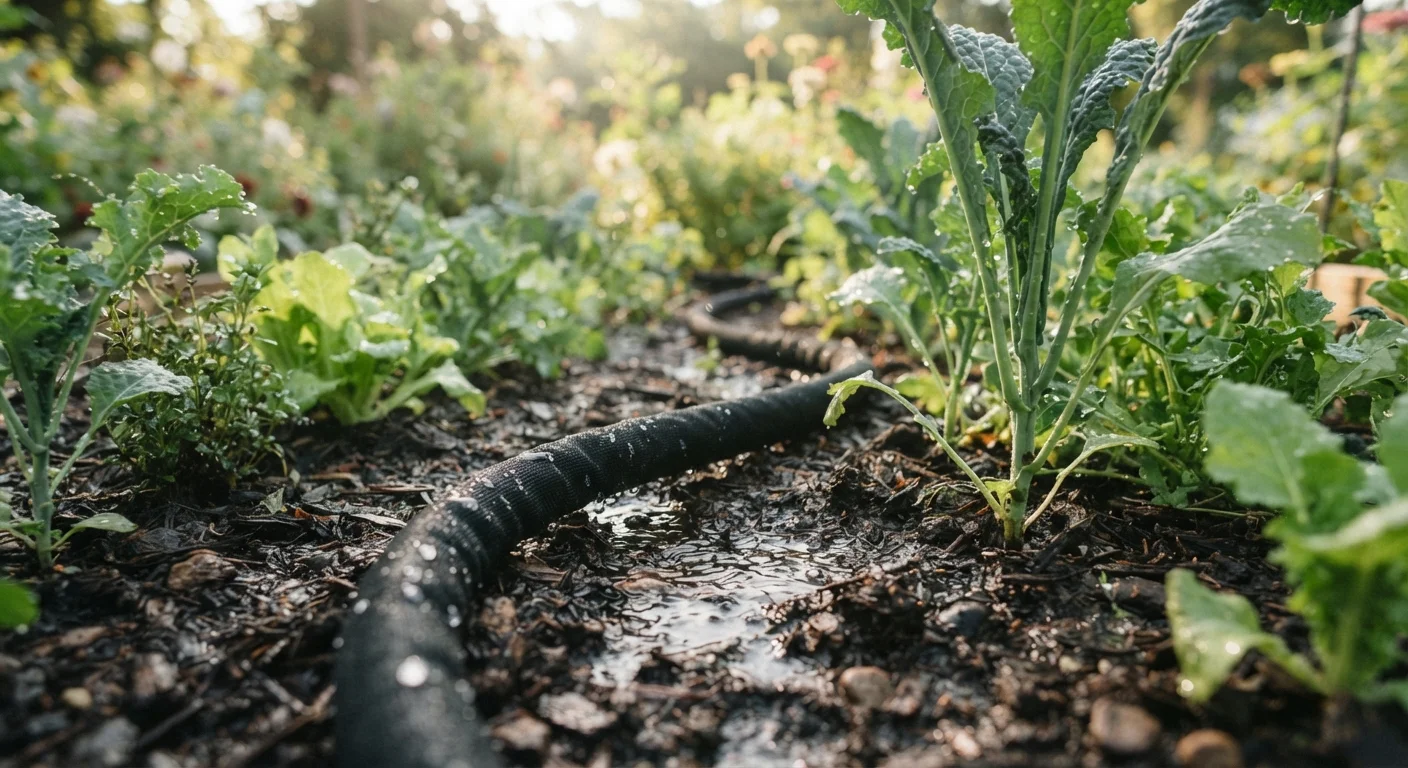
If you use a drip system or soaker hoses, run a quick check at the start of each growing season. Look for clogged emitters, splits in hose lines, or areas where water pools rather than soaks in. Our pre-season readiness checklist includes irrigation as one of the items to audit before planting begins.
Watering Depth and the Finger Test
Depth matters because roots follow water. When water only moistens the top inch of soil, roots congregate near the surface. Aim to wet the soil to at least 6 inches for most vegetables and perennials, and closer to 12 inches for shrubs and trees. A slow, sustained application - whether from a soaker hose, a drip system, or careful hand-watering - allows moisture to percolate rather than run off.
To know when to water in the first place, use the finger test: push your index finger about 2 inches into the soil. If it feels dry at that depth, it's time to water. If there's still moisture, wait another day and check again. This simple method beats any rigid schedule because it responds to actual conditions rather than the calendar.
Healthy soil structure makes all of this easier. Improving your soil over time increases its ability to hold moisture where roots can reach it - reducing both overwatering risk and the frequency of watering needed.
Water deeply and infrequently rather than lightly every day
Deep watering encourages roots to grow downward toward stable moisture reserves, making plants more drought-tolerant. Shallow daily watering keeps roots near the surface where they're vulnerable to heat and drying out.
Always water at the base of the plant, not overhead
Directing water to the root zone means moisture goes exactly where the plant can use it. Overhead watering wastes water through evaporation and keeps foliage wet, increasing susceptibility to fungal diseases.
Use the finger test before every watering session
Rigid watering schedules ignore the fact that weather, season, and soil type all affect how quickly moisture is used or lost. The finger test gives you real information rather than a guess.
Apply mulch around plants to retain soil moisture
Mulch reduces surface evaporation significantly, meaning the soil stays moist longer between waterings. This is especially valuable during hot or windy periods.
Adjust watering frequency as seasons change
Plants need more water during active growth in warm weather and considerably less during cool or dormant periods. Continuing a summer watering schedule into fall is a common cause of root rot.
Adjusting for Growth Stage and Plant Type
Watering needs shift throughout a plant's life. Seedlings require consistently moist (not wet) soil because their roots are short and can't reach deeper reserves. Once plants are established - usually after 4-6 weeks in the ground - you can begin transitioning to deeper, less frequent sessions.
Container plants are a special case. They dry out faster than in-ground plants because the root zone is limited and terracotta or unglazed pots lose moisture through their walls. Check containers daily in warm weather and water until it drains freely from the bottom, ensuring the entire root ball is moistened rather than just the surface.
Annuals and perennials also differ: annuals often need more consistent moisture since they're completing their whole life cycle in one season, while established perennials are generally more drought-tolerant once their root systems are developed.
Mulching: The Simple Step That Cuts Your Watering Work
If there's one technique that pays dividends all season, it's mulching. A 2-3 inch layer of organic mulch - such as wood chips, straw, or shredded leaves - placed around (but not touching) plant stems dramatically slows evaporation from the soil surface. In practice, a well-mulched bed may need watering half as often as a bare one during summer.
Mulch also moderates soil temperature and suppresses weeds that would otherwise compete for water. As it breaks down, it contributes organic matter that further improves soil structure. See our seasonal garden calendar for the best times of year to apply or refresh your mulch layer.
Rainfall Counts - Adjust Accordingly
Many gardeners water on a set schedule regardless of recent rainfall. A simple rain gauge (a small tube placed in the garden) lets you track how much natural moisture your garden has received. If you've had an inch of rain in the past few days, your established plants almost certainly don't need supplemental watering - and adding more may harm rather than help them.