

Key Takeaways
- Brake pads, rotors, and callipers each play a distinct role - failure in one affects the whole system.
- Squealing or grinding noises are common early signs that brake pads are wearing thin.
- Rotors can warp over time, causing a pulsating or vibrating sensation through the brake pedal.
- Brake fluid is the hydraulic medium that transmits pedal pressure to the calliper - it matters too.
- Most mechanics recommend inspecting brake components at least once a year or every 12,000 miles.
- Any brake concern that affects your ability to stop safely warrants prompt professional evaluation.
Disc Brake System
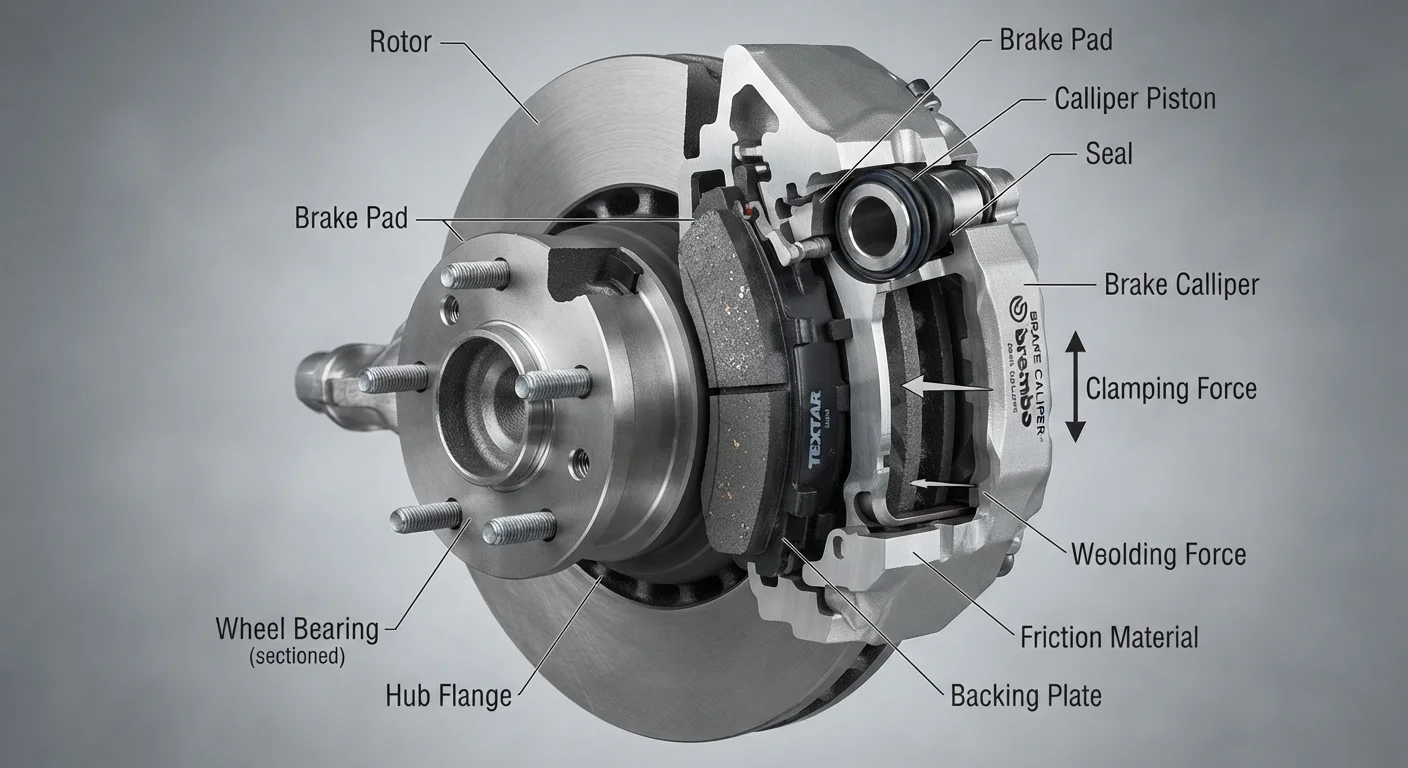
A disc brake system is the most common type of braking setup found on modern passenger vehicles. It uses friction generated between a rotating metal disc (the rotor), a set of friction material pads, and a hydraulic clamp (the calliper) to slow or stop the wheel. When you press the brake pedal, hydraulic pressure forces the calliper to squeeze the pads against the rotor, converting your vehicle's kinetic energy into heat.
Most modern vehicles use disc brakes on all four wheels, though some older or lighter vehicles retain drum brakes at the rear axle. Disc brakes generally dissipate heat more effectively than drum designs, which is why they dominate performance and safety-focused applications.
The Three Core Components and What Each One Does
Your car's braking system is an elegant piece of engineering, but it's built on three straightforward components. Understanding what each one does helps you recognize problems early and have more confident conversations with your mechanic.
Brake Pads
Brake pads are the friction material that physically contacts the rotor to create stopping force. They're mounted inside the calliper and pressed against both sides of the spinning rotor when you apply the brakes. Pads are made from various compounds - including ceramic, semi-metallic, and organic materials - each with different characteristics for noise, dust, and heat tolerance. Because they're designed to wear down gradually, they are the most frequently replaced brake component.
Rotors
The rotor (also called a brake disc) is the large, flat metal disc bolted to the wheel hub that spins with your wheel. When the pads clamp against it, friction slows the disc - and the wheel - down. Rotors are typically made of cast iron, though some performance vehicles use carbon-composite materials. Over time, rotors thin out from friction and can develop grooves, rust patches, or warping from heat cycles.
Callipers
The calliper is the hydraulic clamp that houses the brake pads and forces them against the rotor. When you press the brake pedal, hydraulic brake fluid travels through steel lines to pistons inside the calliper, pushing the pads inward. Most vehicles use floating callipers with one or two pistons, while performance vehicles often use fixed callipers with pistons on both sides of the rotor for more even pressure distribution.
Drum Brakes Are Still Around
Some vehicles - particularly older models and certain economy cars - use drum brakes at the rear wheels instead of discs. Drum brakes work on a different principle, using brake shoes pressed outward against a drum housing rather than pads clamping a disc. The concepts of friction, heat, and wear still apply, but the components and service intervals differ from disc systems.
How the System Works as a Unit
No single component stops your car - they only work because of how tightly they interact. When you press the pedal, brake fluid transmits force to the calliper pistons. Those pistons push the pads inward, creating friction against the spinning rotor. That friction converts kinetic energy into heat, which is why rotors are vented (slotted through the middle) on most vehicles - to dissipate that heat efficiently.
The system depends on every element being in good condition. Worn pads reduce friction. Warped rotors mean uneven contact. A sticking calliper means inconsistent clamping force. And degraded brake fluid can compress under high heat, causing the pedal to feel spongy or sink toward the floor. Understanding this chain of dependency is why brake service often involves inspecting all three components together, not just replacing whichever one triggered the concern.
For a broader view of the fluids supporting your brake system, our plain-English guide to car fluids explains how brake fluid works, where to find the reservoir, and when it should be replaced.
25,000-65,000 mi
Typical brake pad lifespan range
Pad longevity varies significantly based on driving style, vehicle weight, and compound type - city driving can halve the mileage of highway driving.
~1,100°F
Peak rotor surface temperature under hard braking
Engineering references note that rotor surfaces can reach extreme temperatures during repeated hard stops, which is why adequate heat dissipation is central to rotor design.
1 in 5
Vehicles with brake deficiencies found at inspection
Road safety surveys conducted by organizations such as the Car Care Council have found that a significant share of inspected vehicles show measurable brake wear or fluid issues.
Warning Signs Worth Knowing
Brake problems rarely appear without warning. Learning to recognize these signals early can prevent minor wear from becoming a serious safety issue.
- Squealing or squeaking: Most brake pads include a small metal wear indicator that contacts the rotor when pads are low, producing a high-pitched squeal. This is intentional - it's a built-in alert.
- Grinding noise: If squealing has progressed to grinding, the pad friction material may be fully worn through, and metal is contacting metal. This requires immediate attention.
- Pulsating pedal: A vibrating or pulsating sensation through the brake pedal when stopping typically indicates rotor warping - uneven surface contact caused by heat distortion.
- Vehicle pulling to one side: If your car drifts left or right when braking, one calliper may be sticking or one set of pads may be worn more than the other.
- Spongy or low pedal: A pedal that travels further than usual before braking engages can indicate air in the brake lines or low/degraded fluid.
If your dashboard's brake warning light activates, don't ignore it. Our guide to dashboard warning lights explains what it means and how urgently to respond.
Listen to Your Car During Every Stop
Make it a habit to note any unusual sounds, sensations, or pedal behavior during normal driving - not just when you suspect a problem. Early changes in brake feel are often subtle. Catching them before they progress to grinding or pulling is both safer and typically less expensive to address.
When to Have Your Brakes Inspected
Many mechanics recommend a brake inspection at least once a year or roughly every 12,000 miles - though high-mileage drivers, those who tow frequently, or anyone who drives in mountainous terrain may need more frequent checks. Brake pads are often evaluated during routine tire rotations, since the wheels are already off the vehicle.
It's worth noting that brakes are one area where professional evaluation matters. While a basic visual check through your wheel spokes can give a rough sense of pad thickness remaining, accurately measuring rotor thickness and assessing calliper function requires proper tools and training. Our article on DIY car maintenance limits outlines where home checks are reasonable and where they're not.
If you're building a broader maintenance routine, the seasonal car maintenance calendar is a useful companion - it places brake checks within the context of everything else your vehicle needs through the year.
This article is for general informational purposes only. Brake systems are safety-critical components. If you have concerns about your vehicle's braking performance, consult a qualified mechanic before driving further.