

Key Takeaways
- Light is the single most important factor - assess it honestly before choosing plants.
- Herbs, lettuce, radishes, and cherry tomatoes are reliable producers in small containers.
- Good drainage and quality potting mix matter far more than container size or style.
- Succession planting keeps harvests continuous throughout the growing season.
- Most small-space setups need more frequent watering than ground beds - plan accordingly.
Why Small-Space Growing Works
The idea that productive food gardening requires a yard is one of the most common misconceptions new gardeners carry. In reality, many edible plants evolved in dense, competitive conditions and adapt readily to containers, raised beds, and window boxes. What matters is meeting a plant's core needs - light, water, nutrients, and root space - not the square footage available.
Small-space growing also has genuine advantages. You can control the soil quality precisely, move containers to follow the sun, and start modestly without committing to a large project. For apartment dwellers or those with shaded yards, a balcony or south-facing windowsill can realistically produce fresh herbs, greens, and even some fruiting crops. If you're approaching this from scratch, this first-timer's roadmap provides useful grounding before you dive in.
80%
U.S. population living in urban areas
According to U.S. Census Bureau data, the vast majority of Americans live in urban settings where yard space is limited or absent.
25 days
Days to harvest for fast radish varieties
Several short-season radish varieties reach harvest size in as few as 25 days from sowing, making them ideal for quick-turnover container gardens.
5 gallons
Minimum container size for cherry tomatoes
Horticultural guidelines generally recommend at least a 5-gallon container for compact tomato varieties to provide adequate root room and moisture retention.
Assessing Your Space and Light
Before buying a single seed packet, spend a few days observing your available space at different times of day. Light is non-negotiable: most fruiting vegetables (tomatoes, peppers, cucumbers) need at least six hours of direct sun daily. Leafy greens and herbs like parsley, mint, and cilantro tolerate three to four hours and can even manage bright indirect light.
Note wind exposure on balconies - strong gusts dry out containers quickly and can damage taller plants. Check load-bearing limits before placing heavy planters on elevated surfaces; your building management or a structural guide can clarify safe weight ranges. Also consider proximity to a water source, since small containers dry out faster than ground soil and daily watering is common during warm months.
Track Your Sun Before You Plant
Mark how sunlight moves across your balcony or windowsill at three points during the day: morning, midday, and late afternoon. Do this over two or three days. This simple exercise prevents the common mistake of planting sun-hungry crops in a spot that only gets glancing light - and helps you match plants to the conditions you actually have.
Best Edible Plants for Compact Spaces
Choosing plants suited to your constraints is the fastest path to a satisfying harvest. These categories perform consistently in small setups:
- Cut-and-come-again greens: Loose-leaf lettuce, spinach, arugula, and Swiss chard can be harvested repeatedly by cutting outer leaves. A single 12-inch pot can supply salad greens for weeks.
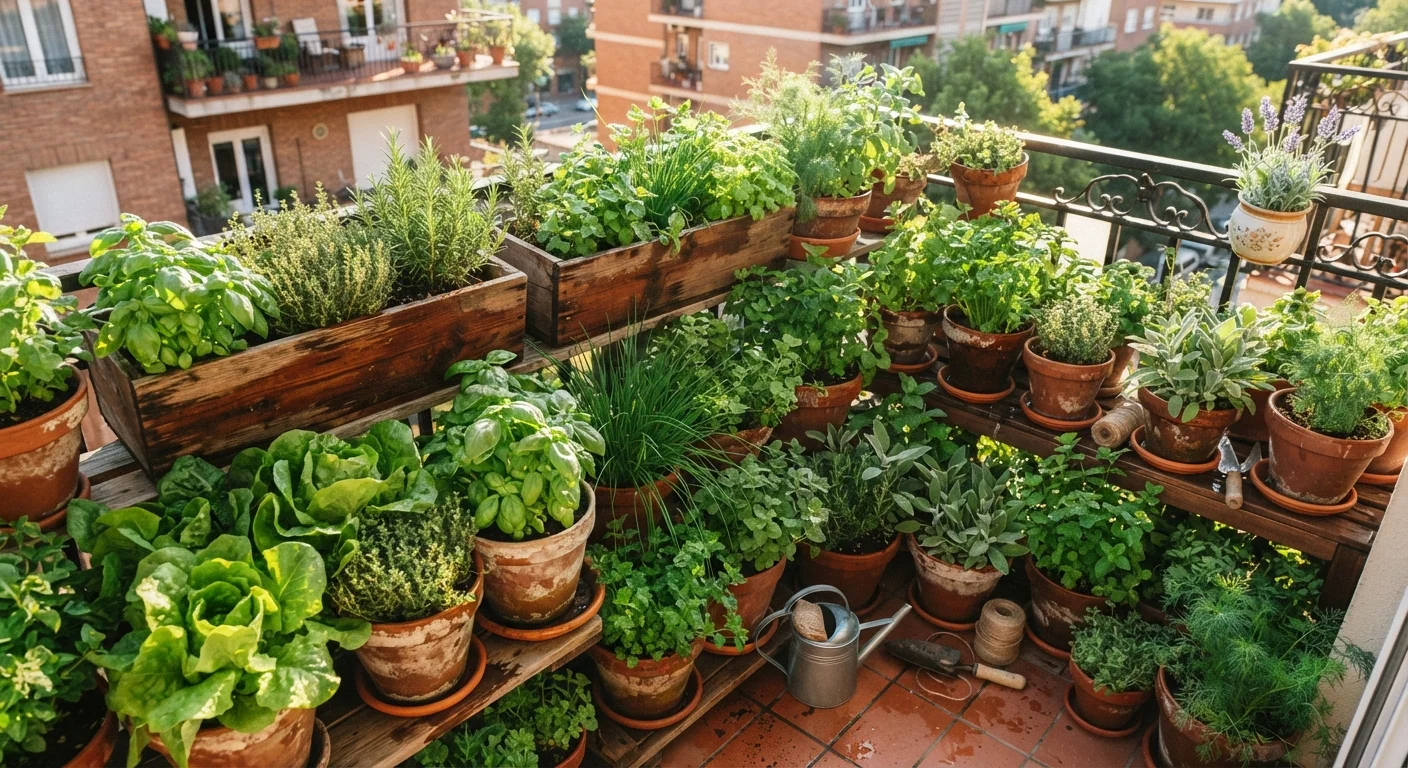
- Herbs: Basil, chives, mint (keep it contained - it spreads aggressively), thyme, and oregano thrive in small pots and repay kitchen use heavily. Mint is best grown in its own container to prevent it overtaking neighbors.
- Radishes and green onions: Both mature quickly (radishes in as few as 25 days), making them ideal for succession planting in limited space.
- Cherry tomatoes and compact peppers: Dwarf or patio varieties are bred specifically for container culture. They need at least a 5-gallon container and full sun.
- Peas and pole beans: With a small trellis or vertical support, these use vertical space efficiently on a balcony.
Container gardening trade-offs are worth understanding before you commit to specific plants, particularly for fruiting crops that demand more from a pot than greens do.
When choosing container tomatoes, look specifically for varieties labeled 'patio,' 'dwarf,' or 'determinate' - these are bred to stay compact and still fruit well. Standard indeterminate varieties will outgrow a balcony setup quickly.
Determinate varieties stop growing at a set height and concentrate fruiting, making them far more manageable in confined spaces than sprawling indeterminate types.
Grow mint in its own dedicated pot rather than mixing it with other herbs. Even in a container, mint's roots will crowd out neighbors if given the chance.
Mint spreads aggressively through underground runners; isolating it in a single container protects companion plants and keeps the mint itself easier to manage.
Containers, Soil, and Drainage
Container choice matters less than what goes inside it. Any vessel with drainage holes - fabric grow bags, terracotta pots, wooden window boxes, even repurposed food-grade buckets - can work. Fabric bags are especially good for vegetables because they air-prune roots, preventing the circling that stunts plants in rigid pots.
Use a quality potting mix, not garden soil. Garden soil compacts in containers, restricts root growth, and drains poorly. A good potting mix is formulated to retain some moisture while still draining freely. Many gardeners add perlite (a lightweight volcanic mineral) to improve aeration further. Avoid mixes with excessive moisture-retaining gels if your space gets hot afternoon sun - waterlogged roots in warm conditions invite rot.
Always Verify Balcony Weight Limits
Wet soil is surprisingly heavy - a single large planter filled with moist potting mix can weigh 50 pounds or more. Before placing multiple containers on a balcony or rooftop, check with your building manager or a structural professional about safe load capacity. Exceeding rated limits poses a real safety risk.
Drainage holes are essential. A container without them, or one sitting in standing water, will drown roots regardless of how well everything else is managed.
Watering, Feeding, and Pest Management
Small containers lose water faster than the ground, and inconsistent watering is the most common cause of poor yields. Check soil moisture daily in warm weather by pressing a finger an inch into the mix - water when it feels dry at that depth. Self-watering containers with built-in reservoirs reduce this burden significantly and are worth considering for anyone who travels or forgets to water.
Nutrients leach out of pots with repeated watering, so a regular feeding schedule matters. A balanced liquid fertilizer applied every two to three weeks during active growth generally keeps plants productive. Slow-release granular fertilizers worked into the potting mix at planting time offer a lower-maintenance alternative.
Pest pressure in containers is usually lighter than in ground beds, but aphids, spider mites, and fungus gnats are common. Non-chemical pest control strategies - like insecticidal soap sprays, sticky traps for gnats, and strong water jets to dislodge aphids - handle most problems without disrupting nearby food crops.
Don't Overfeed Container Plants
More fertilizer does not equal faster growth. Overfertilizing - especially with high-nitrogen products - encourages lush leafy growth at the expense of flowers and fruit on crops like tomatoes and peppers. Always follow the product's recommended rate and resist the urge to increase doses when growth seems slow. Slow growth is more often a light or water problem than a nutrient deficiency.
Maximizing Yield in Tight Spots
A few planning habits significantly increase what a small space can produce:
- Succession planting: Sow a short row of radishes or lettuce every two to three weeks rather than all at once. This staggers harvests and prevents gluts. See our seasonal garden calendar for timing guidance by month.
- Vertical growing: Trellises, wall-mounted planters, and stacked pocket organizers turn vertical surfaces into productive space. Cucumbers, peas, and beans climb readily with minimal training.
- Interplanting: Pair fast-growing crops like radishes with slower ones like tomatoes. The radishes mature and are harvested before the tomatoes need the root space.
- Starting from seed: It costs far less than buying transplants and gives access to compact varieties rarely found at garden centers. Starting seeds indoors is a practical skill that extends your season and expands your options.
If your growing space spills into your kitchen, keeping the area organized supports the whole system. Organizing a small kitchen can help you find room for a grow light, seed trays, or harvested herbs without cluttering your workspace.
“The best garden is the one you'll actually tend. Starting small and succeeding builds the confidence to expand - far more reliably than starting big and feeling overwhelmed.”
— Home Editorial Team, Home, Garden & Pets Editorial