

Key Takeaways
- Repainting is the lowest-cost option and suits DIYers, but requires thorough prep for lasting results.
- Refacing replaces doors and visible surfaces while keeping the existing cabinet boxes intact.
- Full replacement offers the most flexibility but costs significantly more and disrupts the kitchen longest.
- Cabinet condition, budget, and layout goals should drive which approach you choose.
- Permits are rarely needed for cosmetic updates, but replacement may affect plumbing or electrical lines.
Our Verdict
Repainting delivers solid visual impact at the lowest cost when cabinets are structurally sound and you're willing to invest in prep work. Refacing is the middle-ground choice - a meaningful upgrade without the disruption of full replacement. Replacement makes sense when the layout no longer works, boxes are damaged beyond repair, or a complete kitchen overhaul is already underway.
| Best for | Recommended |
|---|---|
| Homeowners on a tight budget who want a fresh look | Repainting |
| Those wanting new-cabinet aesthetics without full demolition | Refacing |
| Kitchens with damaged boxes, poor layout, or a full remodel in progress | Replacement |
Why Cabinet Updates Matter - and Why the Choice Is Harder Than It Looks
Cabinets occupy more visual real estate in a kitchen than almost anything else. Updating them can transform the entire room - but choosing between repainting, refacing, and replacing isn't straightforward. Each approach involves different costs, skill levels, timelines, and trade-offs.
The decision also depends on factors unique to your kitchen: the condition of the cabinet boxes, whether you want to change the layout, and how long you plan to stay in the home. This article walks through each option honestly so you can match the right approach to your actual situation.
For a broader look at how renovation costs can surprise homeowners, see our article on common myths about home renovation costs.
| Repainting | Refacing | Full Replacement | |
|---|---|---|---|
| Typical cost range | Lowest (DIY to low professional) | Moderate (40-60% less than replacement) | Highest (varies widely by material) |
| DIY-friendly? | Yes, with proper prep | Rarely - requires precision | Possible for stock cabinets; usually professional |
| Kitchen downtime | Days (per phase) | A few days to a week | Days to several weeks |
| Layout change possible? | No | No | Yes |
| Best cabinet condition | Solid boxes, good doors | Solid boxes, worn doors | Any - boxes replaced entirely |
| Result longevity | 5-10 years with good prep | 10-15 years typical | 15-25+ years |
| Permit likely needed? | No | No | Sometimes (if moving utilities) |
Repainting: High Impact, Lower Cost, Unforgiving Prep
Painting existing cabinet boxes and doors is the most budget-friendly path. Professional cabinet painting typically runs a few hundred to a couple thousand dollars depending on kitchen size, while DIY costs are mainly time and materials. The results can look sharp - but only with thorough preparation.
The most common reason painted cabinets fail quickly is skipped prep. Cabinets need to be degreased, lightly sanded, and primed before any topcoat goes on. The finish you choose also matters considerably. A semi-gloss or satin finish resists moisture and wipes clean more easily than a flat or matte one - see our guide on paint finish types and where each one actually works for guidance on matching finish to function.
Test Your Paint Adhesion Before Committing
Before painting all your cabinet doors, do a small test on one interior surface. Apply primer, let it cure fully, then try to scratch or peel it with a fingernail. If adhesion is poor, you may need a different primer formulation or more aggressive sanding. Catching this early saves you from redoing the whole job.
Repainting works best when the cabinet boxes and door fronts are in good structural condition - no swelling, delamination, or warped frames. If the wood substrate has seen significant water damage, paint alone won't fix it.
Refacing: New Look Without Tearing Out the Kitchen
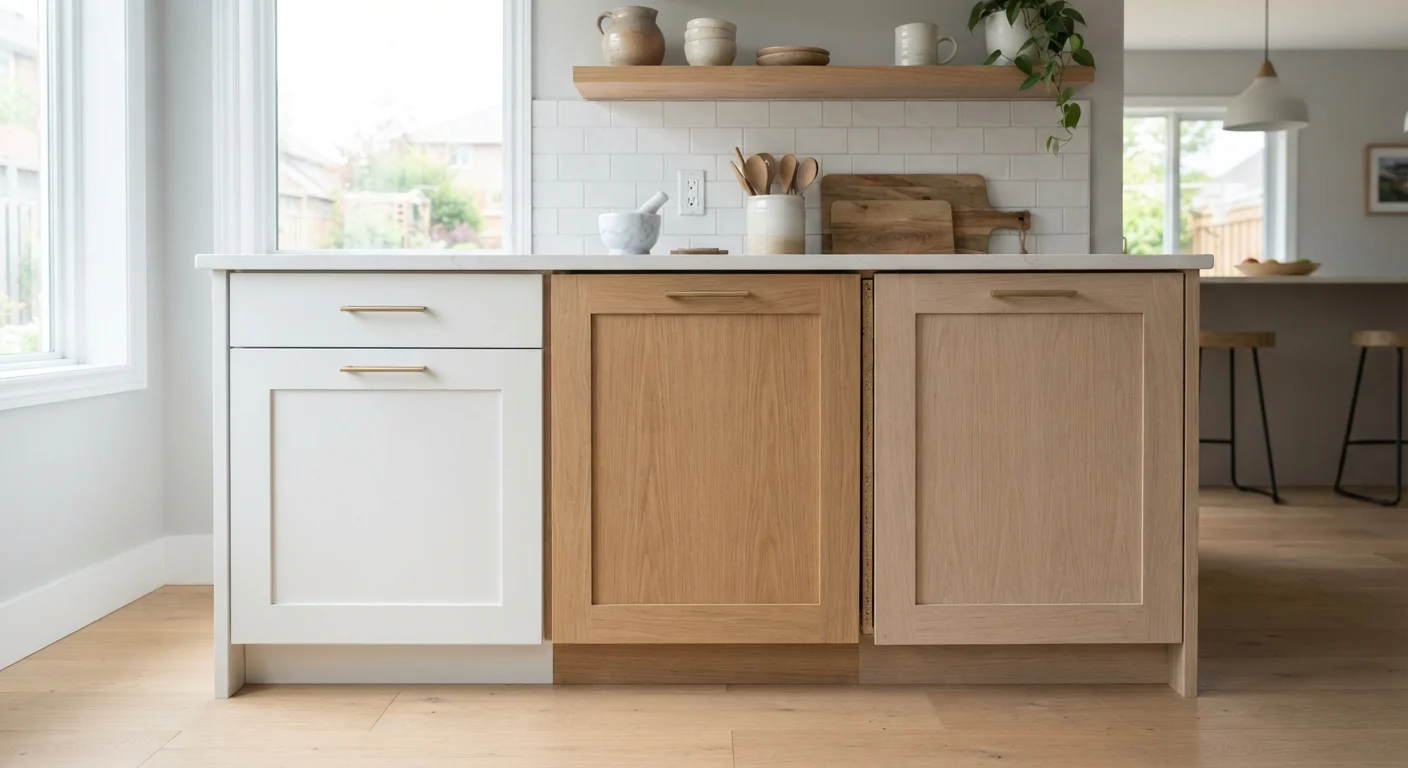
Refacing keeps the existing cabinet boxes in place while replacing the doors, drawer fronts, and applying a matching veneer or laminate to the exposed box surfaces. The result looks and feels like new cabinetry at a fraction of full-replacement costs - typically 40-60% less, depending on materials and kitchen complexity, though exact figures vary widely by region and scope.
This option makes sense when your cabinet layout works well and the boxes themselves are solid and square. If shelving positions, drawer configurations, or overall storage feel right, there's no reason to tear everything out just to refresh the appearance.
Refacing is largely a professional job. The veneer application requires precision, and poorly aligned doors or mismatched materials will be obvious. Lead times for custom door styles can add weeks to the project timeline. That said, the kitchen remains mostly functional during the process - a significant advantage over full replacement.
If you're evaluating how your storage setup is working alongside the aesthetics, our comparison of open shelving vs. closed cabinets may also be worth reading before you commit to a door style.
Full Replacement: Maximum Flexibility, Maximum Disruption
Replacing cabinets entirely means removing everything down to the wall and starting fresh. This is the right path when boxes are damaged, the layout needs to change, or a whole-kitchen remodel is already planned. It's also the only option that lets you reconfigure storage completely - moving the sink, adding an island, or changing upper cabinet heights.
Costs for full cabinet replacement vary enormously based on material quality, custom versus stock sizing, and whether installation is DIY or professional. Stock cabinets from home improvement stores sit at the lower end of the price range; semi-custom and fully custom cabinetry can cost several times more. Labor adds substantially to the total, and the kitchen will be out of service for days to weeks.
Replacement Can Uncover Hidden Issues
Removing old cabinets sometimes reveals water damage, mold, or outdated wiring behind the walls. Budget a contingency of 15-20% for unexpected repairs before starting a full replacement project. Attempting to conceal existing damage without addressing it is both unsafe and likely to create bigger problems down the line.
If replacement is part of a larger remodel, check whether permits are required in your jurisdiction. Work that moves plumbing, electrical, or structural elements typically needs inspection. For more on where DIY makes sense versus when to hire a pro, see our article on DIY home improvement.
Once new cabinets are in, organization becomes the next challenge - particularly in smaller spaces. Our piece on organizing a small kitchen without losing counter space offers practical ideas for making the most of fresh storage.