

Key Takeaways
- Physical barriers like row covers prevent pests from reaching plants without any chemicals.
- Companion planting uses plant relationships to naturally repel or confuse common garden pests.
- Encouraging beneficial insects creates a self-sustaining pest-control system in your garden.
- Consistent cultural practices - proper spacing, watering, and cleanup - reduce pest pressure significantly.
- Multiple low-intervention methods used together are more effective than any single approach alone.
Why non-chemical pest control is worth the effort
Chemical pesticides can work quickly, but they come with real downsides: disrupted soil ecosystems, harm to pollinators, and the gradual development of pest resistance. Non-chemical strategies take a different approach - they work with your garden's natural systems rather than against them. The result, when applied consistently, is a more resilient garden that requires less intervention over time, not more.
The methods below are grounded in established horticultural practice. None of them demand special equipment or expertise. What they do require is observation, timing, and a willingness to think preventively rather than reactively.
Scale matters for these methods
These approaches work best for home gardens and small-scale food growing. If you're managing a larger plot or allotment, the same principles apply but may require more consistent effort to maintain. If you're gardening in a compact space, many of these techniques are especially practical - see our guide to growing food in small spaces for context on adapting pest control strategies to balconies and windowsill plots.
Five approaches that reliably reduce pest pressure
Use physical barriers to exclude pests
The simplest way to stop a pest is to prevent it from reaching your plants in the first place. Row covers made from lightweight fabric (sometimes called floating row cover or garden fleece) let in light, air, and rain while keeping out insects like cabbage moths, aphids, and beetles. Secure the edges with soil, stones, or clips to eliminate gaps.
Copper tape around raised beds or containers can deter slugs and snails - they dislike the mild electrical charge copper produces when touched. Sticky yellow traps catch flying insects such as whiteflies and fungus gnats and also serve as an early-warning system for emerging infestations.
A well-fitted row cover stops the pest before it ever touches your plant.
Practice companion planting
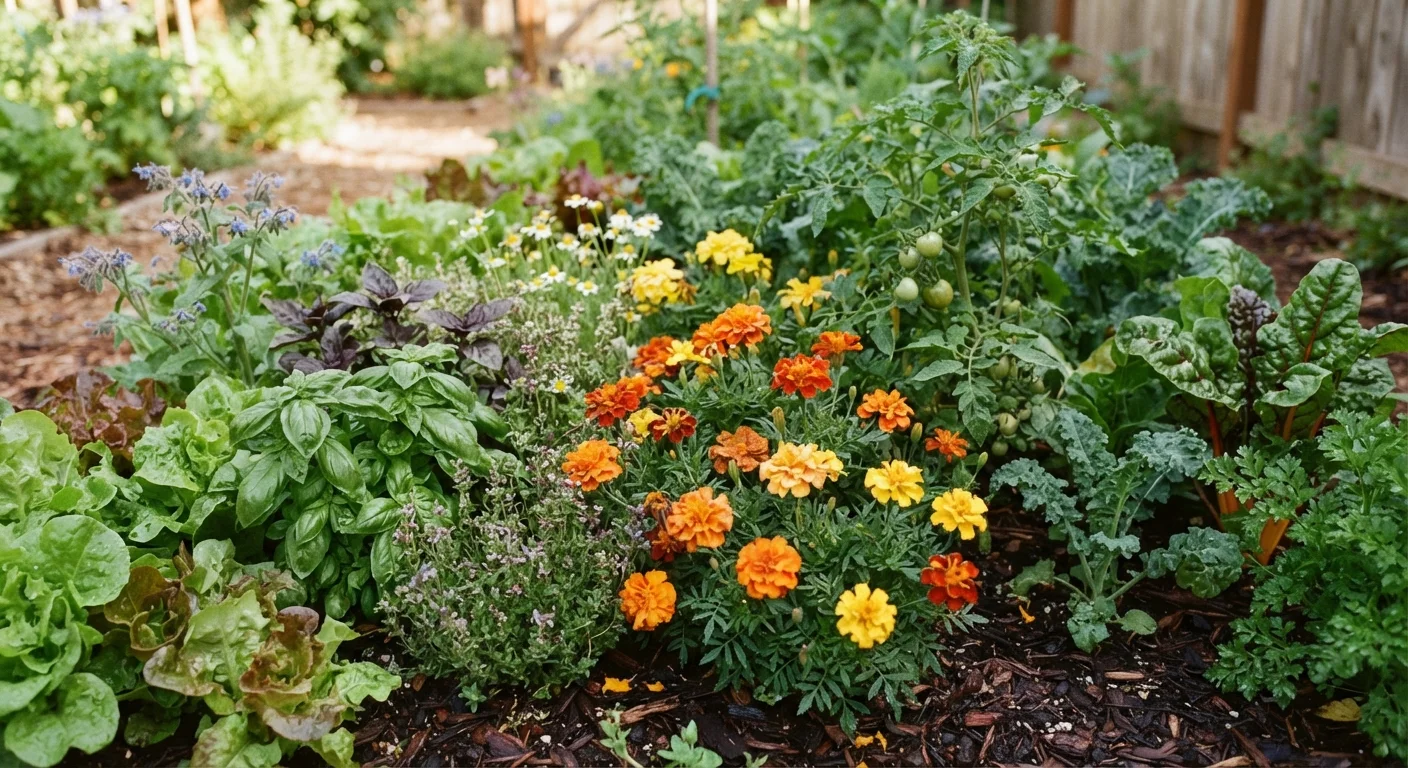
Companion planting means growing different species near each other to create mutual benefits. Certain plants release compounds that repel specific pests or mask the scent of vulnerable crops. Marigolds are widely planted near tomatoes and brassicas because they deter nematodes and aphids. Basil planted alongside tomatoes may reduce thrip and aphid pressure.
Alliums - onions, chives, garlic - interplanted with carrots or lettuce help confuse pests that navigate by scent. Dense plantings of aromatic herbs like rosemary, mint, or thyme near susceptible crops can further disrupt pest orientation. The key is thinking about the garden as a community of plants rather than isolated rows.
Aromatic plants mask the scent of vulnerable crops, confusing pests before damage begins.
Attract and protect beneficial insects
Ladybugs, lacewings, parasitic wasps, and ground beetles are natural predators of aphids, caterpillar eggs, and whiteflies. Your goal is to make your garden a habitat they want to inhabit. Plant nectar-rich flowers with small, open blooms - dill, fennel, yarrow, sweet alyssum - to provide food for adult beneficials so they stay and breed nearby.
Avoid broad-spectrum insecticides (including some organic options) that kill beneficial insects alongside pests. Leave some areas of bare soil or a small log pile to provide nesting habitat. Once you stop disrupting the ecosystem, natural predator populations often rebuild within a single growing season.
Planting dill or yarrow near crops gives beneficial insects a reason to stay and reproduce.
Apply cultural controls consistently
How and when you garden matters as much as what you plant. Remove plant debris at the end of the season - overwintering pest eggs and fungal spores often live in dead stems and fallen leaves. Rotate crops so that pests tied to a specific plant family don't build up in the same soil year after year.
Water at the base of plants in the morning so foliage dries before evening; wet leaves invite fungal diseases that weaken plants and make them more attractive to opportunistic insects. Proper plant spacing also improves airflow and makes it harder for pests to move undetected from plant to plant.
Crop rotation disrupts pest lifecycles more reliably than many reactive treatments.
Hand-pick and monitor regularly
Regular scouting - a slow walk through the garden, inspecting leaf undersides and stems - catches infestations early when they're still manageable. Many pests can be physically removed: cabbage worms, hornworms, and slug clusters are easier to control by hand than by spray once you build the habit of checking frequently.
Drop hand-picked pests into a bucket of soapy water to prevent escape. For smaller insects like aphids, a firm spray of plain water from a hose is often enough to dislodge them. Combine this with yellow sticky traps to monitor population trends over time, not just react after damage appears.
Catching an infestation early - even by hand - prevents the need for any intervention at scale.
Layer methods for stronger results
No single technique eliminates pest pressure entirely, but combining two or three - say, row covers plus companion planting plus regular hand-picking - creates overlapping defenses that are much harder for pests to overcome. Start with one method you can maintain consistently, then add others as they fit your routine.
Building a pest-resilient garden over time
The most effective chemical-free gardens don't rely on any single trick - they combine physical barriers, diverse plantings, and ongoing monitoring into a system that gets stronger each season. Soil health plays a role too: well-fed plants in balanced soil are inherently more resistant to pest damage than stressed ones.
Give any new approach at least a full growing season before judging its effectiveness. Some methods, like attracting beneficial insects, take time to build momentum. Others, like crop rotation, deliver clearer payoffs year over year. Expect a learning curve, keep notes on what you observe, and adjust based on your specific conditions and pest pressures.