

| Red light urgency | Stop or pull over as soon as safely possible |
| Amber/yellow light urgency | Address soon — schedule service within days |
| Flashing check engine light | More urgent than a steady light — reduce speed and seek service promptly |
| OBD-II standard adopted | Required on all US passenger vehicles from 1996 onward (U.S. Environmental Protection Agency) |
| TPMS required in new vehicles | Mandatory on all new US passenger vehicles since 2008 (NHTSA Federal Motor Vehicle Safety Standard 138) |
| Owner's manual | Primary reference for vehicle-specific warning symbols |
What Dashboard Warning Lights Are Actually Telling You
Your dashboard is designed to communicate. When a light comes on, the car's onboard diagnostic system has detected something worth flagging — ranging from routine reminders to urgent mechanical alerts. The challenge is that most owners don't know the difference between a light that can wait until the weekend and one that means pull over now.
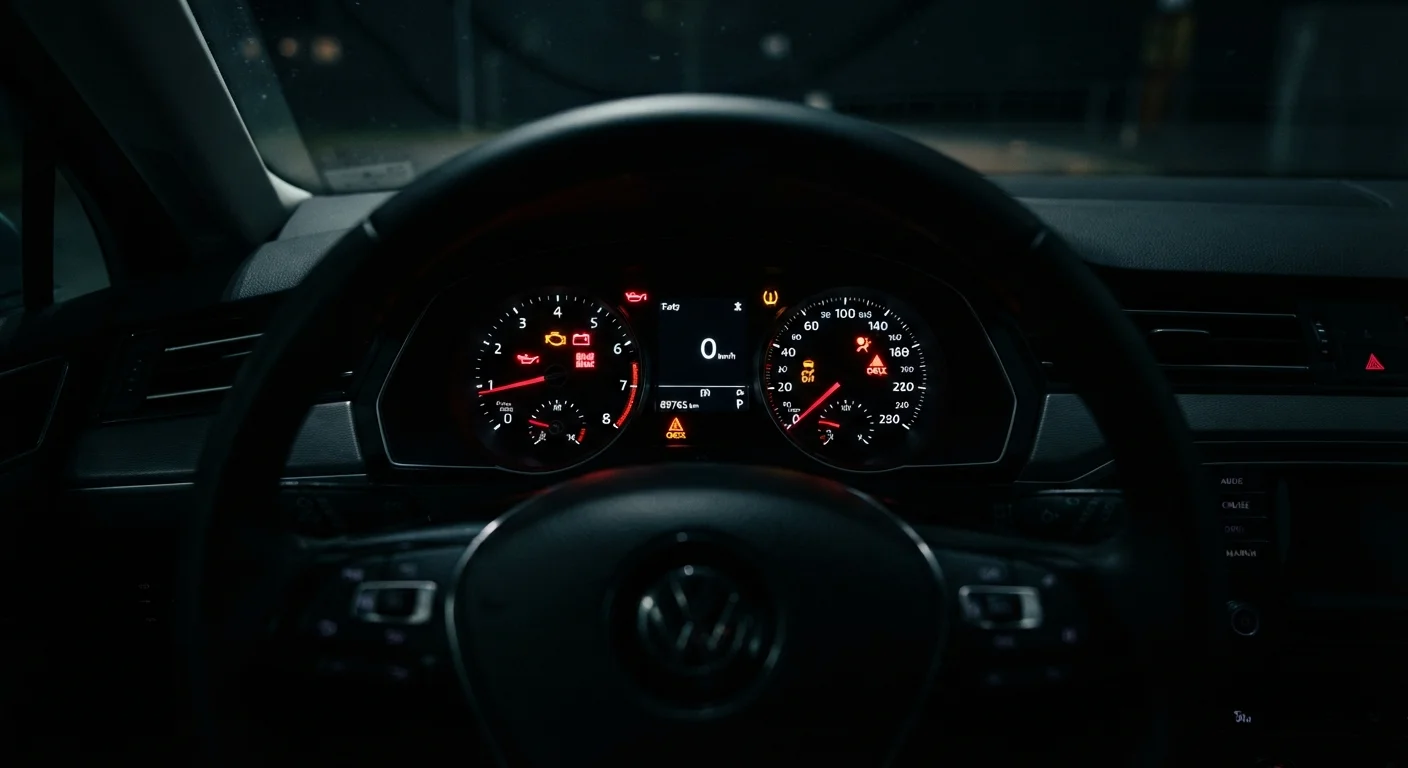
Warning lights are typically color-coded by urgency. Red signals demand immediate attention and often mean stopping the vehicle as soon as it is safe to do so. Yellow or amber signals indicate a developing issue that should be addressed soon but rarely requires pulling over immediately. Green or blue lights are informational — confirming that a system (like high beams or turn signals) is active.
| Red light urgency | Stop or pull over as soon as safely possible |
| Amber/yellow light urgency | Address soon — schedule service within days |
| Flashing check engine light | More urgent than a steady light — reduce speed and seek service promptly |
| OBD-II standard adopted | Required on all US passenger vehicles from 1996 onward (U.S. Environmental Protection Agency) |
| TPMS required in new vehicles | Mandatory on all new US passenger vehicles since 2008 (NHTSA Federal Motor Vehicle Safety Standard 138) |
| Owner's manual | Primary reference for vehicle-specific warning symbols |
Understanding this hierarchy alone prevents most panic situations. For a broader foundation on keeping your car healthy, see our complete maintenance guide for new drivers.
The Most Common Warning Lights, Explained
Below are the lights drivers encounter most often, along with what they actually mean.
Malfunction Indicator Lamp (MIL)
The technical name for the check engine light. It illuminates when the vehicle's onboard diagnostic system detects a fault code from any number of monitored components or systems.
OBD-II
On-Board Diagnostics, second generation — a standardized system used in vehicles since 1996 that monitors emissions and engine performance. A scan tool can read fault codes stored by this system, helping pinpoint why a warning light is on.
TPMS
Tyre Pressure Monitoring System. A sensor-based system that alerts the driver when one or more tyres drop significantly below the recommended inflation pressure.
ABS
Anti-lock Braking System. A safety system that prevents the wheels from locking up during hard braking, helping the driver maintain steering control. When the ABS warning light is on, this function may be impaired.
Catalytic Converter
An emissions control device in the exhaust system that converts harmful combustion byproducts into less harmful gases. Engine misfires — often signaled by a flashing check engine light — can overheat and damage it.
Alternator
A generator driven by the engine that recharges the battery and powers the vehicle's electrical systems while the engine runs. A failing alternator is a common cause of the battery warning light.
Check Engine (Malfunction Indicator Lamp): One of the most misunderstood lights on the dashboard. It can signal anything from a loose fuel cap to a misfiring engine. A steady light usually means investigate soon; a flashing light means reduce speed and seek service promptly, as a flashing light often indicates active engine misfires that can damage the catalytic converter.
Oil Pressure Warning: A red oil can symbol is serious. Low oil pressure can mean the engine isn't being lubricated properly — driving further risks significant engine damage. Pull over safely, turn the engine off, and check the oil level before proceeding. Learn more about fluids your car depends on in our plain-English guide to car fluids.
Battery / Charging System: A battery icon typically means the charging system isn't maintaining voltage. Your car may be running on reserve power from the battery alone. Common culprits include a worn alternator or a failing battery. For early warning signs before this light ever appears, read our article on signs your car battery is on its way out.
Temperature Warning: A thermometer symbol in red means the engine coolant has reached a dangerous temperature. Stop driving as soon as it is safe — overheating can warp cylinder heads and cause costly damage.
Tyre Pressure (TPMS): A flat tyre icon with an exclamation mark means one or more tyres is significantly under-inflated. Driving on low-pressure tyres affects fuel economy, handling, and tyre wear. Our guide on tyre pressure and what the numbers mean covers how to check and correct it.
Brake System Warning: If this appears while driving (not just during startup), it may indicate low brake fluid, worn brake pads, or a hydraulic system fault. Do not ignore a brake warning — have the system inspected by a qualified mechanic promptly.
ABS Warning: The Anti-lock Braking System (ABS) prevents wheel lock-up during emergency stops. An ABS light means normal braking still works, but the ABS function may be disabled. Seek diagnosis soon.
When to Act Immediately vs. When to Schedule a Visit
Not every warning light is an emergency, but all of them deserve a response. Use this general framework:
- Stop driving immediately: Oil pressure warning, engine temperature warning, brake system warning (while in motion).
- Drive carefully to a safe location, then stop: Flashing check engine light, battery light (you may have limited time before the car stalls).
- Schedule service within a few days: Steady check engine light, ABS warning, TPMS light.
- Address at next service: Service reminder lights (oil life, filter reminders).
Scan Tools Can Read the Code Behind the Light
When a check engine or other diagnostic light comes on, the vehicle stores a fault code in its OBD-II system. An inexpensive handheld scan tool — or a visit to many auto parts stores that offer free code reading — can retrieve this code and give you a starting point before visiting a mechanic. A code alone doesn't confirm a diagnosis, but it narrows the field considerably and helps you have a more informed conversation with a technician.
Your owner's manual remains the definitive reference for your specific vehicle's warning symbols. Many manufacturers use proprietary icons that differ from generic descriptions. If a light appears that you don't recognize, consulting the manual or a qualified mechanic is always the right call. For help navigating your service schedule alongside these alerts, see reading your car's service schedule without the jargon.