

Key Takeaways
- Regular fluid checks are among the simplest yet most impactful things a new driver can do.
- Tire pressure and tread depth directly affect braking distance and fuel economy.
- Your car's service schedule - not mileage myths - should drive your maintenance timing.
- Most warning lights signal an issue that worsens and costs more if ignored.
- Some tasks are safe to DIY; others require a qualified mechanic for safety reasons.
Why Maintenance Matters More Than You Think
A car is one of the most mechanically complex things most people will own - and also one of the most neglected. New drivers often assume that as long as the engine starts and the car moves, everything is fine. In reality, the gap between a car that runs and a car that's genuinely safe and reliable is filled by consistent maintenance.
Skipping routine checks doesn't just risk a breakdown. It can mean degraded braking performance, reduced fuel efficiency, and - in serious cases - a safety hazard on the road. The good news: most foundational maintenance is straightforward once you understand what you're looking for.
If you're also navigating the process of choosing a vehicle, our buying a car hub covers the key factors to weigh before you commit.
~$1,200
Average annual car maintenance cost per vehicle
AAA research has consistently found that routine maintenance and repair costs average around this figure for typical passenger vehicles in the US.
1 in 3
Drivers who regularly check tire pressure
Industry surveys suggest a significant majority of drivers rarely or never check tire pressure between service visits, despite it being a monthly task.
The Fluids Every Driver Should Know
Your car relies on several fluids to function safely. Letting any of them run low or degrade can cause damage ranging from minor to catastrophic.
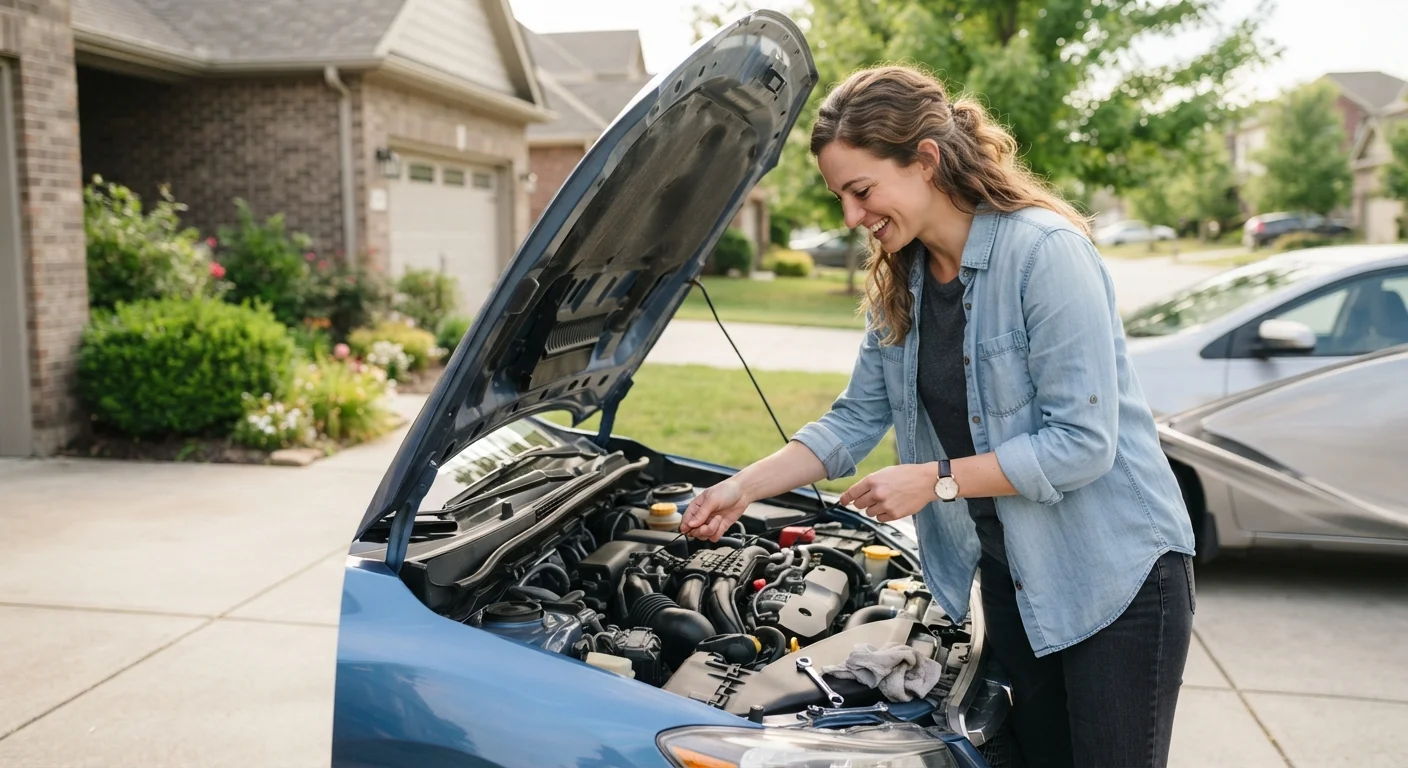
- Engine oil: Lubricates moving parts and reduces heat. Check it monthly using the dipstick - look for a clear amber color and a level between the min and max marks. Dark, gritty oil signals it's time for a change.
- Coolant (antifreeze): Prevents the engine from overheating in summer and freezing in winter. Check the reservoir when the engine is cold - never open the radiator cap on a hot engine.
- Brake fluid: Transfers the force of your foot to the brakes. A low or discolored level should be inspected by a mechanic promptly.
- Power steering fluid and transmission fluid: Less frequently checked, but both have reservoirs with dipsticks or sight windows that allow visual inspection.
- Windshield washer fluid: The only one that's purely a convenience item - but running dry at the wrong moment is a real visibility hazard.
When checking engine oil, don't just look at the level - rub a small amount between your fingers. Gritty or metallic-feeling oil needs changing regardless of color.
Oil condition matters as much as quantity. Contaminated oil accelerates engine wear even when the level appears normal on the dipstick.
Store a quality tire pressure gauge in your glove box and make checking all four tires part of your monthly routine, not just when a light comes on.
TPMS lights only activate when pressure drops well below the optimal range - by that point, the tire is already underperforming and wearing unevenly.
Tires, Brakes, and the Checks You Can Do Yourself
Tires are your car's only contact with the road, making them central to both safety and efficiency. Two checks matter most.
Tire pressure: Check monthly when tires are cold, using a gauge. The correct pressure is listed on a sticker inside your driver's door jamb - not on the tire sidewall, which shows the maximum pressure. Under-inflated tires wear unevenly, reduce fuel economy, and can overheat at highway speeds.
Tread depth: A simple test - insert a quarter into the tread groove with Washington's head pointing down. If you can see the top of his head, tread depth is getting dangerously low. Many mechanics recommend replacement before that point.
Never Check Tire Pressure on Hot Tires
Heat from driving expands the air inside tires, causing pressure readings to be artificially high. Always check pressure when tires have been stationary for at least three hours. Adjusting to a "correct" reading on hot tires will leave you under-inflated once they cool.
For brakes, listen for squealing or grinding when you stop, and pay attention to whether the car pulls to one side under braking. These are signals to have a mechanic inspect the pads and rotors. Brake inspection is generally not a DIY task - our guide on DIY car maintenance limits explains which tasks are appropriate to handle yourself and which carry real risk.
Following a Service Schedule
Every vehicle comes with a manufacturer-specified service schedule, usually printed in the owner's manual or a separate service booklet. This schedule sets intervals - by mileage, time, or both - for tasks like oil changes, filter replacements, spark plug checks, and more.
A common source of confusion: many drivers follow generic advice like "change your oil every 3,000 miles" regardless of what their vehicle actually requires. Modern engines and synthetic oils often support significantly longer intervals. Always defer to your owner's manual over generic rules.
Service schedules also distinguish between normal and severe driving conditions. Short trips, frequent towing, extreme temperatures, or stop-and-go city driving can qualify as severe - meaning more frequent maintenance is warranted. If you're unsure how to read your booklet, our plain-language service schedule guide translates the intervals and codes into plain English.
Warning Lights: What They're Actually Telling You
Dashboard warning lights are your car's communication system - and most drivers ignore them longer than they should. Here's a quick orientation:
- Check Engine Light
- Can indicate anything from a loose fuel cap to a failing catalytic converter. Don't assume it's minor - have the stored diagnostic code read at a shop. Many auto parts retailers do this at no charge.
- Oil Pressure Warning
- A red oil can symbol means oil pressure has dropped dangerously low. Pull over safely and shut off the engine. Continuing to drive can cause severe engine damage within minutes.
- Battery Warning
- Signals the charging system isn't functioning properly. The car may continue running temporarily, but electrical systems will fail. Have it inspected promptly.
- Tire Pressure Monitoring System (TPMS)
- Alerts you that one or more tires is significantly under-inflated. Check all four tires (including the spare if your car monitors it) with a gauge.
Red Warning Lights Require Immediate Action
A red dashboard warning - particularly for oil pressure or engine temperature - means stop driving as soon as it is safe to do so. Continuing to operate the vehicle can cause irreversible mechanical damage within a very short time. Pull over, shut off the engine, and contact a mechanic or roadside assistance.
Building Habits That Keep Your Car Reliable
The most reliable cars on the road aren't necessarily the most expensive - they're the ones whose owners treat maintenance as a routine, not an emergency response. A few habits make a significant cumulative difference.
- Do a brief walkaround before long trips: check tire appearance, look for fluid spots under the car, and ensure all lights function.
- Keep a simple maintenance log - even a notes app entry - recording what was done and when.
- Don't ignore small changes in how the car sounds, feels, or handles. Early intervention is almost always cheaper than delayed repair.
- Plan for seasonal checks. A seasonal maintenance calendar can structure when to inspect specific systems throughout the year.
Consistent care compounds over time. For a deeper look at the practices that keep vehicles dependable across years and high mileage, see our guide on keeping a car in good shape long term.
This article is for general informational purposes. For any maintenance or repair task you're unsure about, consult a qualified mechanic.