

| Coolant flush interval | Every 2-5 years or 30,000-50,000 miles (varies by vehicle) (Consult your owner's manual for your specific model) |
| Brake fluid change interval | Every 2 years regardless of mileage (Many manufacturers recommend this due to moisture absorption) |
| Power steering fluid check | Every 12 months or at each oil change (Frequency increases if steering feels stiff or noisy) |
| Coolant mixture ratio | 50% antifreeze, 50% distilled water (typical) (Pre-mixed formulas are widely available for convenience) |
| Brake fluid types | DOT 3, DOT 4, DOT 5, DOT 5.1 (Type is specified on the reservoir cap and in your owner's manual) |
| Electric power steering | Many newer vehicles use electric, not hydraulic, power steering (Electric systems have no fluid reservoir to check) |
Why Car Fluids Matter
Your car is less a machine of gears and metal than it is a system kept alive by carefully controlled liquids. Fluids manage heat, transmit force, protect surfaces, and keep critical components from destroying themselves. Most drivers are familiar with engine oil, but several other fluids are just as essential - and just as easy to overlook.
This guide focuses on three fluids that cause the most confusion: coolant, brake fluid, and power steering fluid. Each one does a fundamentally different job, fails in a different way, and needs attention on its own schedule. For a broader look at how engine oil fits into the picture, see why engine oil does more than just lubricate.
| Coolant flush interval | Every 2-5 years or 30,000-50,000 miles (varies by vehicle) (Consult your owner's manual for your specific model) |
| Brake fluid change interval | Every 2 years regardless of mileage (Many manufacturers recommend this due to moisture absorption) |
| Power steering fluid check | Every 12 months or at each oil change (Frequency increases if steering feels stiff or noisy) |
| Coolant mixture ratio | 50% antifreeze, 50% distilled water (typical) (Pre-mixed formulas are widely available for convenience) |
| Brake fluid types | DOT 3, DOT 4, DOT 5, DOT 5.1 (Type is specified on the reservoir cap and in your owner's manual) |
| Electric power steering | Many newer vehicles use electric, not hydraulic, power steering (Electric systems have no fluid reservoir to check) |
Coolant: Your Engine's Temperature Manager
Coolant - sometimes called antifreeze - circulates continuously between your engine and the radiator, absorbing heat from combustion and releasing it through the radiator fins. Without it, your engine would overheat within minutes of running.
Most modern coolants are a mix of ethylene glycol and water, which gives them a wider temperature tolerance than water alone. The glycol prevents freezing in winter, while the mixture raises the boiling point well above what plain water could achieve in a pressurized system.
What to Check
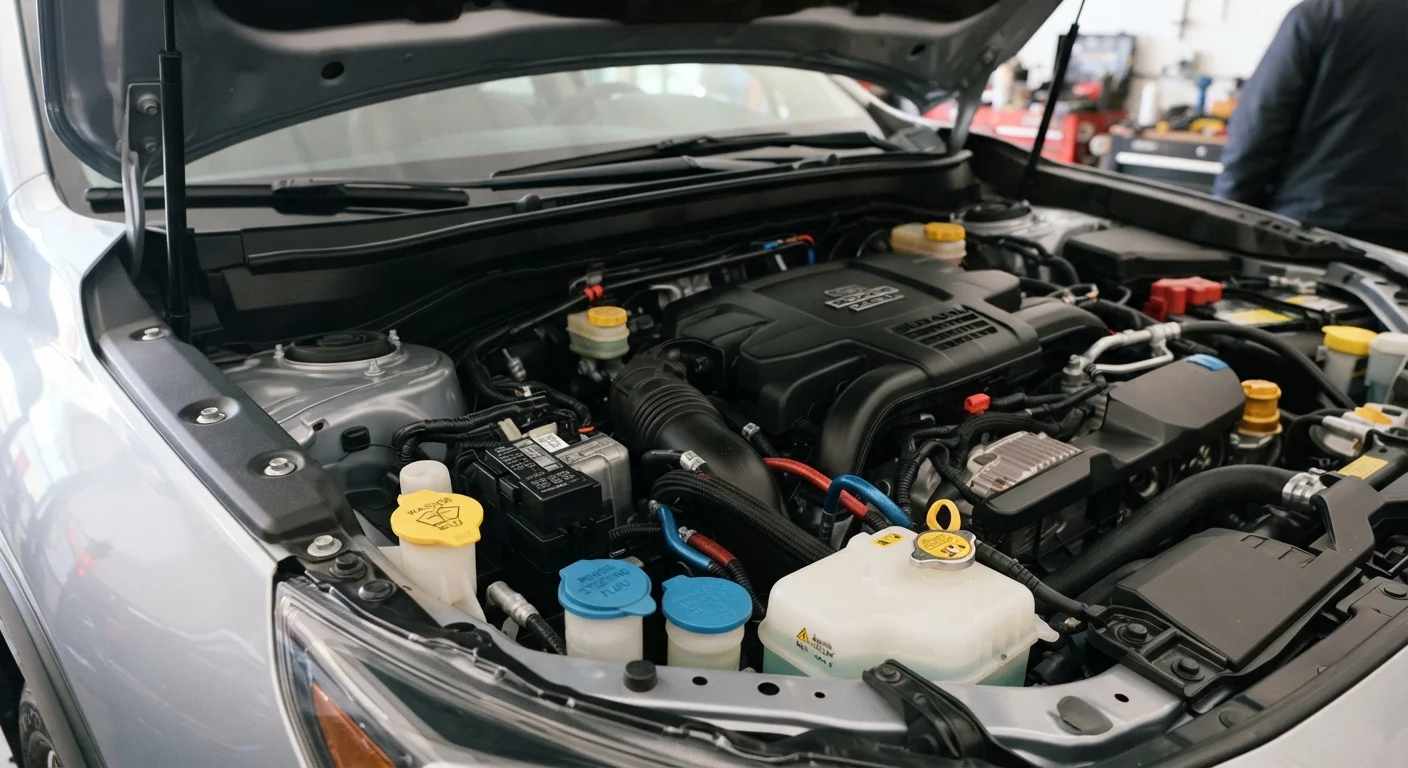
- Level: Look at the translucent overflow reservoir near the radiator - the fluid should sit between the MIN and MAX marks when the engine is cold.
- Color and clarity: Fresh coolant is typically bright green, orange, pink, or blue depending on the formula. Murky, rusty, or oily coolant is a sign it's degraded or contaminated.
- Smell: A sweet smell from under the hood after driving can indicate a coolant leak.
Never open a radiator cap on a hot engine - the system is pressurized and can cause serious burns. Let it cool completely first, or have a qualified mechanic handle it.
Coolant (Antifreeze)
A liquid, usually a mix of ethylene glycol and water, that circulates through your engine and radiator to regulate temperature. It prevents the engine from overheating in summer and the water from freezing in winter.
Hydraulic fluid
Any fluid used to transmit force through a pressurized system. Brake fluid and power steering fluid are both hydraulic fluids - they move mechanical force rather than simply lubricating surfaces.
Hygroscopic
Describes a substance that absorbs moisture from the surrounding air over time. Brake fluid is hygroscopic, which is why it degrades and requires periodic replacement even if the reservoir appears full.
Reservoir
A small plastic or metal tank under the hood that holds a fluid and allows you to check levels visually, usually through a translucent wall or a dipstick.
Boiling point
The temperature at which a fluid turns to vapor. In brake fluid, a lowered boiling point - caused by moisture absorption - can lead to vapor lock, where brakes temporarily fail under hard use.
Power steering rack
The component that translates steering wheel movement into wheel direction. Hydraulic power steering systems use pressurized fluid to assist this motion, reducing the effort needed from the driver.
Brake Fluid: The Force Behind Every Stop
When you press the brake pedal, you're not directly squeezing the brake pads - you're pushing hydraulic fluid through a sealed system, and that fluid transmits your foot's force to the brakes at each wheel. This is why brake fluid quality matters so much: if the fluid degrades, your stopping power degrades with it.
Brake fluid is hygroscopic - it absorbs moisture from the air over time. As water content builds up, the fluid's boiling point drops. Under heavy braking, degraded fluid can vaporize, creating air pockets in the lines. Air compresses where fluid does not, resulting in a soft or spongy brake pedal - a serious safety concern.
What to Check
- Level: The brake fluid reservoir is a small, semi-transparent plastic tank near the firewall on the driver's side. Fluid should be between MIN and MAX.
- Color: New brake fluid is nearly clear or pale yellow. Dark brown fluid is a sign of degradation.
- DOT rating: Always use the fluid type specified on your reservoir cap or owner's manual - mixing incompatible types can damage seals.
For more on the components your brake fluid supports, see how brake pads, rotors, and callipers work together.
When to See a Mechanic, Not Just Top Up
Topping up a fluid reservoir is a temporary measure, not a fix. If a fluid level keeps dropping, it points to a leak somewhere in the system - a problem a qualified mechanic should diagnose. Never ignore a repeated low-fluid warning, and do not attempt to inspect or repair pressurized cooling or brake systems while the engine is hot.
Power Steering Fluid: Keeping Your Steering Effortless
Hydraulic power steering systems use a pump driven by the engine to pressurize fluid, which then assists the steering rack in turning your wheels. Without adequate fluid, the pump works harder, steering becomes heavy, and components wear prematurely.
It's worth noting that many vehicles built in the past decade use electric power steering (EPS), which has no fluid reservoir at all - a motor does the work instead. If you can't find a power steering reservoir, check your owner's manual to confirm which system your vehicle uses.
What to Check
- Level: The reservoir is typically a small capped tank with MIN/MAX markings, often located near the front of the engine bay.
- Condition: Healthy power steering fluid is clear, pink, or red. Dark, gritty, or foamy fluid suggests contamination or aeration.
- Sounds: A whining or groaning noise when turning the wheel - especially at low speeds or full lock - often indicates low fluid or a struggling pump.
Staying on top of all three fluids is much easier when you understand your car's full maintenance schedule. Reading your car's service schedule without the jargon helps you track intervals clearly, and your car's warning lights decoded can alert you when a fluid issue is already flagging on the dashboard.
~70°F
Temperature range coolant extends protection
Proper coolant concentration typically protects against freezing down to around -34°F and boiling up to roughly 265°F depending on mix ratio and system pressure.
3%
Moisture content that compromises brake fluid
Studies from automotive safety organizations have shown that brake fluid with just 3% water content can reduce its boiling point significantly, increasing the risk of vapor lock.