

Key Takeaways
- Open shelving rewards tidy habits; clutter on display becomes visual noise quickly.
- Closed cabinets conceal messes but can make items harder to locate without good interior organization.
- Dust accumulation is a real maintenance factor for open shelves, especially in kitchens.
- A hybrid approach - mixing both types - often suits most households better than choosing one exclusively.
- Your household's daily habits matter more than aesthetics when deciding between the two.
- Room type strongly influences which option performs better for practical storage.
Option A
Open Shelving
The airy, accessible, display-forward approach.
Best for: Households that keep items consistently tidy and want everyday essentials within easy reach.
Option B
Closed Cabinets
The clutter-concealing, versatile storage workhorse.
Best for: Households that prioritize a clean visual baseline and need to store a varied mix of items out of sight.
If you have a small kitchen and want to avoid a cramped feel
Open Shelving
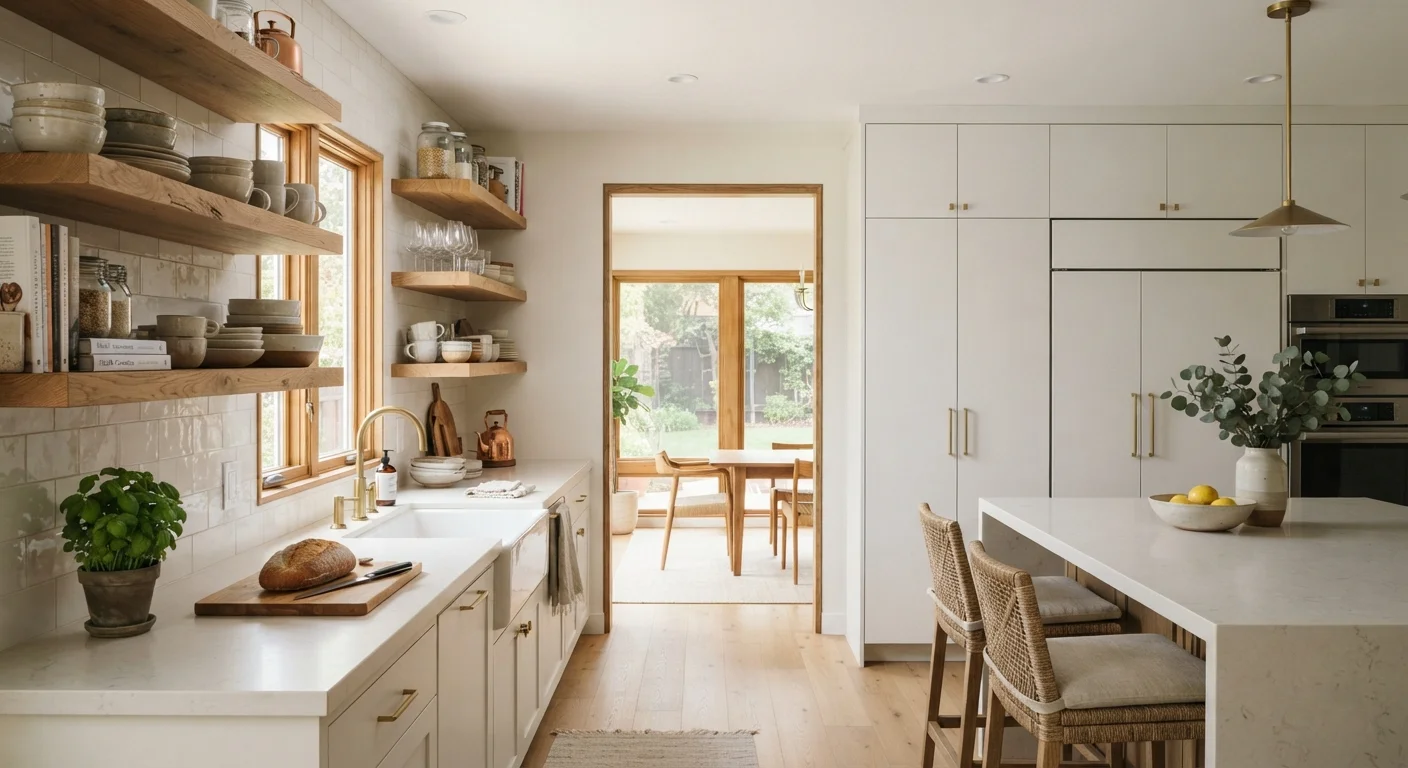
Removing upper cabinet doors creates a sense of openness and makes a tight space feel larger, provided items are kept orderly.
If you share your home with people who have different tidiness habits
Closed Cabinets
Closed doors provide a consistent, tidy appearance regardless of what's stored inside, reducing visual friction between housemates.
If you want to display curated collections or frequently used items
Open Shelving
Open shelves let you treat everyday objects as décor, keeping frequently reached items accessible without opening a door.
If dust, grease, or humidity are concerns in your storage area
Closed Cabinets
Cabinet doors protect stored items from dust, cooking grease, and moisture - reducing cleaning frequency significantly.
If you want maximum flexibility across multiple rooms
Closed Cabinets
Closed cabinets adapt well to kitchens, bathrooms, bedrooms, and utility spaces without requiring items inside to be visually appealing.
The Core Trade-off: Visibility vs. Concealment
At their core, open shelves and closed cabinets solve the same problem differently. Open shelving makes everything visible and immediately accessible - which is a genuine advantage when your items are orderly and attractive, and a clear disadvantage when they aren't. Closed cabinets, by contrast, offer a visual reset: whatever is behind those doors becomes invisible to anyone in the room.
This distinction matters more than most people expect. Homes where someone consistently restocks and straightens items tend to thrive with open shelving. Homes where the priority is low daily maintenance typically do better with closed storage. Neither is objectively superior - the right answer depends heavily on your household's actual habits, not the habits you plan to develop.
For a broader look at how storage choices apply across different rooms, see our storage solutions by room type reference guide.
| Criterion | Open Shelving | Closed Cabinets |
|---|---|---|
| Visual effect | Airy, open, spacious feel | Clean, uniform, contained look |
| Clutter visibility | Everything on display | Hidden behind doors |
| Dust & grease exposure | High - items exposed | Low - doors provide protection |
| Accessibility | Instant, no doors to open | Requires opening cabinet door |
| Interior organization needed | Low - everything visible | High - easy to lose track of items |
| Maintenance frequency | Regular (dust, wipe-downs) | Periodic (interior cleaning) |
| Best room fit | Living rooms, display kitchens | Kitchens, bathrooms, utility rooms |
| Adaptability to varied items | Low - items must look good | High - works for any items |
Practical Maintenance: What Each System Actually Demands
Open shelves collect dust and, in kitchens, cooking grease. Items stored in the open need regular wiping - both the shelves themselves and everything sitting on them. This isn't a dealbreaker, but it's a real, recurring time cost that surprises many homeowners who install open shelving for aesthetic reasons.
Closed cabinets shift the cleaning burden inside rather than eliminating it. Cabinet interiors accumulate crumbs, spills, and clutter that's invisible until you open the door. The practical upside: you clean on your own schedule rather than whenever guests arrive. Interior organization tools - drawer dividers, turntables, pull-out trays - help make closed cabinet storage genuinely efficient rather than just a place to stash things.
~30%
Kitchen remodels incorporating open shelving
Design industry surveys have consistently found roughly a third of kitchen renovations include at least some open shelving, reflecting its sustained popularity despite maintenance trade-offs.
2-3x
More frequent cleaning needed for open vs. closed storage
Home organization professionals generally note that open shelves in active kitchens require cleaning two to three times more often than the interior of closed cabinets.
If wall space is a factor in your planning, consider how both options interact with vertical storage strategies - stacking open shelves high or using tall closed units can dramatically expand capacity without expanding your footprint.
Room-by-Room Fit: Where Each Option Performs Best
Kitchens: Open shelving works well for everyday dishes, glasses, and cookbooks you reach for constantly. It struggles with storing baking supplies, small appliances, or anything you'd rather not dust weekly. Closed upper cabinets near the stove protect items from grease and steam. A hybrid layout - open shelves for display, closed cabinets for utility - is a common and practical middle ground. See our small kitchen organization guide for more targeted ideas.
Bathrooms: Closed cabinets generally outperform open shelving here. Toiletries, medications, and cleaning supplies benefit from concealment both aesthetically and practically. Open shelving in bathrooms works best for towels and decorative items - not everyday clutter.
Living rooms and bedrooms: Open shelving thrives when used intentionally - bookshelves, display collections, and media storage all suit it well. Closed cabinets or armoires handle the less photogenic side of bedroom storage: linens, seasonal clothing, and personal items.
The Hybrid Approach Is Worth Considering
Most interior designers and professional organizers don't frame this as an either/or decision. Mixing open and closed storage in the same room lets you enjoy the visual lightness of open shelves for curated, attractive items while keeping utilitarian or mismatched items behind doors. This balance tends to work well in kitchens, home offices, and living areas where both display and utility storage are needed. If you're unsure which to prioritize, start by identifying which items you'd genuinely want visible every day - and store everything else behind doors.
Making the Decision: Questions to Ask Before Committing
Before installing either option, consider a few honest questions. First, how consistent is your household at returning items to their designated spots? Open shelving amplifies both tidiness and disorder - it will not encourage tidiness on its own. Second, who else lives in the space? If household members have different organization styles, organizing a shared home with closed cabinets as the default often reduces daily tension.
Third, what are you storing? Uniform, attractive items (matching containers, stacked books, coordinated dishware) suit open shelving. Mismatched or utilitarian items suit closed cabinets. Finally, consider whether the aesthetic payoff is worth the maintenance investment - and be realistic rather than aspirational about that answer.
For those weighing deeper cabinet changes, our cabinet refacing, repainting, and replacement comparison covers what each upgrade level actually involves in effort and cost.