

Key Takeaways
- Shared households need flexible systems that accommodate different tidiness standards, not a single rigid approach.
- Identifying each person's actual storage habits - not ideals - is the essential first step.
- Designating personal zones alongside shared zones reduces friction over day-to-day tidiness.
- Visible, low-effort storage helps members with different habits stay more consistently organized.
- Regular household check-ins keep systems functional as needs and routines evolve over time.
What you will need
Why One-Size Organization Fails Shared Homes
Most home organization advice is written for a single person with a clear vision and full control over their space. Shared households - whether roommates, couples, or multigenerational families - operate under entirely different conditions. When one person is a natural neatnik and another leaves items wherever they land, any system built around the tidier person's standards is likely to collapse quickly.
The real problem isn't messiness. It's that most organization systems are designed around ideal behavior rather than actual behavior. A beautifully labeled cabinet works only if every household member consistently uses it the same way. When they don't, the system gets blamed - and abandoned.
Research in behavioral design consistently shows that the easiest path wins. If putting something away correctly requires multiple steps, people will skip steps under time pressure. Any shared system must account for this reality across everyone's habits, not just the most organized person's.
For a broader look at how different methods compare, see our guide to zone-based vs. room-by-room decluttering - the zone approach often adapts more naturally to households with mixed habits.
Start With the Highest-Friction Spot
Rather than overhauling the entire home at once, identify the single area causing the most daily conflict - often the entryway, kitchen counter, or bathroom sink - and solve that first. A visible early win builds trust in the process and makes it easier to tackle the rest of the home together.
How to Build a Shared System That Actually Holds
The goal isn't to make everyone organize the same way. It's to create an environment where each person's natural tendencies cause the least friction for others. These steps walk you through building that environment together.
What you will need
Map actual habits, not aspirations
Before buying a single bin or rearranging a shelf, observe where items actually end up in your shared space - not where you wish they did. Walk through the home and note: Where do bags get dropped? Where does mail pile up? Where do dishes sit before they reach the sink? This honest audit reveals the natural traffic patterns and default drop zones that any workable system must accommodate.
Ask each household member to describe, without judgment, what they find annoying about the current setup and what they find genuinely easy to maintain. The gap between those two answers tells you where to focus first.
Agree on non-negotiables and flex zones
Hold a brief household conversation to define two categories: non-negotiables (standards everyone must meet in shared spaces, such as dishes washed within 24 hours or no items left on the kitchen counter overnight) and flex zones (personal areas where each person sets their own standard). Keep the non-negotiables list short - three to five items maximum - so they're actually enforceable without constant policing.
Avoid framing non-negotiables as one person's preferences imposed on others. Instead, ground them in shared outcomes: "The counter stays clear so we can both use it" lands differently than "You need to be tidier."
Design storage around the lowest-effort path
For every shared storage decision, ask: what's the easiest thing someone could do with this item? Then make that easy action the correct one. If bags always end up on the floor near the door, install hooks at that exact spot. If mail lands on the kitchen counter, place a tray there rather than expecting people to walk it to a filing area.
Matching storage to existing behavior requires fewer behavior changes and produces more consistent results than systems that demand new habits from everyone involved. You can see how this principle applies room by room in our storage solutions by room type reference guide.
Give each person a dedicated personal zone
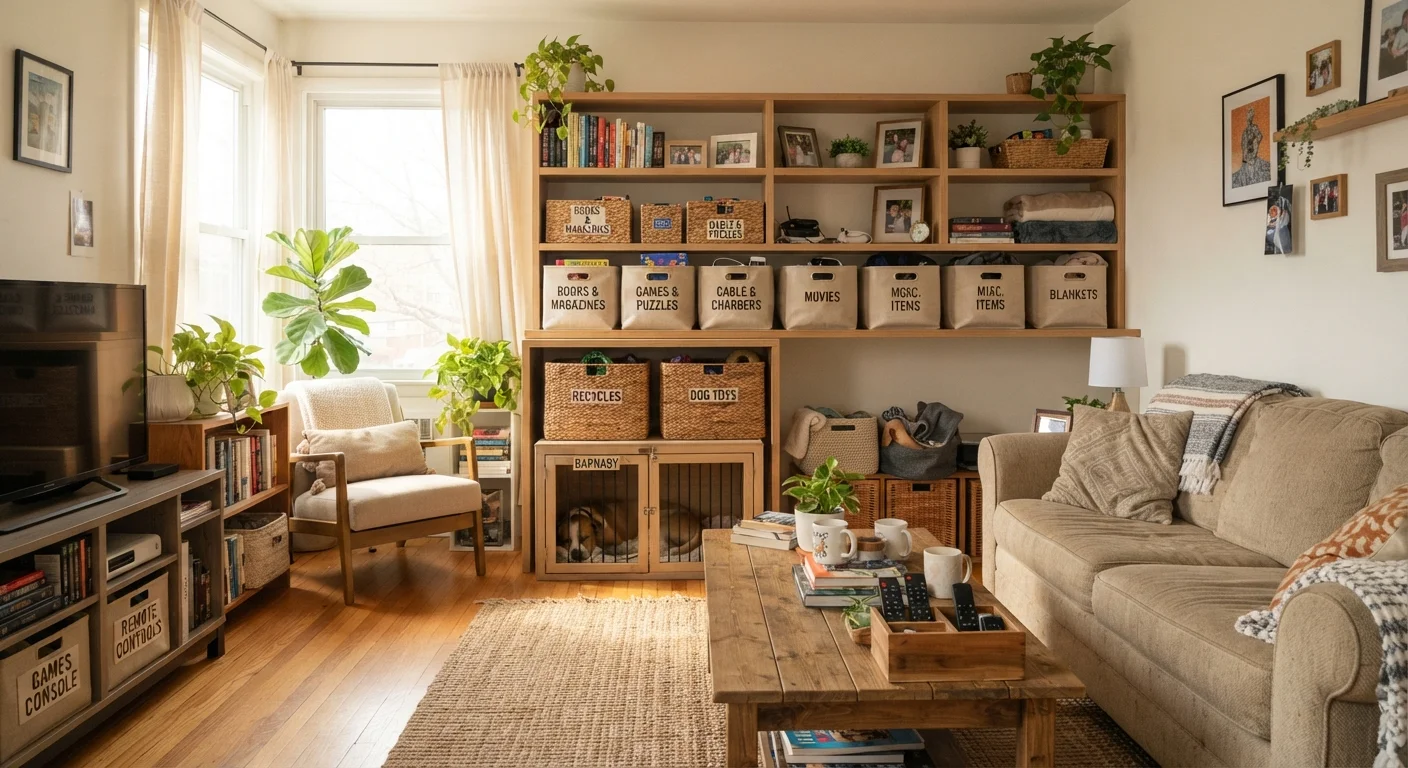
Even in small shared spaces, carving out a personal zone for each household member dramatically reduces friction. This might be a dedicated shelf in the bathroom, a specific kitchen cabinet, or a basket in the living room. The rule is simple: anything that lives in your zone is your responsibility; anything that ends up in shared space is subject to the agreed standards.
Personal zones give people with higher clutter tolerance a space to operate in without affecting common areas, while giving tidier members confidence that shared spaces will stay manageable.
Schedule brief household maintenance check-ins
Even well-designed systems drift over time as routines change, new items enter the home, and seasonal needs shift. Schedule a short check-in every four to six weeks - fifteen minutes is often enough - to ask: what's working, what isn't, and does anything need to move? This keeps systems adaptive rather than letting frustration build silently until something breaks down entirely.
Treat these as practical problem-solving sessions, not accountability meetings. The goal is to adjust the system, not evaluate each other's behavior.
Once the system is in place, seasonal resets are a practical way to revisit what's working and adjust before clutter quietly rebuilds. You may also find it useful to audit each room before making structural changes - see our room-by-room organization audit for a structured checklist.
Avoid Imposing a System Without Buy-In
Reorganizing a shared space unilaterally - even with good intentions - often creates resentment and sabotages the system before it has a chance to work. Any storage change that affects shared areas should involve input from everyone who uses that space. People are far more likely to maintain a system they helped design.
Shared Zones vs. Personal Zones: Drawing the Line
One of the most effective structural moves in a shared home is explicitly distinguishing between shared zones (entryways, kitchens, bathrooms, living areas) and personal zones (bedrooms, dedicated desk areas, personal shelves). Shared zones need agreed-upon, low-maintenance systems. Personal zones can follow each individual's preference without affecting anyone else.
In shared zones, prioritize storage that requires minimal steps to use correctly: hooks instead of hangers, open trays instead of lidded bins, a single landing spot for incoming items rather than multiple categorized locations. The trade-offs between open shelving and closed cabinets are worth understanding here - open storage tends to lower the effort barrier, while closed storage hides visual clutter but demands more consistent follow-through.
For personal zones, resist the urge to impose one person's system on another. A partner who keeps a chaotic but functional desk isn't a problem if that chaos stays contained to their zone. What matters is that shared surfaces remain usable by everyone. You can also explore vertical storage strategies to give each person dedicated wall space without consuming shared floor area.
Keep in mind that perfection isn't the goal - sustainability is. A system that's 70% tidy and consistently maintained beats one that's perfectly organized for two weeks and then abandoned. For more on why high-effort systems often backfire, common organization myths is worth a read before committing to any new setup.