

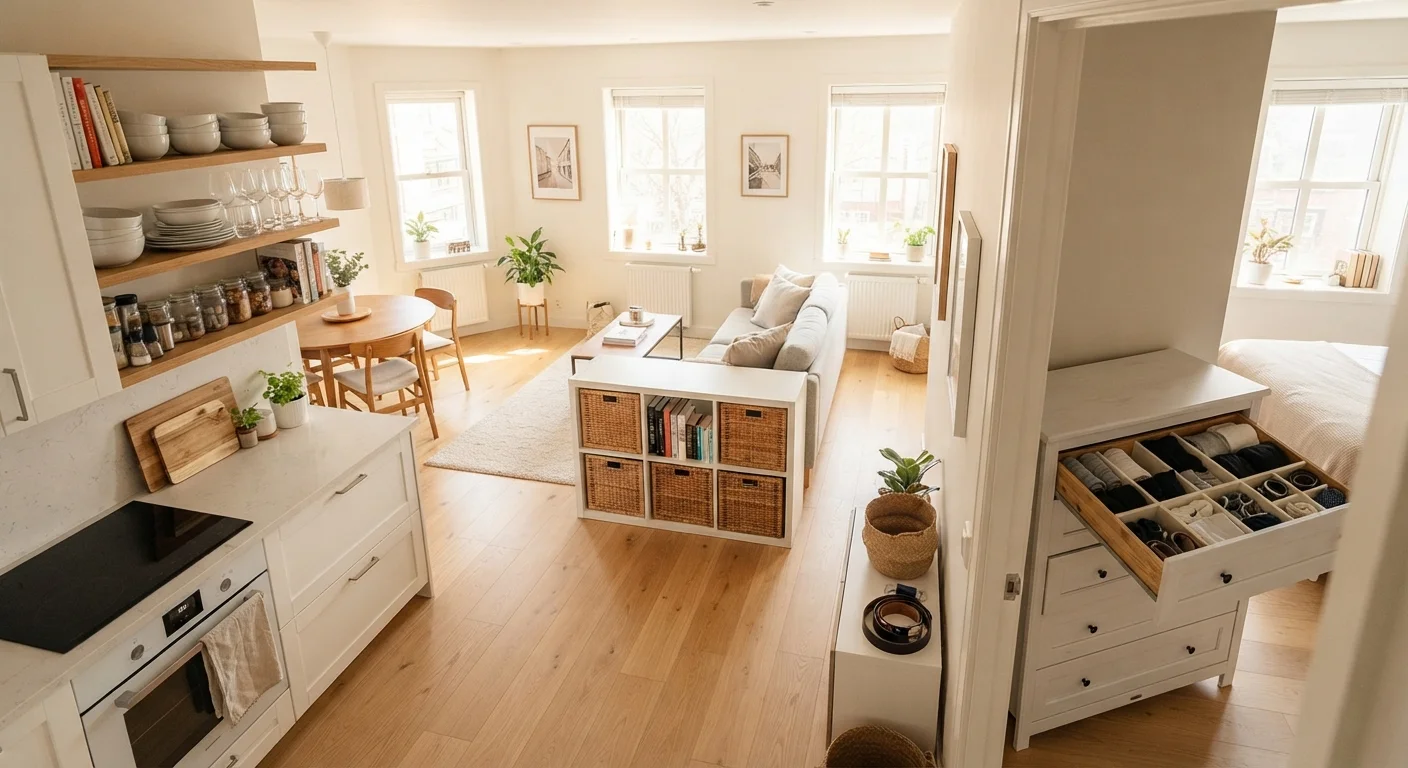
Why Room-Specific Storage Matters
Generic storage advice rarely survives first contact with your actual home. A solution that works beautifully in a bedroom closet may be completely wrong for a damp bathroom or a high-traffic kitchen. Room-specific storage thinking starts with understanding how each space is actually used - what comes in, what goes out, how often, and by whom.
Before rearranging anything, it helps to assess where storage is genuinely breaking down. The room-by-room organization audit is a useful starting point for identifying root causes rather than just rearranging clutter. This reference guide picks up from that diagnostic step and maps the most practical approaches by room type.
Kitchen Storage: Function Over Form
Kitchens demand storage that keeps frequently used items within arm's reach while clearing the decks for food prep. The core principle: store things where you use them. Cooking oils live near the stove; cutting boards near the counter.
- Vertical cabinet space: Most upper cabinets have unused height. Stackable shelf risers or pull-down shelf hardware can double usable space without any permanent modification.
- Drawer inserts: Dividers in deep drawers prevent the "everything pile" problem and make utensils instantly findable.
- Inside cabinet doors: Slim organizers mounted here work well for spice packets, foil boxes, and cleaning supplies.
- Under-sink space: Tension rods can hold spray bottles vertically; stacking drawers work around plumbing curves.
For compact kitchens, the guide to organizing a small kitchen without losing counter space covers strategies that keep surfaces clear even in tight layouts.
Bathroom, Bedroom, and Living Area Strategies
Bathroom
Humidity and limited square footage define bathroom storage challenges. Prioritize moisture-resistant materials - sealed plastics, coated wire, or teak - over wood that will warp. Key approaches:
- Over-toilet shelving: Dead vertical space above the toilet is one of the most underused storage zones in most homes.
- Magnetic strips: Mounted inside a cabinet door, these hold metal tweezers, nail clippers, and bobby pins without taking up shelf space.
- Tiered caddies in the shower: Corner tension-pole caddies use no wall anchors and can hold shampoo, soap, and razors at different heights.
Bedroom
Bedroom storage succeeds when it reduces decision fatigue at the start of the day. Closet systems with adjustable shelves and double-hang rods can often double hanging capacity. Under-bed storage on rolling frames works well for seasonal items or extra linens. Drawer organizers - even simple cardboard dividers - dramatically improve how quickly people find what they need.
Living Areas
Living rooms store a wide variety of items: media, books, kids' toys, blankets, games. Ottoman storage and coffee tables with lift lids handle items that need to be accessible but out of sight. Built-in or freestanding shelving anchors the room visually while providing organized display and concealed storage in equal measure.
For homes where multiple people share organizing responsibilities, the guide to organizing shared spaces addresses how to build systems that work across different habits and standards.
Zone-based layout
Organizing a space by grouping related items and activities together in dedicated areas. Each zone has its own storage cluster, making it easier to find and return items consistently.
Vertical storage
Using wall height - shelves, hooks, mounted organizers - rather than floor or counter space. Especially valuable in small rooms where floor area is limited.
Concealed storage
Storage solutions that hide contents from view, such as lidded ottomans, cabinet doors, or closed bins. Helps a space look tidier without requiring everything to be minimized.
Shelf riser
A small platform placed inside a cabinet or on a shelf to create a second level of storage beneath it. A simple, non-permanent way to increase usable space inside existing cabinetry.
Garage and Utility Spaces
Garages are often where organization systems go to die. The fix is treating garage storage the same way you would any room - by category and frequency of use.
- Wall-mounted track systems: Adjustable rail systems with hooks, bins, and shelves can be reconfigured as storage needs change - without drilling new holes each time.
- Overhead ceiling storage: Ceiling-mounted platforms are well-suited for items used once or twice a year (holiday decorations, camping gear). Ensure any ceiling storage is anchored to structural joists, not just drywall - consult a professional if unsure.
- Labeled clear bins: Opaque bins create mystery; clear bins with labels eliminate it. This is especially important in spaces you don't visit daily.
- Zone-based layout: Group items by activity - gardening, automotive, sports, tools - so each zone has its own storage cluster.
For a broader look at how storage principles tie together across every part of the home, the complete home organization framework provides end-to-end guidance from entryways to attics.
Safety First for Overhead and Wall-Mounted Storage
Any storage system attached to walls or ceilings should be anchored into studs or structural framing - not just drywall. Weight limits on shelving and ceiling platforms are not suggestions; overloading can cause sudden collapse. If you're unsure about your wall or ceiling structure, consult a licensed contractor before installation.