

Key Takeaways
- Organizing every room starts with a consistent framework, not room-specific product purchases.
- High-traffic zones need the most forgiving systems because they absorb daily disorder.
- Private spaces benefit from personalized systems rather than one-size-fits-all solutions.
- Utility spaces require category-based storage with clear, durable labeling.
- Maintenance habits - not a single weekend overhaul - keep a home organized long-term.
The Core Principles Behind Every Organized Room
Before touching a single drawer, it helps to understand the framework that makes organization durable rather than temporary. Three principles apply universally, regardless of room size or household size.
Categorize before you contain. Every item in your home belongs to a category - tools, pantry goods, linens, paperwork. Assign categories first; only then choose bins, shelves, or drawers to hold them. Buying storage before categorizing is the most common reason systems fail within months.
Match frequency to accessibility. Things you reach for daily should be at arm's reach. Seasonal or rarely used items can live on high shelves, in attic boxes, or behind other items. This single rule eliminates most of the friction that makes homes feel chaotic.
Design for the worst-case user. If you live with children, a busy partner, or frequent guests, your system needs to be simple enough for the least organized person in the household to maintain. Overly complex systems collapse under real-life use. See our guide to organizing homes where household members disagree for strategies when standards differ.
Start With an Honest Audit
Before reorganizing any space, spend 15 minutes observing how you actually use it - not how you intend to use it. Note where items pile up naturally and where storage currently breaks down. This prevents you from designing a system around an idealized version of your habits rather than your real ones.
If you're not sure where to begin applying these principles, a room-by-room audit helps identify exactly where storage is breaking down. Our pre-organization audit checklist walks you through that assessment before you rearrange anything.
High-Traffic Zones: Entryways, Kitchens, and Living Areas
High-traffic areas absorb the most daily activity and therefore need the most resilient systems - ones that are easy to use correctly and hard to use wrong.
Entryways
The entryway is where organization either starts or falls apart. A functional entry needs a landing spot for bags, a dedicated hook or cubby per household member, and a single container for mail and keys. Resist the urge to over-design this space; it needs to absorb a rushed morning routine, not require one.
Kitchens
Kitchens work best when organized around cooking workflows rather than aesthetics. Store prep tools near the cutting board, cooking utensils near the stove, and serving pieces near the dining area. Pantry items should be grouped by meal type or ingredient category - grains together, canned goods together - not alphabetically. The storage solutions reference guide covers practical kitchen storage approaches in more detail.
Living Areas
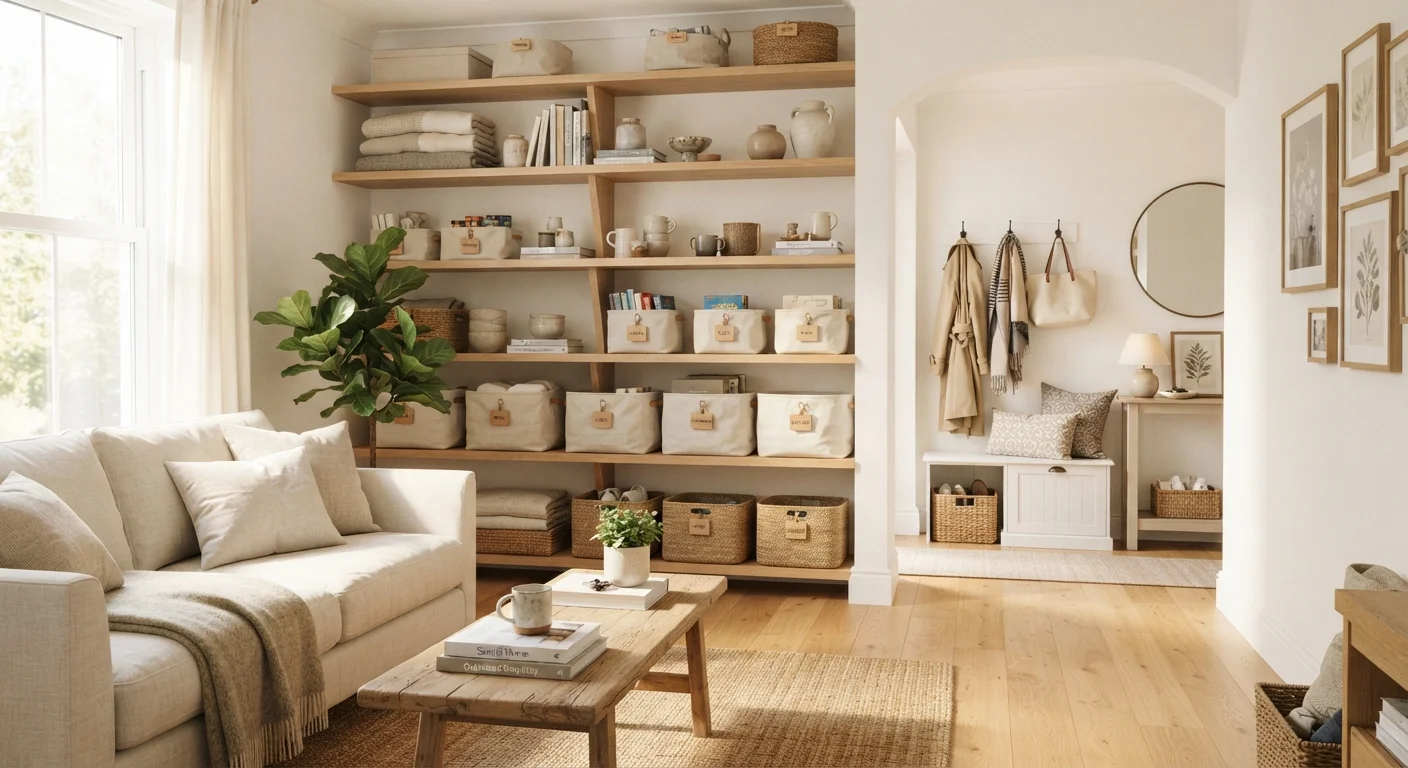
Living rooms accumulate clutter because they serve multiple functions: relaxation, entertainment, hobbies, and sometimes work. Assign each activity a designated container or zone. A basket for remotes and chargers, a tray for coffee table items, a shelf section for books currently in rotation - these small boundaries make tidying a 2-minute task instead of a 20-minute one.
~$10B
U.S. home organization industry annual revenue
The home organization market has grown substantially, reflecting how common disorganization is as a household pain point, according to industry research estimates.
1 hr/day
Average time lost searching for misplaced items
Studies on household productivity suggest people spend significant time daily locating items that lack a consistent home.
Private Spaces: Bedrooms, Closets, and Bathrooms
Private spaces reward personalized systems. Unlike shared areas, these rooms can be organized around one person's habits and preferences without needing to accommodate competing styles.
Bedrooms
The bedroom should support rest above all else. Reduce visual noise by keeping surfaces clear of anything that doesn't serve sleep or morning preparation. A nightstand needs only what you reach for in bed: a lamp, a book, perhaps a glass of water. Everything else belongs in drawers or the closet.
Closets
Closets are the most underutilized storage space in most homes. Start by purging items you no longer wear or use - this step alone often doubles usable space. Then organize by category (tops, bottoms, outerwear) and within each category, by frequency of use. If you're starting from scratch, our practical decluttering starting point lays out the momentum-building process.
Bathrooms
Bathrooms typically have limited storage and high turnover of products. Keep only current-use items accessible; store backstock under the sink or in a linen closet. Group items by person or by routine (morning routine vs. evening routine) to reduce daily hunting.
When organizing a closet, hang items facing the same direction and turn the hanger backward after each use. After a season, anything still backward is a strong candidate for donation.
This passive tracking method removes the guesswork from deciding what to keep and reveals actual usage patterns rather than assumed ones.
In bathrooms with limited counter space, attach a small adhesive hook to the inside of a cabinet door to hold frequently used tools like hair dryers or straighteners.
Inside-door storage is one of the most consistently underused surfaces in a home, and it keeps appliances accessible without cluttering the counter.
Utility and Storage Spaces: Garages, Attics, and Basements
These spaces are often the final destination for items with no assigned home elsewhere - which is exactly why they become disorganized quickly. The solution is treating them with the same categorical discipline applied to living areas.
Garages benefit from wall-mounted storage (pegboards, wall tracks, shelving units) that keeps floors clear and maximizes vertical space. Group by activity zone: yard care, automotive supplies, sports equipment, and hand tools each get their own section.
Attics and basements are appropriate for long-term storage only - seasonal decorations, archived documents, infrequently used equipment. Every box should be labeled on the side (not the top), and a simple inventory list kept near the entrance saves significant time later. Moisture control matters here too; climate considerations affect how you store items and what containers you choose. If you're assessing your attic's infrastructure, our guide to home insulation is a useful companion resource.
Avoid Storing Items Directly on Concrete
Concrete floors in garages, basements, and utility areas can transfer moisture to cardboard boxes, fabric, and wooden items stored directly on them. Use plastic shelving, pallets, or sealed bins with lids to protect long-term storage. Moisture damage is often invisible until it's significant.
Building Maintenance Habits That Stick
Organization is not a one-time event. The homes that stay organized do so because their occupants have developed small, repeatable habits - not because they completed a single weekend overhaul.
Daily resets: Spend five to ten minutes each evening returning items to their assigned places. This prevents accumulation from becoming a project.
Weekly reviews: Once a week, scan high-traffic surfaces and donation boxes. Items that repeatedly migrate to the wrong place signal that their assigned home isn't working - adjust the system, not your expectations of yourself.
Seasonal reassessments: Every season is an opportunity to rotate items in and out of accessible storage and to reassess whether your systems still match your life. Household needs shift - systems should shift with them. Pairing this with routine home upkeep is efficient; our seasonal home maintenance checklist integrates both.
For those weighing whether to work room by room or tackle the whole home by zone, the zone-based vs. room-by-room comparison breaks down when each approach is more effective.
Systems Must Fit Real Life, Not Ideal Life
The most common reason home organization fails is designing a system for the organized person you hope to become rather than the busy person you currently are. If a system requires too many steps to maintain, it will be abandoned. Build in forgiveness - closed storage hides visual clutter, broad categories are easier to sort into than narrow ones, and simpler always outperforms perfect.