

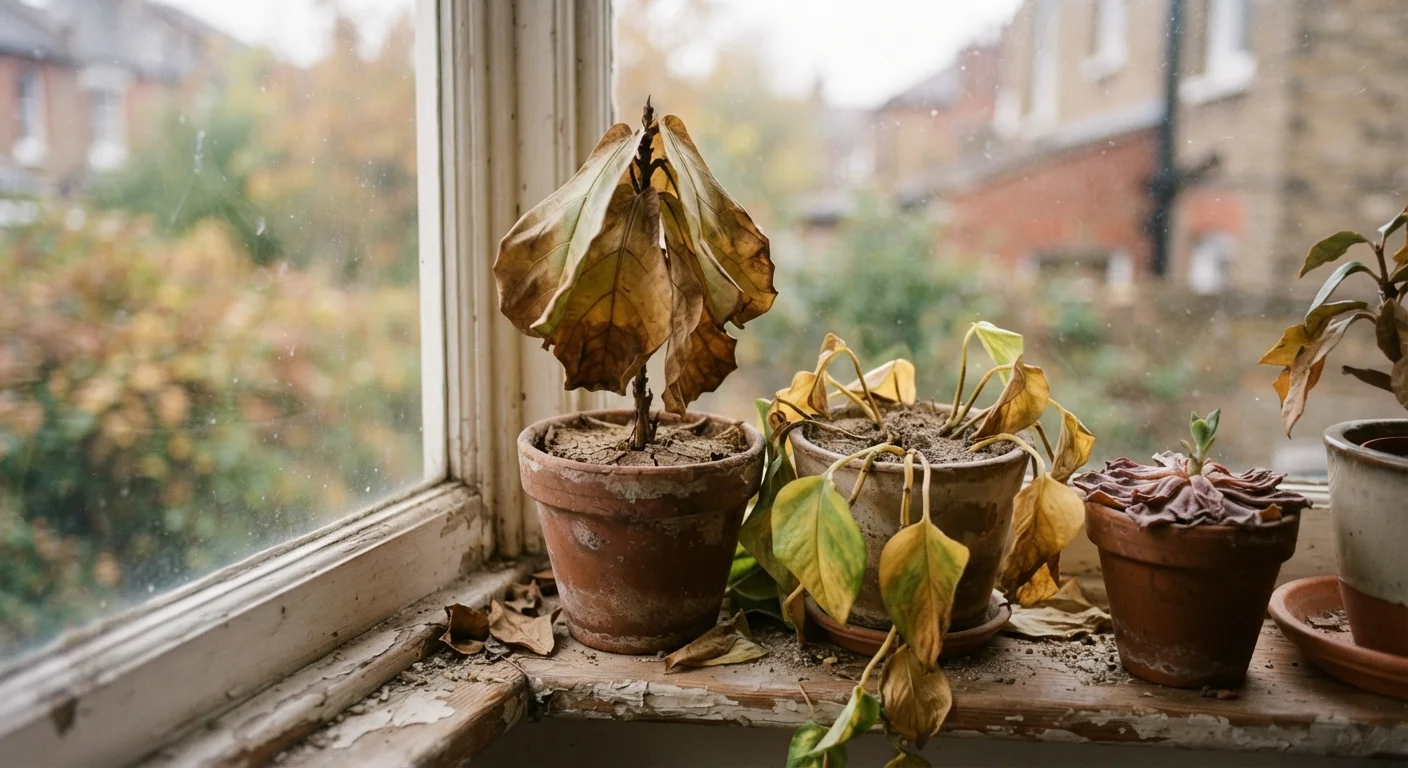
Key Takeaways
- Overwatering is the single most common reason houseplants and garden plants die.
- Poor drainage traps moisture around roots and causes rot even with moderate watering.
- Most plants fail because they're placed in the wrong light conditions for their species.
- Skipping soil preparation sets plants up to struggle from the moment they go in the ground.
- Recognizing early warning signs - yellowing, wilting, leggy growth - lets you correct course quickly.
The Real Reasons Plants Keep Dying
If you've ever watched a plant decline despite your best efforts, you're not alone - and it almost certainly isn't bad luck. The vast majority of plant deaths trace back to a small set of repeatable mistakes that are entirely fixable once you know what to look for. Understanding these patterns is the first step toward becoming a more confident, successful gardener.
Most failures fall into four categories: water management, light, soil quality, and container conditions. Fixing even one of these can dramatically improve outcomes. The sections below walk through the most common errors, why they happen, and exactly what to do differently.
#1
Most common cause of houseplant death
Overwatering is consistently identified by horticulturalists and cooperative extension services as the leading preventable cause of houseplant failure.
~80%
Plant problems linked to water or soil issues
Cooperative extension educators commonly estimate that the large majority of plant health problems originate with watering habits, drainage, or soil conditions rather than pests or disease.
Common Mistakes That Kill Plants - and How to Fix Them
Each of the following mistakes is genuinely common, even among experienced gardeners. The good news: they're all correctable once identified.
Overwatering - giving plants more water than their roots can absorb.
Why it happens: Many gardeners water on a fixed daily schedule rather than checking soil moisture first. The instinct to "do something" when a plant looks stressed often leads to more watering, even when excess moisture is the actual problem.
Planting in containers or beds with inadequate drainage.
Why it happens: Drainage is invisible - it's easy to overlook when setting up a pot or bed. Many decorative containers lack drainage holes, and garden beds in clay-heavy soils drain slowly even when the surface looks fine.
Placing plants in the wrong light conditions for their species.
Why it happens: Light requirements are often underestimated, or plant labels are misread. A room that feels bright to human eyes may provide only a fraction of the light a sun-loving plant needs to survive.
Skipping soil preparation before planting.
Why it happens: Gardeners eager to get plants in the ground often skip the less exciting work of amending and loosening soil. Native soil can look fine on the surface while being compacted, nutrient-poor, or poorly structured underneath.
Ignoring early warning signs until the plant is in serious decline.
Why it happens: Minor leaf yellowing, slight wilting, or a few dropped leaves are easy to dismiss as normal variation. By the time distress becomes obvious, the underlying cause has often been ongoing for weeks.
For a deeper look at how often and how much to water at each growth stage, see our guide to watering timing and depth. And if you've been following advice that doesn't seem to be working, it's worth checking our piece on garden myths that quietly harm plants - some widely repeated tips are simply incorrect.
How to Build Conditions Where Plants Actually Thrive
Avoiding individual mistakes helps, but long-term plant health depends on getting the fundamentals right from the start. That means choosing the right plant for your available light, using appropriate soil and containers, and building a watering routine around your specific plants rather than a generic schedule.
Don't Diagnose by Symptoms Alone
Yellowing leaves, wilting, and stunted growth can each have multiple causes - overwatering and underwatering, for instance, can look nearly identical on the surface. Before adding fertilizer or adjusting watering, check the soil moisture and drainage first. Treating the wrong cause can accelerate decline rather than reverse it.
Soil quality is often the hidden factor behind struggling plants. Compacted, nutrient-depleted, or poorly draining soil handicaps even the most resilient species. Our article on building healthier garden soil over time covers proven approaches for improving structure and drainage across seasons.
Container growers face an additional set of trade-offs - limited root space, faster drying, and restricted nutrient availability among them. For a balanced overview, see Container Gardening: The Trade-Offs of Growing in Pots. Small adjustments to potting mix, drainage holes, and watering frequency can make an outsized difference in a container setting.
Ultimately, plant care is a skill built through observation. When you understand why problems happen, each struggling plant becomes a learning opportunity rather than a frustration - and each recovery builds the confidence to try something more ambitious next season.