

Key Takeaways
- Soil health improves gradually through consistent organic matter additions each season.
- A simple soil test reveals pH and nutrient gaps before you spend money on amendments.
- Covering bare soil with mulch or cover crops prevents erosion and feeds soil biology.
- Minimizing tilling preserves the soil structure and microbial networks plants depend on.
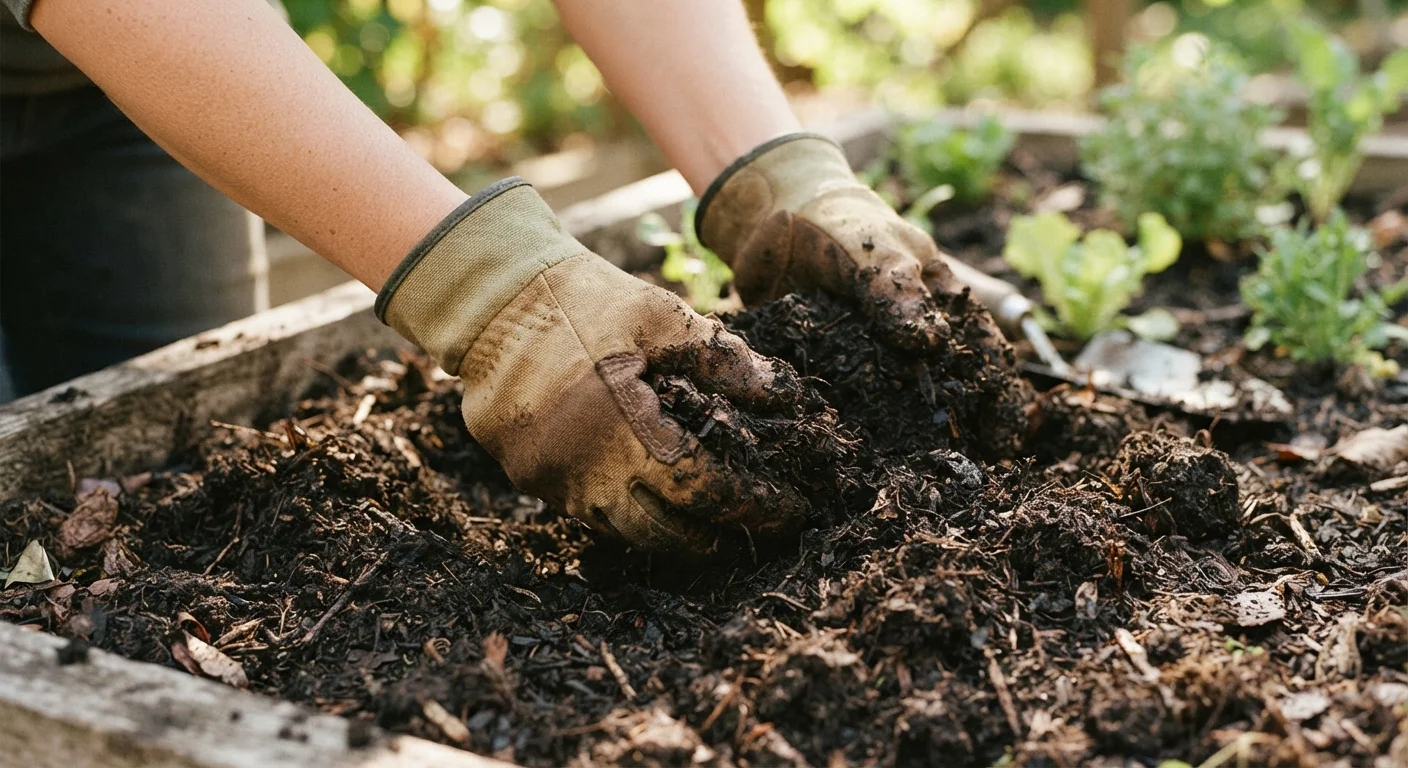
- Compost is the single most versatile soil-building tool available to home gardeners.
Why Soil Quality Is the Starting Point
Most garden problems - poor yields, persistent disease, struggling transplants - trace back to soil that lacks structure, balance, or biological life. Understanding this changes your approach: instead of chasing symptoms with quick fixes, you start building the conditions that allow plants to thrive on their own.
If you're planning your first garden or auditing an existing one, the pre-season garden readiness checklist is a practical companion to the soil work described here. And if you're completely new to growing, starting a garden from zero covers the full setup process step by step.
Healthy soil is dark, loose, and alive - it smells faintly earthy because of microbial activity. Getting there takes consistent seasonal effort, not a single dramatic intervention.
Core Practices That Build Soil Over Time
The following practices work together as a system. Some deliver results within a single season; others compound across years. Used consistently, they gradually convert average garden soil into a productive, resilient growing medium.
Test your soil before adding any amendments
Adding fertilizer or lime without knowing your soil's pH and nutrient levels is guesswork that can create imbalances. A basic soil test - available through many cooperative extension services - reveals exactly what's missing and what's already sufficient, saving you time and money.
Add compost to your beds every season
Compost feeds soil microbes, improves drainage in clay soils, helps sandy soils retain moisture, and slowly releases nutrients plants need. It is the closest thing to a universal soil amendment, and its benefits accumulate with repeated applications.
Plant cover crops in the off-season
Cover crops - such as winter rye, clover, or buckwheat - protect bare soil from erosion, suppress weeds, and add organic matter when turned under in spring. Legume cover crops like clover also fix atmospheric nitrogen, reducing the need for added fertilizer.
Minimize tilling to protect soil structure
Frequent deep tilling disrupts fungal networks (mycorrhizae) that help plants absorb water and nutrients, breaks apart soil aggregates, and can bring weed seeds to the surface. Limiting tillage to light surface mixing preserves the layered structure healthy soil naturally develops.
Keep soil covered with mulch between plants
Bare soil loses moisture quickly, erodes under rain, and is rapidly colonized by weeds. A two- to four-inch layer of organic mulch - such as straw, wood chips, or shredded leaves - moderates soil temperature, retains moisture, and breaks down slowly to feed soil organisms.
Soil Building Takes More Than One Season
Significant improvements in soil structure and fertility typically develop over two to three growing seasons of consistent care. Don't be discouraged by slow early results - each amendment and cover crop cycle compounds over time. Think of it as a long-term investment in your garden's productivity rather than a quick fix.
Putting It Into Practice This Season
You don't need to implement every technique at once. Start with the highest-impact actions and layer in others as your routine develops.
One useful frame: soil building parallels the idea behind building sustainable nutrition habits - small, consistent inputs accumulate into lasting improvement far more reliably than occasional intensive efforts.
If you're weighing raised beds versus working directly in the ground, soil amendment strategies differ meaningfully between the two. The article on raised beds vs. in-ground planting explains those trade-offs clearly. Once your soil is in better shape, watering well becomes the next lever for healthier roots and stronger yields.
“The soil is the great connector of lives, the source and destination of all. It is the healer and restorer and resurrector, by which disease passes into health, age into youth, death into life.”
— Wendell Berry, Author and farmer, from 'The Unsettling of America'