

Key Takeaways
- Mental health conditions can directly worsen physical symptoms, and vice versa - this relationship is bidirectional.
- Chronic physical illness significantly raises the risk of developing depression and anxiety disorders.
- Stress hormones like cortisol create measurable changes in cardiovascular, immune, and metabolic function.
- Treating one dimension of health while ignoring the other often produces incomplete outcomes.
- Integrated care approaches that address both dimensions simultaneously show stronger results in research.
Our Verdict
Mental and physical health are deeply intertwined - each amplifies or undermines the other through shared biological pathways, including the stress response, immune function, and inflammation. Viewing them as separate systems leads to gaps in care; recognizing their connection leads to more complete, effective health management. Readers who suspect one dimension is affecting the other are encouraged to raise this with a qualified healthcare provider.
| Best for | Recommended |
|---|---|
| Those managing a chronic physical illness | Integrated care addressing both physical and mental health |
| Those experiencing unexplained physical symptoms alongside low mood | Mental health screening alongside physical assessment |
| Those seeking to maintain general wellbeing proactively | Lifestyle strategies that support both dimensions simultaneously |
The Mind-Body Connection Is Not Metaphor - It's Biology
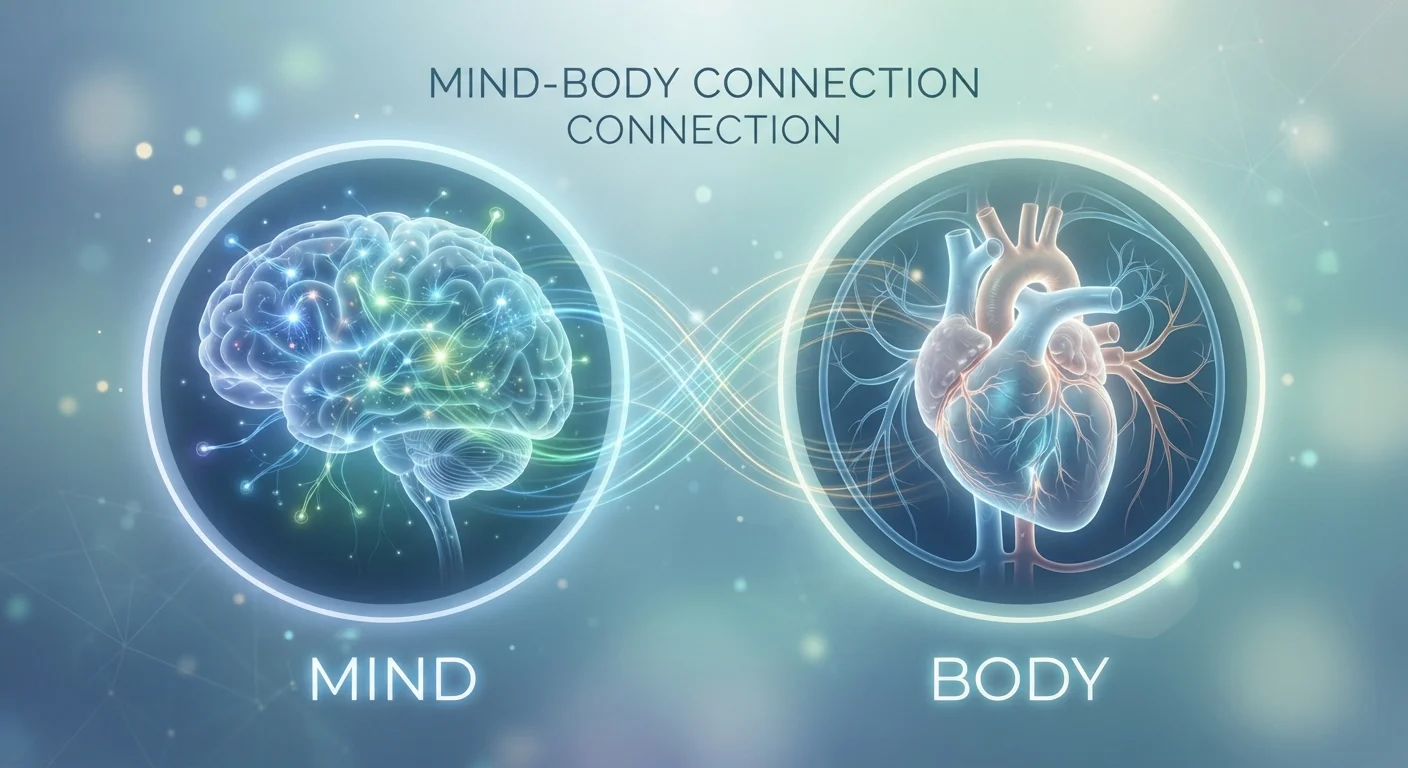
For much of modern medical history, mental and physical health were treated as distinct domains. Today, research in psychosomatic medicine - the study of how psychological factors influence physical health - has firmly established that the two systems are inseparable. The brain and body communicate constantly through hormonal signals, the nervous system, and immune pathways.
One of the clearest examples is the hypothalamic-pituitary-adrenal (HPA) axis - the body's central stress-response system. When psychological stress activates this pathway, it triggers the release of cortisol and adrenaline, hormones that prepare the body to respond to threat. In short bursts, this is adaptive. Chronically elevated, it accelerates cardiovascular wear, disrupts blood sugar regulation, and suppresses immune function. See what stress actually does to your body and brain for a deeper look at these mechanisms.
Inflammation is another shared pathway. Psychological distress raises circulating inflammatory markers - the same markers implicated in heart disease, type 2 diabetes, and autoimmune conditions. Inflammation underlies many chronic conditions, and mental health stress can quietly amplify it.
When Physical Illness Affects Mental Health
Living with a chronic physical condition places sustained demands on a person's psychological resources - managing symptoms, navigating healthcare systems, adjusting daily routines, and confronting uncertainty about the future. It is not surprising, then, that depression and anxiety occur at considerably higher rates among people with chronic illnesses than in the general population.
Research published in journals such as JAMA Internal Medicine and reviewed by the National Institute of Mental Health consistently finds that people with conditions like heart disease, diabetes, and cancer face substantially elevated risk of clinically significant depression. Importantly, this is not simply a psychological response to difficult news - it also reflects shared biological mechanisms. For instance, inflammatory cytokines (proteins the immune system uses to signal inflammation) can directly affect neurotransmitter systems involved in mood regulation.
| Direction of Influence | Primary Mechanisms | Common Examples | Clinical Implication | |
|---|---|---|---|---|
| Mental → Physical | Mental → Physical | HPA axis, cortisol, inflammation, behavioral changes | Depression worsening heart disease risk; anxiety causing GI symptoms | Screen for physical health markers in mental health patients |
| Physical → Mental | Physical → Mental | Inflammatory cytokines affecting mood, pain burden, life disruption | Chronic illness raising depression and anxiety rates | Integrate mental health screening in chronic disease management |
| Shared Pathways | Bidirectional | Sleep disruption, inflammation, immune dysregulation | Poor sleep worsening both mood disorders and metabolic risk | Address lifestyle factors that influence both systems |
Understanding the distinction between acute and chronic conditions is also relevant here. Psychological burden tends to escalate with duration and complexity of illness. Chronic and acute conditions require different care approaches - and the mental health implications differ accordingly.
When Mental Health Affects Physical Health
The reverse pathway is equally well documented. Depression, for example, is associated with reduced motivation to engage in health-protective behaviors - regular movement, consistent nutrition, medication adherence, and sleep hygiene. Over time, these changes compound into measurable physical risk. People with untreated depression have higher rates of cardiovascular events, slower surgical recovery, and more frequent hospitalizations.
Anxiety disorders can produce pronounced physical symptoms - chest tightness, gastrointestinal disturbance, chronic muscle tension, and disrupted sleep - that may be mistaken for, or co-occur with, organic physical conditions. This overlap is one reason some conditions are commonly mistaken for each other in clinical assessment.
Sleep is a particularly important mediating factor. Poor mental health disrupts sleep architecture, and disrupted sleep worsens both mood and physical health markers. Poor sleep interacts with many existing health conditions, creating feedback loops that are difficult to break without addressing both dimensions.
When to Raise Both Dimensions With Your Provider
If you are experiencing persistent physical symptoms alongside changes in mood, energy, or sleep - or managing a chronic physical condition and noticing increased anxiety or low mood - it is worth raising both with your healthcare provider explicitly. Many providers focus on the presenting complaint; describing the full picture helps ensure neither dimension is overlooked. Asking "Could my mental health be affecting this, or vice versa?" is a reasonable and clinically relevant question.
Practical Implications: What Integrated Care Looks Like
Recognizing the bidirectional relationship between mental and physical health has direct implications for how people approach their own care. A few evidence-informed principles are worth noting.
- Mental health screening matters in physical care settings. Patients managing chronic physical conditions benefit from routine assessment of mood and psychological wellbeing - not as an afterthought, but as a standard component of care.
- Physical health factors belong in mental health conversations. Sleep quality, physical activity levels, nutritional patterns, and inflammatory conditions are all relevant context when discussing mood or anxiety with a provider. Building informed conversations with your healthcare provider helps ensure both dimensions are addressed.
- Social connection supports both. Robust evidence links social relationships to mental health resilience, and social isolation is itself a risk factor for physical health decline. Social connection functions as a genuine mental health resource with downstream physical benefits.
For those unsure where to start, mental wellness resources and everyday nutrition guidance both address lifestyle factors that support the whole system. If you are managing symptoms affecting either your physical or mental health, consult a qualified healthcare professional who can assess your individual situation.
This article is for general informational and educational purposes only and does not constitute medical advice. Always consult a qualified healthcare provider for guidance about your personal health circumstances.