

Key Takeaways
- Stress triggers a hormonal cascade involving cortisol and adrenaline that affects nearly every organ system.
- Short-term stress is a normal, adaptive response; chronic stress is where health risks accumulate.
- Elevated cortisol over time disrupts sleep, immunity, digestion, and cardiovascular function.
- The brain's structure can be physically altered by prolonged stress exposure.
- Recognizing stress patterns early is a meaningful part of protecting long-term health.
The Stress Response
The stress response is the body's built-in alarm system - a coordinated set of physical and hormonal changes triggered when the brain perceives a threat. It evolved to help humans react quickly to danger, but it can become harmful when activated repeatedly or without resolution. Understanding this system is the first step toward managing it more effectively.
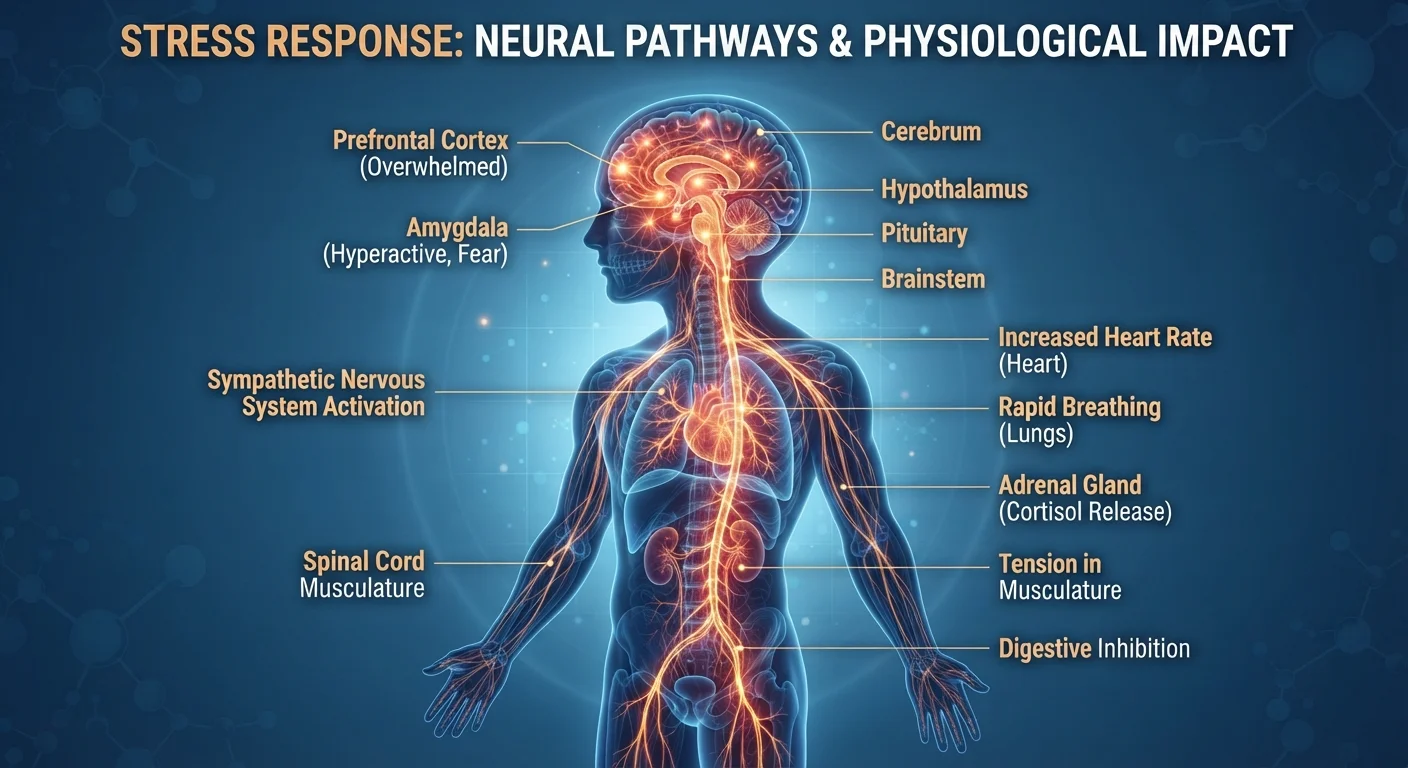
The stress response is primarily governed by the hypothalamic-pituitary-adrenal (HPA) axis, which regulates the release of cortisol and other stress hormones from the adrenal glands.
The Alarm System Your Brain Never Fully Turns Off
When your brain detects a threat - whether it's a swerving car or a looming deadline - it activates the hypothalamic-pituitary-adrenal (HPA) axis within milliseconds. The hypothalamus signals the adrenal glands to flood the bloodstream with adrenaline and cortisol. Heart rate surges, muscles tense, and digestion slows. Your body is preparing to fight or flee.
This response evolved for genuine physical threats. The problem is that the modern brain doesn't reliably distinguish between a predator and a difficult email. The same cascade fires either way.
Short bursts of this response are not only harmless - they're adaptive. They sharpen focus and mobilize energy. The issue is when the alarm never fully resets.
“Stress is not simply a psychological experience - it is a whole-body biological event with measurable effects on the immune system, cardiovascular system, and brain structure.”
— American Psychological Association, Leading professional organization in psychology research and public health education
What Cortisol Does - and What Happens When It Stays High
Cortisol, often called the primary stress hormone, serves important functions: it regulates blood sugar, manages inflammation, and helps the body manage energy demands. In small doses, it's useful. Chronically elevated, it becomes disruptive.
When cortisol stays elevated for weeks or months, research from the National Institutes of Health and other institutions has linked it to:
- Immune suppression: The body becomes more vulnerable to illness and slower to heal.
- Cardiovascular strain: Sustained high blood pressure increases wear on artery walls.
- Metabolic changes: Elevated cortisol is associated with increased appetite, particularly for calorie-dense foods, and shifts in how the body stores fat.
- Sleep disruption: Cortisol follows a natural diurnal (daily) rhythm - high in the morning, low at night. Chronic stress distorts this rhythm, making it harder to fall and stay asleep.
The relationship between stress and sleep runs in both directions - poor sleep raises cortisol, which makes sleep worse. This cycle is explored in detail in our article on sleep and mental health. For a broader look at how disrupted sleep compounds other health conditions, see the sleep-health connection.
77%
Adults reporting physical symptoms from stress
According to APA Stress in America survey data, a large majority of U.S. adults regularly experience physical symptoms they attribute to stress.
2-3×
Increased cardiovascular risk with chronic stress
Research published in cardiology literature suggests chronically stressed individuals may face significantly elevated risks for heart-related events compared to those with lower stress levels.
~30%
Reduction in hippocampal volume linked to chronic stress
Neuroimaging studies have observed meaningful hippocampal shrinkage in individuals with long-term stress-related conditions such as PTSD, according to research cited by the NIH.
How Stress Reshapes the Brain
Stress doesn't just affect the body - it physically alters brain structure over time. Neuroimaging studies have shown that chronic stress can reduce volume in the prefrontal cortex (responsible for decision-making, emotional regulation, and planning) and the hippocampus (central to memory and learning). It also tends to enlarge the amygdala, the region that processes fear and threat - making the brain more reactive to stress over time.
This creates a self-reinforcing loop: a stressed brain becomes more sensitive to stressors, less capable of rational response, and more prone to anxiety and low mood. This bidirectional relationship between mental and physical health is examined further in our overview of how mental and physical health shape each other.
It's also worth noting that these changes are not fixed. The brain retains significant plasticity - the capacity to remodel itself - particularly when stress is addressed early and consistently.
Brain Changes Are Often Reversible
Research suggests that stress-related brain changes - including hippocampal shrinkage - can partially or fully reverse with appropriate intervention, including therapy, physical activity, and improved sleep. Early action matters, but it's never too late to support brain health. Speak with a healthcare provider about options that may be appropriate for your situation.
When Stress Becomes Something More
There's an important distinction between everyday stress and clinical anxiety or other stress-related disorders. Stress is typically tied to an identifiable cause and resolves when that cause changes. When the response persists disproportionately - regardless of circumstances - it may warrant clinical attention.
Understanding where that line sits can help people seek support at the right time. Our article on anxiety disorder vs. everyday worry outlines the key clinical distinctions clearly.
It's also worth recognizing that some common ways people try to cope with stress can inadvertently make it worse - from avoidance to over-scheduling. Our piece on approaches to stress that tend to backfire examines these patterns with the evidence behind them.
This article is for general informational and educational purposes only and is not a substitute for professional medical advice, diagnosis, or treatment. Always consult a qualified healthcare provider with questions about your health or a medical condition.