

Key Takeaways
- Acute conditions arise suddenly and typically resolve within days or weeks with appropriate treatment.
- Chronic conditions persist for three months or longer and generally require ongoing management rather than a cure.
- The distinction shapes everything from care setting and specialist involvement to lifestyle adjustments and medication duration.
- Some acute events - like a heart attack - can trigger or accelerate an underlying chronic condition.
- Recognising which type of condition you're dealing with helps you ask better questions and engage more effectively with your care team.
Option A
Acute Conditions
The sudden, time-limited health event requiring immediate response.
Best for: Best understood through rapid, targeted interventions aimed at resolving a specific, short-term episode.
Option B
Chronic Conditions
The ongoing, long-term health challenge requiring sustained management.
Best for: Best managed through continuous, coordinated care strategies designed to minimize symptoms and preserve quality of life over time.
If you're experiencing a sudden onset of severe symptoms
Acute Conditions framework
Acute care prioritises rapid diagnosis and targeted short-term treatment. Seeking prompt medical attention is essential to resolving the episode safely.
If symptoms have persisted for three months or more
Chronic Conditions framework
Long-term management, regular monitoring, and lifestyle adaptation become central. Building a sustained relationship with a care team yields better outcomes.
If you're navigating a condition that began acutely but hasn't resolved
Chronic Conditions framework
Conditions that outlast the typical acute window often require reclassification and a shift toward ongoing management strategies rather than episode-based treatment.
What Acute and Chronic Actually Mean
In clinical medicine, the terms acute and chronic describe the duration and trajectory of a condition - not its severity. An acute condition appears suddenly and is generally expected to resolve within days to weeks. A broken wrist, a strep throat infection, and an appendicitis attack are all acute: they have a clear beginning and a definable end point. A chronic condition, by contrast, persists for three months or longer - and many last a lifetime. Diabetes, asthma, and hypertension (high blood pressure) fall into this category.
The confusion arises because acuity and seriousness are often conflated. A common cold is acute and mild. A heart attack is acute and life-threatening. Meanwhile, some chronic conditions are well-controlled with minimal daily impact, while others are profoundly disabling. Duration and trajectory are the defining variables - not how bad something feels in the moment. For readers who want to understand why certain symptoms get diagnosed differently than expected, our article on conditions commonly mistaken for each other offers useful clinical context.
How Each Type Shapes Your Care
The acute versus chronic distinction isn't just academic - it directly determines the setting, goals, and providers involved in your treatment.
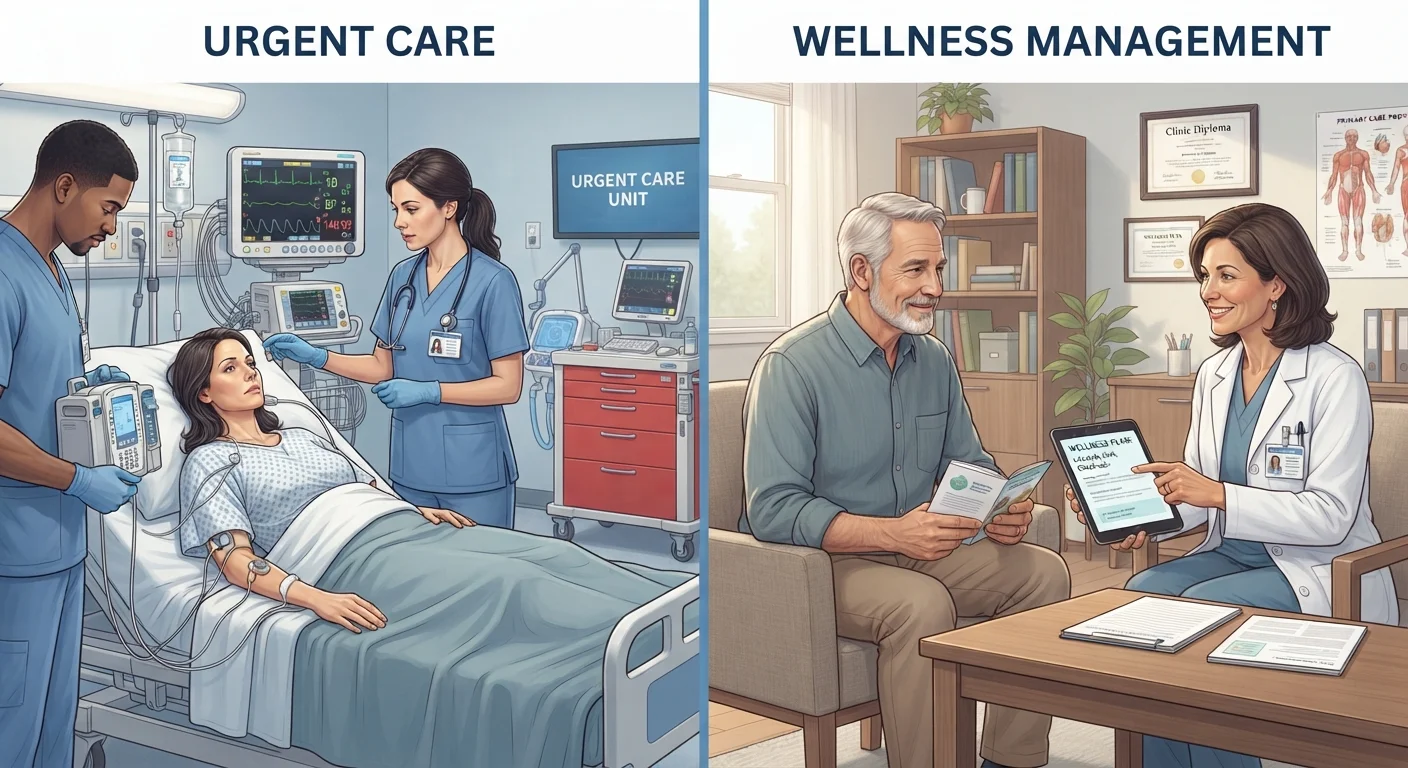
For acute conditions, care is typically episodic and curative. The goal is to resolve the immediate problem: treat the infection, immobilise the fracture, manage the allergic reaction. Emergency departments, urgent care clinics, and short-term specialist consultations are common touchpoints. Medication courses are usually finite, and follow-up ends once recovery is confirmed.
Chronic condition management works differently. The goal shifts from cure to control and quality of life. Care becomes longitudinal - built around regular check-ins, monitoring of biomarkers (measurable biological indicators, like blood glucose or blood pressure), and gradual adjustment of treatment plans. Primary care physicians, specialists, dietitians, and mental health professionals may all be part of a coordinated team. Medications are often ongoing, and self-management skills become as important as clinical interventions.
| Criterion | Acute Conditions | Chronic Conditions |
|---|---|---|
| Onset | Sudden or rapid | Gradual or insidious |
| Duration | Days to weeks | Three months or longer |
| Primary goal of care | Cure or full resolution | Control, management, quality of life |
| Typical care setting | ED, urgent care, short-term clinic | Primary care, specialist, ongoing outpatient |
| Medication use | Finite course | Often ongoing, adjusted over time |
| Patient role | Follow short-term instructions | Active self-management and monitoring |
| Examples | Fracture, strep throat, appendicitis | Diabetes, hypertension, asthma |
It's also worth noting the relationship between these categories. An acute event - a severe asthma attack, a diabetic ketoacidosis episode - can occur within a chronic condition, requiring immediate intervention before returning to long-term management. And some conditions that begin acutely never fully resolve, ultimately becoming chronic. Understanding this overlap helps patients ask better questions of their care team when a diagnosis isn't following the expected trajectory.
The Mind-Body Dimension
Chronic conditions carry a psychological burden that acute conditions typically do not. Living with a long-term diagnosis can affect mood, identity, and relationships - and the relationship between physical and mental health is genuinely bidirectional. Chronic pain conditions, for example, are associated with elevated rates of depression and anxiety, while poorly managed mental health can worsen physical symptoms. Our editorial on how mental and physical health shape each other explores this connection in depth.
Mental health conditions themselves follow the same acute-chronic framework. A grief response or situational anxiety episode may be acute. Generalised anxiety disorder or major depressive disorder, by contrast, are chronic - managed over years, not weeks. Understanding where everyday worry ends and an anxiety disorder begins is one practical example of why the distinction matters clinically.
When an Acute Event Becomes a Chronic Condition
Some conditions blur the line between acute and chronic. Post-COVID conditions, Lyme disease sequelae, and certain post-surgical complications may begin as acute events but persist well beyond the expected recovery window. If symptoms continue after the typical resolution period for an acute diagnosis, it's worth revisiting the classification with your provider. Reclassifying the condition often unlocks different management pathways and specialist referrals.
This article is intended for general health education and does not constitute medical advice. If you are experiencing symptoms - acute or chronic - please consult a qualified healthcare professional for personalised assessment and guidance.