

Key Takeaways
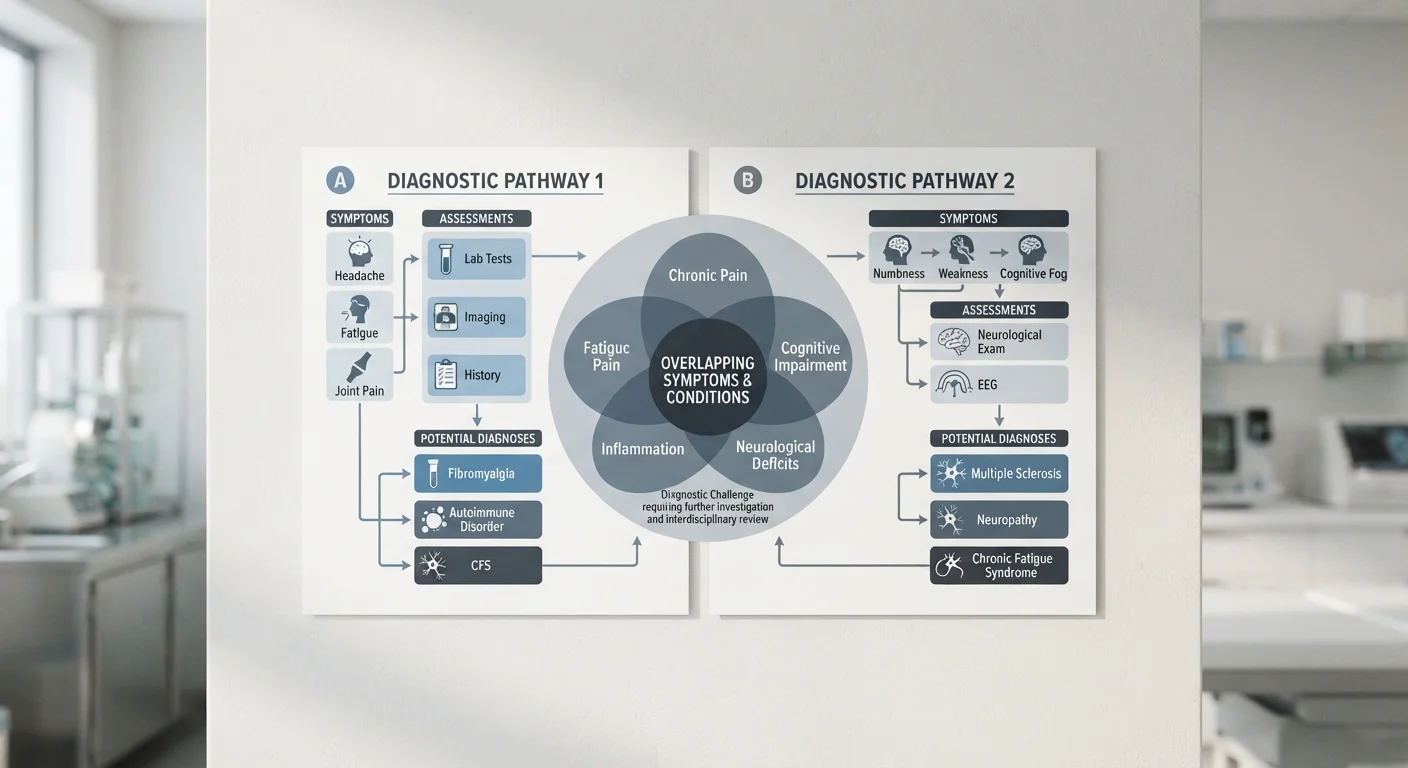
- Overlapping symptoms make several common conditions genuinely difficult to distinguish without clinical testing.
- A correct diagnosis often depends on specific tests, timing patterns, or specialist evaluation - not symptoms alone.
- Misdiagnosis can delay appropriate treatment, making it important to revisit a diagnosis if symptoms persist.
- Several confused condition pairs involve both mental and physical components, adding complexity to assessment.
- Always consult a qualified healthcare professional if you suspect your diagnosis may not fully explain your symptoms.
Why Symptom Overlap Creates Diagnostic Confusion
Medicine is rarely as tidy as textbooks suggest. Many conditions produce overlapping symptoms - fatigue, joint pain, brain fog, shortness of breath - that could point in multiple directions simultaneously. A clinician's job is to use patient history, physical examination, lab work, and imaging to narrow the field. But for the patient trying to understand what's happening in their own body, this overlap can be disorienting and frustrating.
Understanding which conditions are commonly confused - and why - can help you ask better questions and engage more productively with your care team. As our guide to talking with your doctor after a new diagnosis explains, knowing the right terminology makes those conversations far more effective.
The pairs below represent some of the most frequently confused condition groups in primary and specialist care. This is general educational information, not a diagnostic tool - if you're concerned about your own health, speak with a qualified clinician.
Hypothyroidism vs. Depression
Both hypothyroidism (an underactive thyroid gland) and clinical depression can present with persistent fatigue, low mood, weight gain, slowed thinking, and difficulty concentrating. Because the psychological symptoms dominate in many people, hypothyroidism is sometimes initially assessed as a mood disorder - and vice versa.
The key differentiator is a simple blood test measuring thyroid-stimulating hormone (TSH) levels. Elevated TSH is a reliable indicator of hypothyroidism. Clinicians typically screen for thyroid dysfunction when depression symptoms don't respond to standard treatment, or when physical signs such as cold intolerance, constipation, or dry skin are also present.
Elevated TSH levels distinguish hypothyroidism from depression - a distinction that a straightforward blood test can clarify.
Irritable Bowel Syndrome (IBS) vs. Inflammatory Bowel Disease (IBD)
These two conditions are often conflated by patients - and the abbreviations don't help. IBS is a functional gastrointestinal disorder, meaning the gut appears structurally normal but doesn't function properly. IBD - which includes Crohn's disease and ulcerative colitis - involves measurable inflammation and can cause structural damage to the digestive tract over time.
Both cause abdominal pain, bloating, and altered bowel habits. However, IBD more commonly produces rectal bleeding, unintentional weight loss, fever, and elevated inflammatory markers in blood tests. Definitive diagnosis of IBD typically requires colonoscopy and tissue biopsy. IBS is generally diagnosed based on symptom criteria after ruling out structural pathology. Inflammation's role in many chronic conditions is an important backdrop for understanding the IBD side of this pair.
IBS involves no structural damage; IBD causes measurable inflammation - a crucial difference with major treatment implications.
Anxiety Disorder vs. Cardiac Arrhythmia
Palpitations, racing heart, chest tightness, shortness of breath, and dizziness can be symptoms of both a panic attack and a cardiac arrhythmia (an irregular heart rhythm). Because anxiety is common and arrhythmias are less so, clinicians sometimes reassure patients without fully ruling out a cardiac cause - particularly in younger adults.
An electrocardiogram (ECG) can detect many arrhythmias, though some require longer-term monitoring with a Holter monitor to catch intermittent abnormalities. Clinicians look for whether symptoms occur only in high-stress contexts, whether there is a family history of cardiac disease, and whether the episode is triggered by exertion. A thorough cardiac workup is warranted whenever symptoms are recurrent or severe.
Palpitations and chest tightness overlap in both anxiety and arrhythmia - cardiac causes should not be dismissed without testing.
Lupus vs. Rheumatoid Arthritis
Both lupus (systemic lupus erythematosus, or SLE) and rheumatoid arthritis (RA) are autoimmune conditions that cause joint pain, fatigue, and inflammation. They disproportionately affect women and often emerge in early to middle adulthood. The symptom overlap can delay a definitive diagnosis by months or years.
Key distinguishing features include the pattern of joint involvement, the presence of a characteristic butterfly-shaped facial rash in lupus, and specific blood markers. Lupus tends to involve multiple organ systems - kidneys, skin, lungs - while RA is more focused on joint destruction. Anti-CCP antibodies are relatively specific to RA; anti-dsDNA and anti-Smith antibodies are more characteristic of lupus. Our overview of autoimmune conditions covers the broader immune system mechanisms behind both.
Specific autoantibody blood tests help clinicians distinguish lupus from rheumatoid arthritis despite shared inflammatory symptoms.
Type 2 Diabetes vs. Hypothyroidism (Again) vs. Chronic Fatigue Syndrome
Chronic fatigue, cognitive slowing (sometimes called 'brain fog'), weight changes, and mood disturbances appear in all three of these conditions - making initial assessment particularly challenging. Type 2 diabetes is identified via fasting blood glucose or HbA1c testing. Hypothyroidism is caught via TSH levels. Chronic Fatigue Syndrome (ME/CFS), however, has no single confirmatory biomarker and is diagnosed clinically based on symptom criteria after excluding other causes.
ME/CFS is notably underdiagnosed, partly because its symptoms are easily attributed to other conditions. Post-exertional malaise - a worsening of symptoms after physical or mental exertion - is considered one of its hallmark features and can help distinguish it from diabetes-related fatigue or thyroid-related slowing. Understanding common gaps in long-term condition self-management is especially relevant for conditions like ME/CFS where monitoring is largely patient-led.
Post-exertional malaise is a hallmark feature of ME/CFS that helps differentiate it from other fatigue-heavy conditions.
ADHD vs. Bipolar Disorder
Attention-deficit/hyperactivity disorder (ADHD) and bipolar disorder share impulsivity, distractibility, emotional dysregulation, and disrupted sleep patterns. Both can interfere significantly with daily functioning, and both can go undiagnosed well into adulthood. The conditions also commonly co-occur, which complicates assessment further.
Bipolar disorder is distinguished by distinct mood episodes - periods of mania or hypomania (elevated, expansive, or irritable mood) and depression - whereas ADHD symptoms are typically chronic and consistent rather than episodic. A thorough psychiatric history and mood charting over time are central to distinguishing between them. Treatment pathways differ substantially: some medications used for bipolar disorder may worsen ADHD, and stimulant medications used in ADHD can, in some cases, affect mood stability in bipolar disorder.
Bipolar disorder is episodic by nature; ADHD symptoms are persistent - this temporal pattern is a key diagnostic signal.
What to Do When You're Uncertain About a Diagnosis
If your symptoms don't seem to fit neatly - or if a treatment isn't producing the expected results - that's worth raising with your provider. A second opinion is always a reasonable request. Conditions that are misdiagnosed early sometimes become clearer over time as the symptom picture develops or specific test results emerge.
Keep a Symptom Journal Before Appointments
Recording when symptoms occur, how long they last, what triggers or relieves them, and how they affect daily functioning gives your clinician valuable pattern data. Many conditions that mimic each other have distinct timing or trigger signatures that only become visible over days or weeks of careful observation.
For those managing ongoing conditions, questions worth asking your care team can help structure your next appointment productively. And because physical and mental health are closely intertwined - as explored in our piece on how mental and physical health shape each other - symptom patterns that cross both domains deserve careful, holistic evaluation.
This article is for general informational purposes only and does not constitute medical advice. Always consult a qualified healthcare professional for diagnosis, treatment, or any concerns about your personal health.