

Key Takeaways
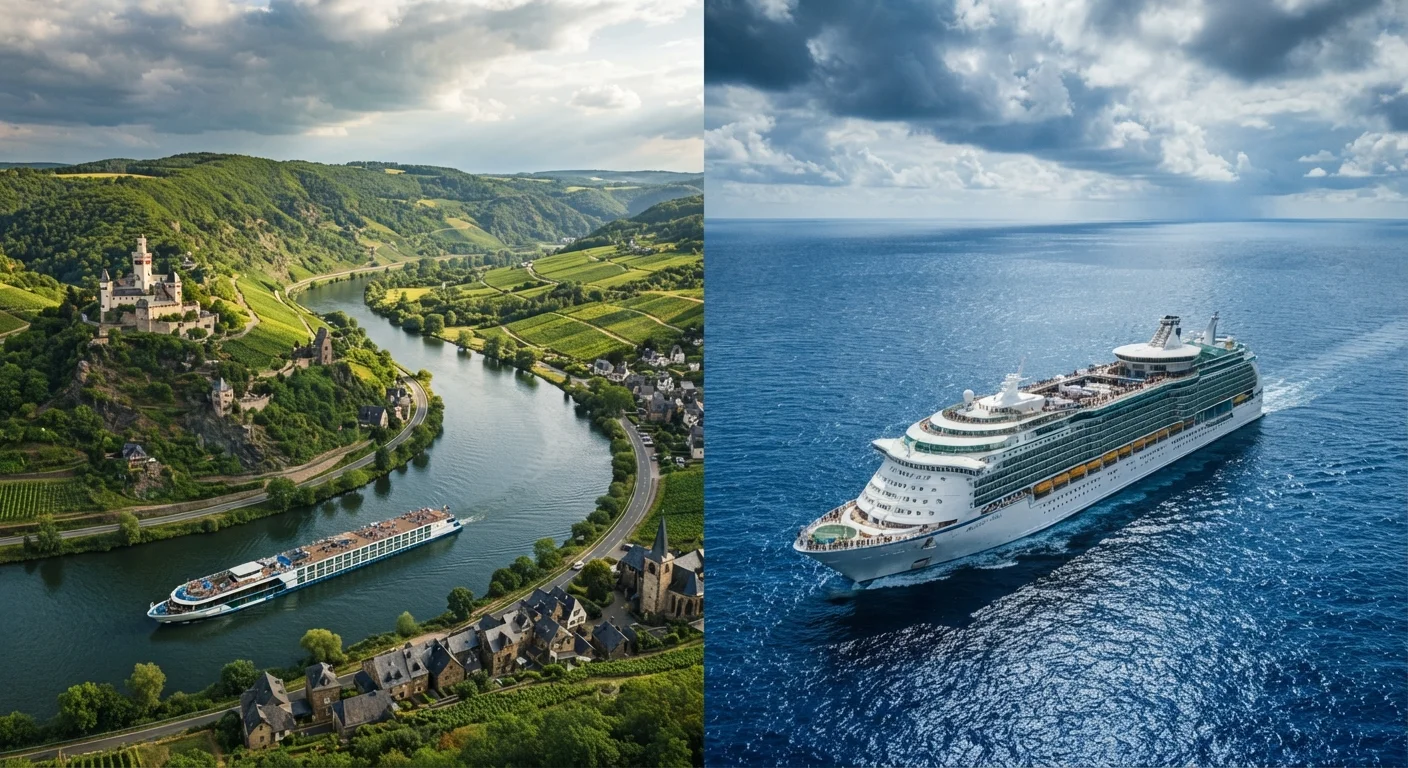
- River cruise ships carry 100–200 passengers; ocean ships can carry thousands, creating very different onboard atmospheres.
- River cruises dock in city centers; ocean ships typically use large commercial ports outside of town.
- Ocean cruises offer far more onboard amenities — pools, shows, specialty dining — while river cruises emphasize shore-side experiences.
- River itineraries follow a fixed geographic corridor; ocean itineraries can span multiple continents.
- Motion sickness is far less common on rivers due to calmer waters and smaller vessels.
- Pricing structures differ significantly — river cruises often include more excursions and meals in base fares.
Option A
River Cruise
The intimate, destination-focused journey through the heart of a region.
Best for: Travelers who want immersive cultural experiences, smaller ships, and slower-paced itineraries through inland Europe, Asia, or the Americas.
Option B
Ocean Cruise
The wide-ranging voyage with resort-style amenities and broad destination reach.
Best for: Travelers who want a variety of onboard entertainment, a wide choice of global itineraries, and the ability to visit multiple countries in one trip.
If you prioritize cultural immersion and intimate travel
River Cruise
Smaller ships dock in town centers, excursions are often built in, and the focus is squarely on the destination rather than the vessel.
If you travel with a group that has mixed interests
Ocean Cruise
Large ocean ships offer enough onboard variety — from pools and spas to entertainment and specialty dining — to keep travelers with different priorities happy.
If motion sickness is a concern
River Cruise
Calm inland waterways eliminate the wave-induced movement that can affect passengers on open-sea voyages.
If you want to reach far-flung destinations in one trip
Ocean Cruise
Ocean itineraries can span the Caribbean, Mediterranean, Alaska, or Asia — geographic range that rivers simply cannot match.
If you prefer a predictable, all-inclusive style budget
River Cruise
Many river lines bundle excursions, wine, and meals into the fare, making it easier to anticipate the total cost of your trip.
Ship Size and Onboard Atmosphere
The most immediate difference between river and ocean cruising is scale. River cruise ships — often called longships or riverboats — are engineered to navigate narrow waterways and pass beneath low bridges. They typically carry between 100 and 200 passengers, which creates an atmosphere closer to a boutique hotel than a floating resort.
Ocean cruise ships range from mid-size vessels of around 700 passengers to mega-ships carrying over 6,000 guests. Amenities scale accordingly: multiple pools, Broadway-style theaters, climbing walls, and dozens of dining options are standard on larger ocean ships. If the ship itself is a destination, ocean cruising delivers. If you'd rather spend your time ashore than exploring onboard, the river model fits better.
Cabin sizes also differ. River cruise staterooms tend to be compact but thoughtfully designed, often featuring floor-to-ceiling panoramic windows or French balconies. Ocean ships offer a full spectrum — from windowless interior cabins to expansive suites. For a breakdown of what each cabin type includes, see our guide to cruise cabin categories.
| Criterion | River Cruise | Ocean Cruise |
|---|---|---|
| Passenger capacity | 100–200 guests | 700–6,000+ guests |
| Port location | City center docking | Commercial port, often outside town |
| Onboard amenities | Dining, bar, lounge, small deck | Pools, theaters, spas, many restaurants |
| Geographic range | Fixed regional corridor | Global — multiple continents |
| Motion sickness risk | Very low (calm inland water) | Moderate — varies by route and ship size |
| Inclusions in base fare | Often includes excursions and meals | Typically cabin and meals; extras vary |
| Typical voyage length | 7–15 days | 3–21+ days |
Destinations, Itineraries, and Port Access
River cruises trade geographic breadth for depth. A classic Danube or Rhine itinerary might cover four or five countries over eight days, docking in city centers like Budapest, Vienna, or Cologne — often within walking distance of major landmarks. That direct access to the heart of a destination is one of river cruising's most compelling advantages.
Ocean cruises cast a wider net. A Mediterranean sailing might touch Spain, Italy, Greece, and Croatia in a single voyage. Caribbean, Alaskan, Northern European, and trans-Pacific itineraries are all accessible by sea in ways that rivers simply cannot reach. For help choosing between cruise regions, our region-by-region itinerary guide can help you narrow your options.
One practical note: ocean cruise ships often dock at large commercial port facilities that are a bus or taxi ride from the city center. Whether you join a ship-organized excursion or explore independently affects how much of each port you actually see — a consideration explored in depth in our guide to shore excursions.
~200
Maximum passengers on most river cruise ships
River vessel design is constrained by waterway dimensions, keeping passenger counts dramatically lower than ocean ships.
6,000+
Passengers on the largest ocean cruise ships
The world's largest cruise ships are purpose-built floating resorts with capacity rivaling a small town.
35+
Countries accessible via major river cruise routes
European river systems alone connect dozens of nations, from Portugal's Douro Valley to Romania's Danube Delta.
Pace, Inclusions, and Who Each Style Suits
River cruising tends to move at a deliberate, unhurried pace. Days at sea are rare — most mornings bring a new port, and evenings often involve onboard lectures about the region's history or culture. Many river lines include guided excursions, local wine and beer, and a significant portion of meals in the base fare, which simplifies budgeting considerably.
Ocean cruising offers more flexibility in how you spend each day. Sea days — full days sailing between ports — are part of the rhythm, and the ship's onboard programming is designed to fill that time. Specialty dining, spa treatments, casino nights, and ticketed shows are often charged separately, so the final cost of an ocean cruise can vary widely depending on your choices.
Neither style is universally better — they suit different travel philosophies. Travelers who want to feel connected to a specific region, prefer smaller social settings, and dislike rough water tend to find river cruising a natural fit. Those who enjoy the energy of a larger ship, want flexibility across destinations, or are traveling with mixed-age groups often find ocean cruising more versatile.
Whatever style you choose, it pays to understand the terminology before you board. From tender ports to muster drills, our cruise glossary covers the vocabulary you'll encounter. And when you're ready to pack, our packing guide explains what dress codes and luggage rules actually mean in practice.
River Water Levels Can Affect Sailings
Unlike ocean voyages, river itineraries can be disrupted by seasonal water levels — too low in summer drought conditions, or too high after spring flooding. Reputable river lines typically have contingency plans such as coach transfers or ship substitutions, but it's worth understanding this variability before booking. Check with your cruise provider about their policies and the typical seasonal conditions for your chosen route.