

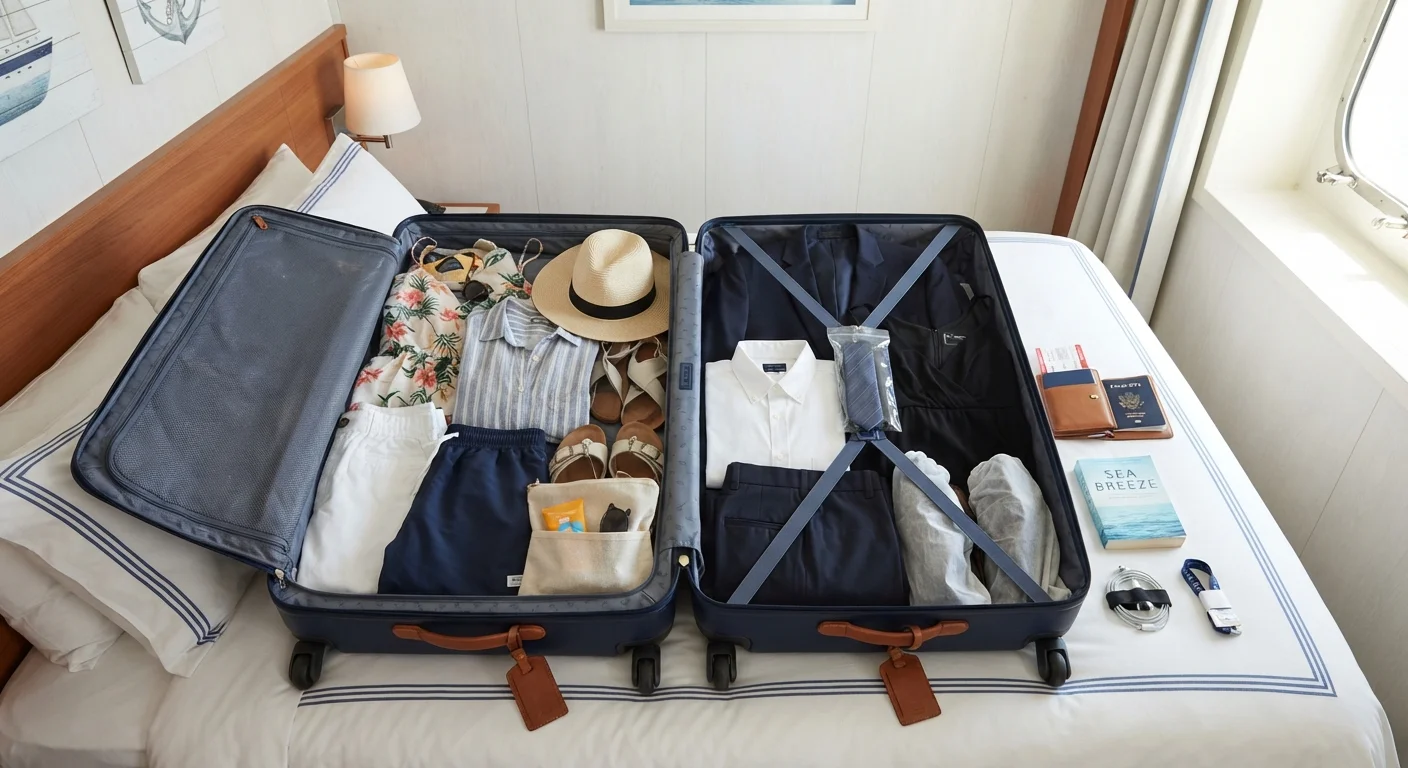
Key Takeaways
- Most cruise lines enforce luggage restrictions at embarkation — prohibited items can be confiscated.
- Formal nights vary by cruise line; misreading dress codes is one of the most common first-timer mistakes.
- Carry-on bags should hold your embarkation-day essentials — checked luggage often arrives hours after boarding.
- Port days and sea days require entirely different clothing strategies, so plan both intentionally.
- Medications, travel documents, and valuables should never go in checked cruise luggage.
Summary
22 items · 45–90 minutes
Why Cruise Packing Is Different From Any Other Trip
Cruise packing sits in an awkward middle ground. You're not roughing it with a backpack, but you're also not hotel-hopping where you can easily buy forgotten items. Once the ship leaves port, your options are limited and expensive. At the same time, you're moving through multiple dress-code environments — pool deck, specialty restaurant, formal dining room, shore excursion — often within the same day.
Add in strict luggage screening policies (cruise ships prohibit a longer list of items than most airlines), limited cabin storage, and the reality that your checked bags may not reach your stateroom until hours after embarkation, and the case for packing deliberately rather than reactively becomes clear.
If you're new to cruising, our guide to what to expect from embarkation to disembarkation covers the broader boarding-day picture. This checklist focuses specifically on what goes in your bags — and what doesn't.
Cruise line's pre-departure documentation
Contains the official prohibited items list, dress code schedule, and embarkation instructions specific to your sailing.
Packing cubes
Help organize and compress clothing in a cruise cabin's limited drawer and closet space.
Surge-protected power strip (verify model is permitted)
Cruise cabins typically have very few outlets; a permitted power strip lets you charge multiple devices safely.
Luggage tags (provided or printable by the cruise line)
Required for porters to route checked bags to the correct stateroom at embarkation.
Carry-on bag with easy document access
Keeps passports, boarding passes, medications, and day-one essentials accessible before checked luggage arrives.
Understanding Luggage Restrictions Before You Pack a Single Item
Cruise lines publish prohibited items lists that go beyond standard airline rules. Common additions include: candles and incense, clothing irons, multi-socket extension cords (surge-protected power strips are sometimes allowed — check your line's policy), alcohol purchased ashore in certain quantities, and in some cases, drones and hoverboards. These aren't suggestions — items flagged at the gangway scanner are typically confiscated and may or may not be returned at the end of the voyage.
Weight and size limits for checked bags vary by cruise line, but many operate without strict per-bag weight caps — instead, practical limits apply at the porter stage. However, some expedition and river cruise operators impose firm limits similar to airline policies. Always verify with your specific cruise line.
Prohibited Items Are Confiscated at the Gangway
Cruise ship security screening is thorough, and items flagged as prohibited — including certain types of extension cords, irons, and undeclared liquids — will be removed before you board. Unlike airport security, where you can sometimes mail items home, items confiscated at a cruise terminal may be held until the end of the voyage or disposed of entirely. Review the prohibited list from your cruise line before packing, not the morning of departure.
If you're traveling internationally and plan to bring back purchases, understanding your customs declaration obligations before you sail will save you stress on disembarkation day. Our explainer on how customs declarations work is worth reading before you go.
Before You Pack: Research and Rules
Carry-On Bag Essentials
Clothing and Dress Code Coverage
Health, Safety, and Practical Items
Final Bag Check Before Leaving Home
Decoding Dress Codes: What Formal, Smart Casual, and Resort Casual Actually Require
Dress codes are one of the most misunderstood parts of cruise planning, and they vary significantly between mainstream, premium, and luxury lines. Most major cruise lines operate a tiered system across the voyage.
Formal nights (typically one or two per seven-night sailing) on mainstream lines generally mean dress slacks and a collared shirt or cocktail dress at minimum — a tuxedo is traditional but rarely required. Premium and luxury lines may hold this standard more firmly. If you're unsure, your cruise line's app or pre-departure documentation will list the dress code schedule.
Smart casual — the most common evening standard — means no swimwear, tank tops, or athletic shorts in main dining rooms. Neat jeans are usually acceptable; ripped or distressed denim often is not.
Resort casual or relaxed applies in buffet venues and daytime public areas. Even here, most ships ask that you're not in wet swimwear.
Dress Code Enforcement Varies — But Can Be Firm
Some cruise lines enforce dining room dress codes at the door and will redirect guests who don't meet the standard to a casual venue. This is more common on premium and luxury lines than on mainstream ones, but it is not unheard of anywhere. If you're unsure whether your planned outfits qualify, erring toward slightly more formal is safer than the reverse. Reading your pre-cruise documents carefully will clarify where your line sits on the enforcement spectrum.
Alcohol and Beverage Policies Differ Significantly
Most major cruise lines restrict how much alcohol passengers can bring aboard — and some prohibit it entirely in favor of their onboard beverage packages. Wine policies, port purchases, and bottle limits vary. Bringing prohibited quantities may result in confiscation at embarkation or upon returning from a port stop. Check your specific cruise line's policy before purchasing alcohol ashore.
For passengers with specific health or mobility needs that affect clothing choices, our resource on cruising with specific health needs covers what to discuss with your cruise line ahead of time.
Travelers who prefer a minimal wardrobe approach should read our balanced look at packing light for travel — cruise dress codes do impose real limits on how far a one-bag strategy can stretch.