

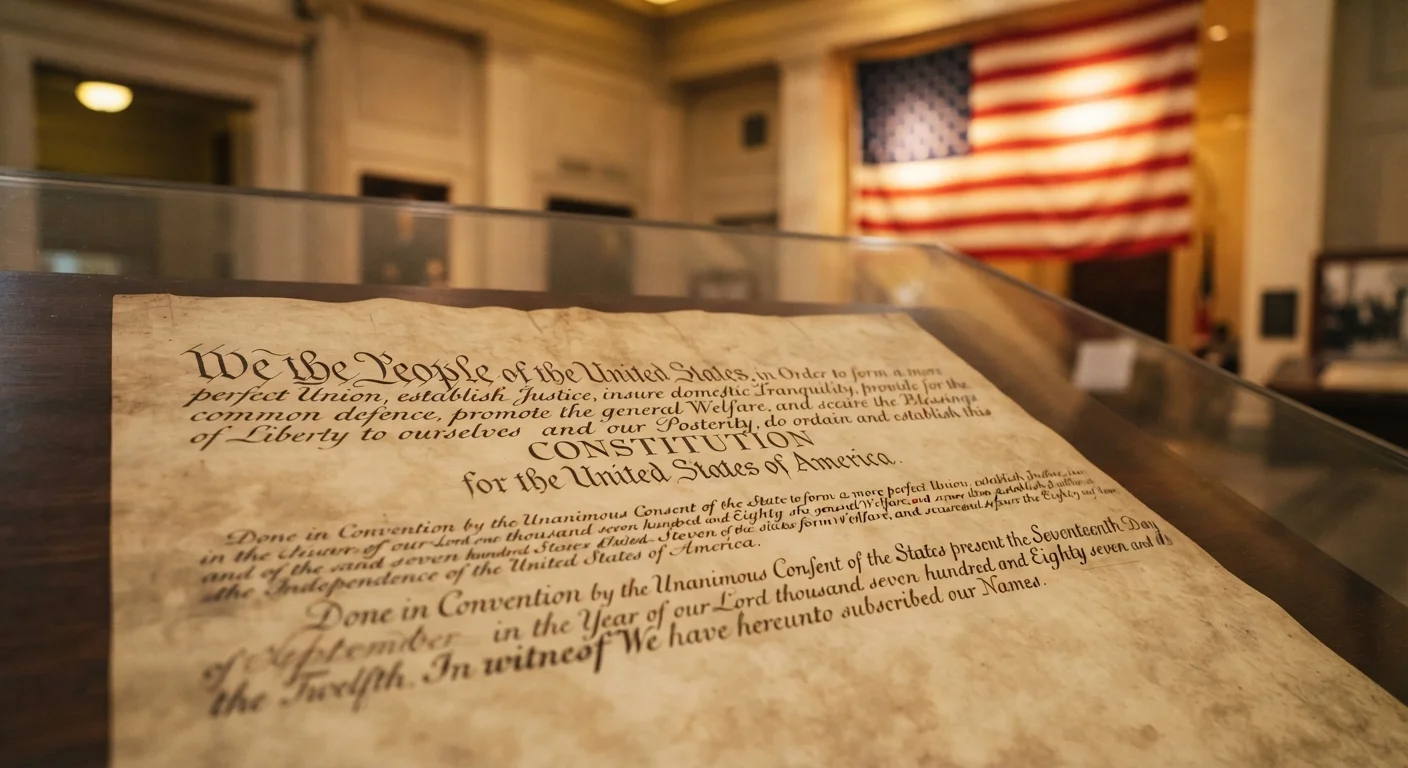
Key Takeaways
- The Fourth Amendment only restricts government agents - not private individuals or companies.
- Police generally need a warrant to search your home, but several well-established exceptions apply.
- You can verbally assert your Fourth Amendment rights without physically resisting a search.
- Anything in plain view of an officer in a lawful location may be seized without a warrant.
- Digital privacy protections under the Fourth Amendment have expanded significantly through recent Supreme Court rulings.
The Fourth Amendment
The Fourth Amendment to the U.S. Constitution protects people from unreasonable searches and seizures by government agents, including police. It generally requires law enforcement to obtain a warrant - supported by probable cause - before searching your home, your belongings, or your person. It applies to federal, state, and local government action.
The amendment also establishes the exclusionary rule through case law (Mapp v. Ohio, 1961), meaning evidence obtained in violation of the Fourth Amendment is typically inadmissible in court.
What the Amendment Actually Says
The Fourth Amendment reads: "The right of the people to be secure in their persons, houses, papers, and effects, against unreasonable searches and seizures, shall not be violated, and no Warrants shall issue, but upon probable cause, supported by Oath or affirmation, and particularly describing the place to be searched, and the persons or things to be seized."
Two core requirements emerge from this text. First, government searches and seizures must be reasonable. Second, warrants must be specific - they cannot be open-ended fishing expeditions. Courts have spent more than two centuries interpreting what those requirements mean in practice, and the boundaries continue to shift with technology and social change.
Critically, this protection only runs against government action. If a private citizen or a company searches your belongings, the Fourth Amendment does not apply. That distinction matters more than many people realize - see how it compares to other civil liberties in our article on civil rights vs. civil liberties.
When Police Need a Warrant - and When They Don't
The warrant requirement is the amendment's centerpiece, but courts have carved out numerous exceptions that apply in everyday situations.
- Consent: If you voluntarily agree to a search, no warrant is needed. You have the right to refuse, and doing so cannot legally be used as grounds for arrest.
- Plain view: Officers lawfully present in a location may seize evidence visible without any additional search.
- Search incident to lawful arrest: Police may search a person and their immediate surroundings when making a valid arrest.
- Exigent circumstances: Emergencies - such as hot pursuit of a fleeing suspect or the imminent destruction of evidence - can justify a warrantless entry.
- Automobile exception: Vehicles carry reduced privacy expectations; probable cause alone can justify a search.
- Stop and frisk: Under Terry v. Ohio (1968), an officer with reasonable suspicion may briefly detain and pat down a person for weapons.
Understanding these exceptions is essential if you ever find yourself in an encounter with law enforcement. Our guide on your rights during a police stop explains what you can and cannot be required to do in those moments.
Always Assert Refusal Verbally and Calmly
If you want to refuse a search, say it clearly and out loud: 'I do not consent to this search.' Courts look for an unambiguous assertion of your rights. Silence or ambiguous responses may be interpreted as consent. Never physically resist - even if you believe the search is unlawful, your remedy is in court, not at the scene.
Your Home, Your Car, Your Phone: What's Actually Protected
Courts apply the concept of a reasonable expectation of privacy to determine whether the Fourth Amendment is triggered. The home receives the strongest protection - warrantless home entries are presumptively unconstitutional. Your car, by contrast, sits on a sliding scale because it is operated in public and heavily regulated.
Digital privacy has become a major frontier. In Riley v. California (2014), the Supreme Court unanimously ruled that the contents of a cell phone cannot be searched incident to arrest without a warrant. In Carpenter v. United States (2018), the Court held that accessing historical cell-site location data - which tracks your physical movements - also requires a warrant. These rulings signal that digital information held by third parties can still carry constitutional protection under certain circumstances.
Unanimous
Supreme Court vote in Riley v. California on phone warrant rule
In 2014, all nine justices agreed that police need a warrant to search the digital contents of a cell phone seized during an arrest.
5-4
Supreme Court decision in Carpenter v. United States
The 2018 ruling extended Fourth Amendment protection to historical cell-site location data held by telecommunications providers.
1961
Year the exclusionary rule was applied to all U.S. courts
Mapp v. Ohio established that evidence obtained through unconstitutional searches must be excluded from state criminal trials.
One persistent misconception: sharing information with a third party - a bank, an email provider, a social platform - does not automatically strip it of all Fourth Amendment protection, though the legal picture remains complex and evolving.
How to Assert Your Rights Without Escalating a Situation
Knowing your rights and exercising them safely are two different skills. Legal experts consistently advise that you should never physically resist a search, even one you believe is unlawful. Physical resistance creates safety risks and can result in additional criminal charges. The proper remedy for an unconstitutional search is to raise the issue in court - not at the scene.
Instead, calmly and clearly state: "I do not consent to this search." This verbal assertion preserves your legal argument without escalating the encounter. Document as much as you can afterward - badge numbers, time, location, witnesses - and consult an attorney promptly.
The Fourth Amendment works alongside other constitutional protections. Understanding when Miranda warnings apply - and when they do not - is equally important; see our explainer on Miranda rights and when they apply for a fuller picture.
The Fourth Amendment Does Not Apply to Private Parties
Private individuals, employers, landlords, and corporations are not bound by the Fourth Amendment. If a neighbor searches your property or a company monitors your device usage under an agreed policy, constitutional protections do not automatically apply. Different legal frameworks - including state privacy laws and contract law - govern those situations.
This article provides general legal information for educational purposes only and is not legal advice. Laws vary by jurisdiction. Consult a licensed attorney for guidance specific to your situation.