

Key Takeaways
- DIY can save money on cosmetic and low-risk projects like painting, caulking, and fixture swaps.
- Electrical, gas, structural, and plumbing-into-mains work typically requires licensed professionals and permits.
- Skipping permits can cause serious problems at resale or after an incident.
- Your skill level, available time, and the cost of mistakes should all factor into your DIY decision.
- Some projects seem simple but carry hidden complexity - research thoroughly before starting.
Reduces labor costs on lower-risk projects
Professional labor often represents 40-60% of a project's total cost. Taking on painting, caulking, or simple fixture work yourself can meaningfully reduce what you spend, though savings depend heavily on your time investment and whether mistakes require corrections.
Builds transferable home maintenance skills
Each successfully completed project adds to a practical skill set. Homeowners who learn basic repairs tend to catch problems earlier and handle routine upkeep with more confidence over time.
Gives you direct control over timing and quality
DIY projects happen on your schedule, and you choose the materials and finish level. You're not dependent on contractor availability, which can stretch timelines in busy seasons.
Deepens your understanding of your home's systems
Working on your home - even in minor ways - teaches you how plumbing, electrical circuits, and structural elements interact. That knowledge makes you a more informed decision-maker when you do hire professionals.
Electrical and gas work carries serious safety risk
Wiring errors can cause fires or electrocution; gas line mistakes can lead to leaks or explosions. These systems require licensed professionals in most jurisdictions, and for very good reason - the margin for error is essentially zero.
Structural work requires expert assessment
Removing walls, modifying load-bearing elements, or altering roof structure without a structural engineer's guidance can compromise your home's integrity in ways that aren't immediately visible but become catastrophic over time.
Mistakes on complex projects can exceed professional costs
A flooring error that damages a subfloor, a plumbing mistake that causes water damage, or an insulation job that traps moisture can cost far more to repair than the original professional quote would have been.
Unpermitted work creates legal and financial exposure
Work completed without required permits can complicate home sales, void insurance claims, and require expensive remediation to bring into compliance. Local building departments enforce these rules for safety - not bureaucracy.
Time demands are frequently underestimated
Projects that professionals complete in a day often take inexperienced homeowners a full weekend or longer. If your time has significant opportunity cost, DIY savings can look different on closer inspection.
Our Verdict
DIY home improvement is genuinely rewarding and cost-effective for the right projects - painting, basic landscaping, minor repairs, and cosmetic updates are well within reach for most motivated homeowners. But for work involving electrical systems, gas lines, structural elements, or anything that requires a permit, the risk of costly errors and safety hazards makes professional help the smarter investment. The best approach is honest self-assessment: match the project's complexity to your actual skill level.
Homeowners who want to take an active role in maintaining their home, lower costs on low-stakes projects, and make confident, informed decisions about when to call in a licensed professional.
The Case for DIY: Real Benefits Worth Considering
Taking on home improvement projects yourself carries genuine advantages - not just on your wallet, but in your overall confidence as a homeowner. Understanding those benefits helps you recognize when DIY is genuinely the right call.
Reduces labor costs on lower-risk projects
Professional labor often represents 40-60% of a project's total cost. Taking on painting, caulking, or simple fixture work yourself can meaningfully reduce what you spend, though savings depend heavily on your time investment and whether mistakes require corrections.
Builds transferable home maintenance skills
Each successfully completed project adds to a practical skill set. Homeowners who learn basic repairs tend to catch problems earlier and handle routine upkeep with more confidence over time.
Gives you direct control over timing and quality
DIY projects happen on your schedule, and you choose the materials and finish level. You're not dependent on contractor availability, which can stretch timelines in busy seasons.
Deepens your understanding of your home's systems
Working on your home - even in minor ways - teaches you how plumbing, electrical circuits, and structural elements interact. That knowledge makes you a more informed decision-maker when you do hire professionals.
Beyond cost, there's a skill-building dimension to DIY that compounds over time. A homeowner who learns to patch drywall, replace a toilet flapper, or re-caulk a tub gains knowledge that serves them for years. Pair that with a solid checklist of upkeep tasks - see our seasonal home maintenance guide - and you're actively protecting your home from preventable damage.
Where DIY Makes Clear Sense
Certain categories of home projects are well-suited to the average motivated homeowner. These tend to share common traits: low structural risk, reversible mistakes, no permit requirements, and widely available instructional resources.
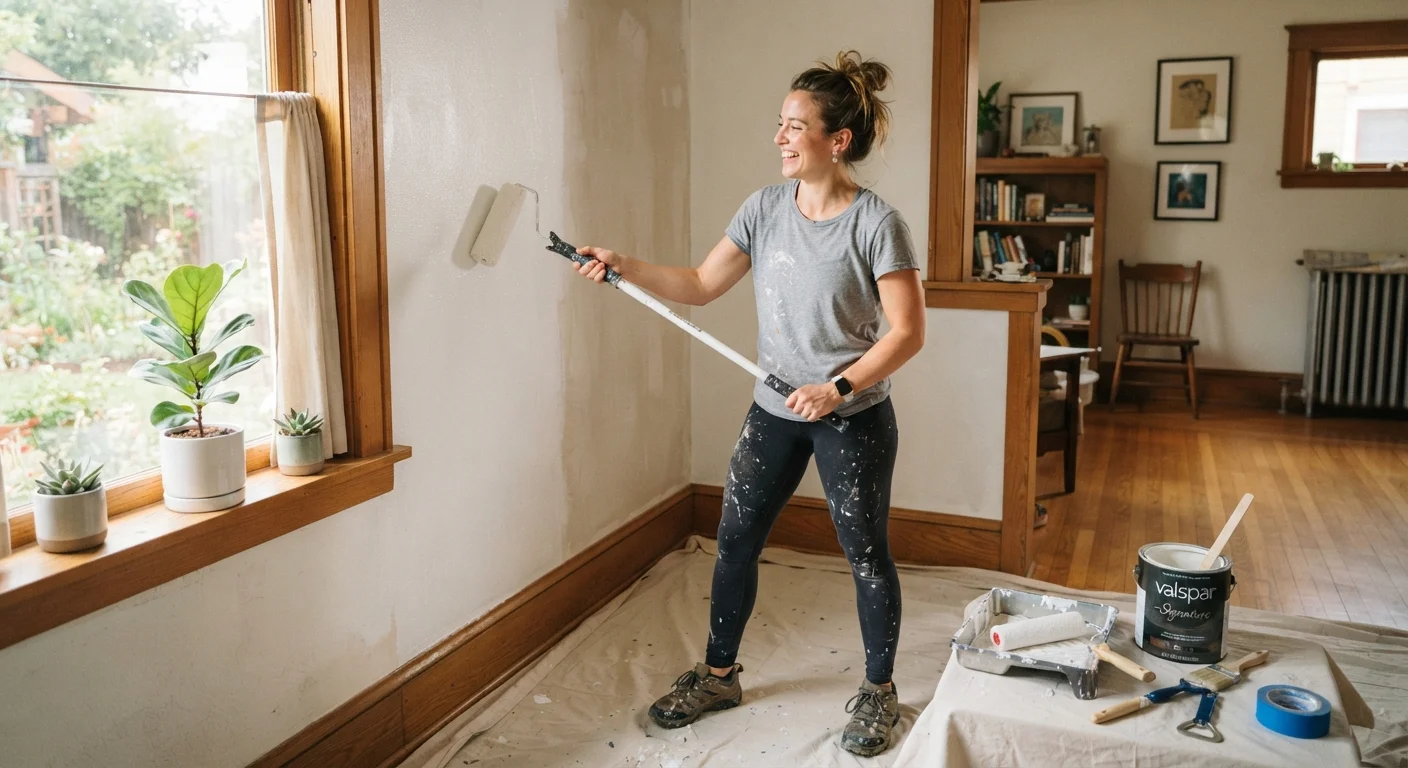
- Interior painting and prep work - Patching nail holes, priming, and painting walls or trim is forgiving and learnable with practice.
- Caulking and weatherstripping - Sealing drafts around windows, doors, and fixtures is low-risk and directly reduces energy costs.
- Fixture swaps - Replacing light fixtures, faucets, or cabinet hardware (without touching supply lines or wiring beyond the junction box) is manageable with basic tools.
- Cabinet cosmetic updates - Repainting or refacing cabinets can dramatically refresh a kitchen. Our article on cabinet refacing, repainting, and replacement walks through trade-offs across all three approaches.
- Basic landscaping and garden beds - Planting, mulching, edging, and simple hardscaping are accessible and satisfying weekend projects.
- Minor drywall repairs - Small holes and surface cracks are patchable with readily available materials and video guidance.
These projects reward patience and preparation. Research the scope thoroughly before you buy materials, and don't underestimate time - most tasks take beginners longer than expected.
Where DIY Doesn't Make Sense - and Can Cause Real Harm
The excitement of a project can sometimes override honest judgment about risk. Some work looks approachable on the surface but involves systems where errors are expensive, dangerous, or both.
Electrical and gas work carries serious safety risk
Wiring errors can cause fires or electrocution; gas line mistakes can lead to leaks or explosions. These systems require licensed professionals in most jurisdictions, and for very good reason - the margin for error is essentially zero.
Structural work requires expert assessment
Removing walls, modifying load-bearing elements, or altering roof structure without a structural engineer's guidance can compromise your home's integrity in ways that aren't immediately visible but become catastrophic over time.
Mistakes on complex projects can exceed professional costs
A flooring error that damages a subfloor, a plumbing mistake that causes water damage, or an insulation job that traps moisture can cost far more to repair than the original professional quote would have been.
Unpermitted work creates legal and financial exposure
Work completed without required permits can complicate home sales, void insurance claims, and require expensive remediation to bring into compliance. Local building departments enforce these rules for safety - not bureaucracy.
Time demands are frequently underestimated
Projects that professionals complete in a day often take inexperienced homeowners a full weekend or longer. If your time has significant opportunity cost, DIY savings can look different on closer inspection.
Permits matter more than many homeowners realize. Unpermitted work on electrical panels, structural walls, plumbing systems, or HVAC can create serious problems during resale inspections or after an incident. Our article on when a permit is required explains which projects typically trigger permit requirements and why they exist. Similarly, before touching any interior wall, it's worth understanding how to identify load-bearing walls - removing the wrong wall without structural guidance can compromise your home's integrity.
The Honest Middle Ground: Assessing Your Own Readiness
Between "clearly fine" and "clearly dangerous" lies a substantial middle ground where the right answer depends on you specifically. Ask yourself these questions before committing to any project:
- Have I done this before, or something similar? First-time tasks almost always take longer and produce rougher results than experienced ones.
- What does a mistake cost? A bad paint job is repaintable. A plumbing error that soaks a subfloor is not cheap to fix.
- Do I have the right tools? Renting or buying specialized tools can erode cost savings quickly.
- Is a permit required? Check with your local building department - requirements vary significantly by municipality.
- Will this affect my insurance or home value? Unpermitted or improperly completed work can complicate coverage and resale.
Not All "Simple" Projects Are Equal
Some tasks appear straightforward but involve hidden complexity. Attic insulation, for example, requires understanding R-values, vapor barriers, and ventilation - get it wrong and you can trap moisture or reduce effectiveness significantly. Our article on home insulation from the ground up covers what homeowners need to know before starting. When in doubt, a professional consultation - even just an assessment - is money well spent.
It's also worth examining cost assumptions carefully. The belief that "DIY is always cheaper" doesn't always hold up - especially when you factor in material waste, tool costs, and the price of correcting errors. Our look at common myths about home renovation costs addresses this directly.
Setting Yourself Up for Success
If you've determined a project is within your reach, good preparation dramatically improves your outcome. Start with a clear project scope - vague plans lead to scope creep, budget overruns, and incomplete work. Our guide to principles behind a well-planned home renovation covers the planning habits that reduce surprises for projects large and small.
Stock up on safety basics: eye protection, gloves, proper ventilation, and stable ladders are non-negotiable regardless of how minor the task seems. Read product instructions fully before opening anything, and don't skip manufacturer prep requirements - they exist for durability reasons, not just liability.
Finally, know when to stop. If a project reveals something unexpected - mold behind a wall, aluminum wiring in an older home, undersized joists - that's the moment to pause and consult a licensed professional rather than improvise. The same honest self-assessment that helps in home improvement applies to other DIY domains; our article on DIY car maintenance explores where those lines fall for vehicle upkeep.
~40-60%
Share of project cost typically attributed to labor
Industry estimates suggest labor commonly represents nearly half or more of total project costs, which is why DIY appeals on cost grounds for lower-risk work.
Varies widely
Permit requirements by municipality
There is no single national standard - permit thresholds for electrical, plumbing, and structural work differ significantly from one local building department to another.