

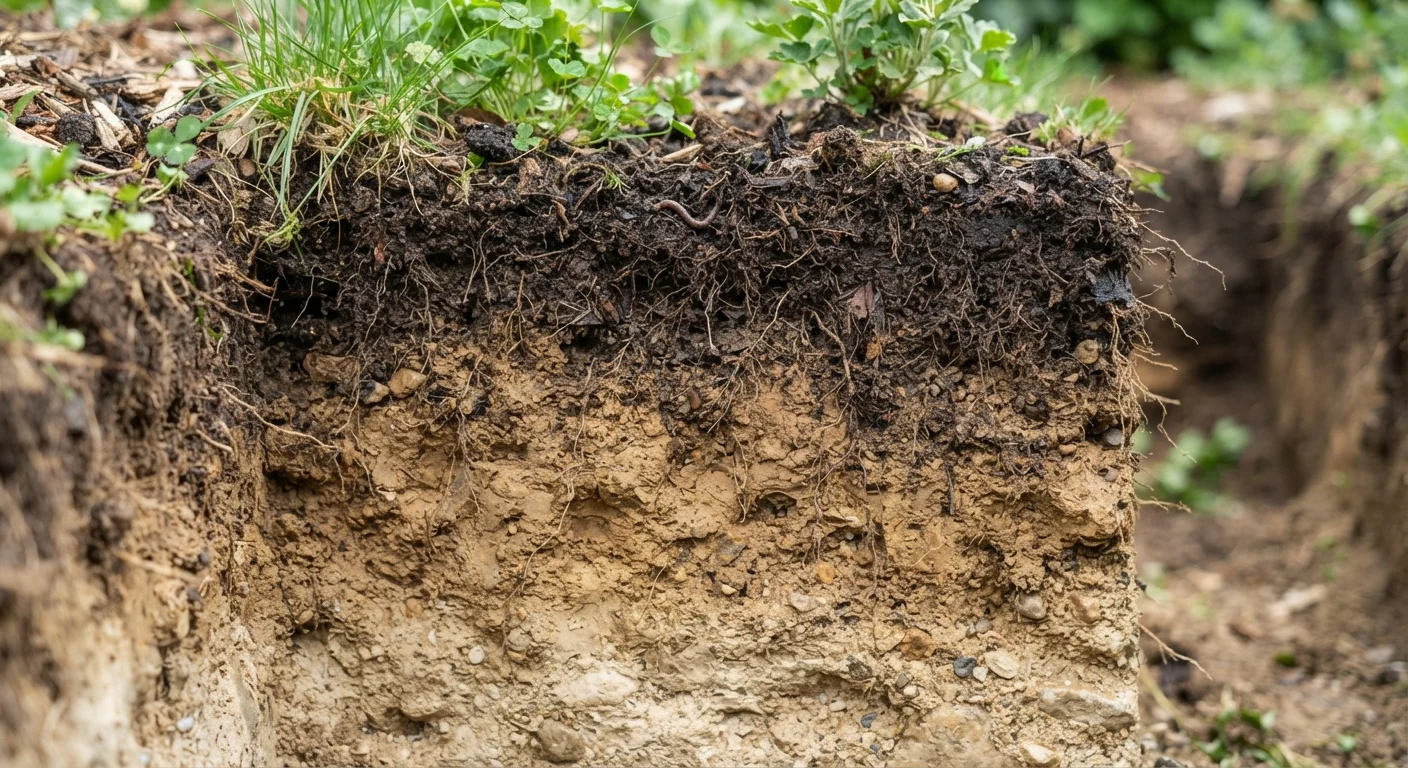
Key Takeaways
- The four main garden soil types are clay, sandy, silty, and loam - each with distinct strengths and challenges.
- You can identify your soil type at home using simple hands-on tests - no lab required.
- Loam is widely considered the most balanced soil for growing a wide range of plants.
- Most soil types can be improved over time through consistent amendments like compost.
- Understanding your soil type helps you choose the right plants and watering schedule from the start.
Soil Type
Soil type refers to the physical composition of the ground in your garden - specifically, the mix of particle sizes (sand, silt, and clay) that determines how your soil holds water, drains, and supports plant roots. Different ratios of these particles create soils with very different behaviors. Knowing your soil type tells you what plants will thrive there and what amendments might help.
Soil texture is classified by the USDA textural triangle, which maps the percentage of sand, silt, and clay to identify soil categories like sandy loam, silty clay, or clay loam.
The Big Four: Clay, Sandy, Silty, and Loam
Most garden soils fall into one of four main categories - or a blend of them. Each is defined by the dominant particle size in the mix, which controls nearly everything about how your soil behaves.
- Clay soil is made of very fine, flat particles that pack tightly together. It holds water and nutrients well but drains slowly and becomes hard when dry. It also tends to compact under foot traffic.
- Sandy soil has large, coarse particles with lots of air space between them. Water moves through quickly, which means nutrients can wash away fast too. It warms up earlier in spring, which some growers appreciate.
- Silty soil sits between clay and sand in particle size. It feels smooth and silky when moist, holds moisture reasonably well, and is moderately fertile - but it can crust over when dry and become compacted.
- Loam is a roughly balanced blend of sand, silt, and a smaller proportion of clay. It drains well while still retaining adequate moisture, supports strong root development, and is considered the most versatile growing medium for a wide range of plants.
If you're just getting started with your garden, see our practical first-timer's roadmap for context on how soil fits into the bigger picture of starting out.
~45%
Mineral particles in typical healthy topsoil
According to USDA soil science education materials, healthy topsoil is roughly 45% mineral particles, 25% water, 25% air, and 5% organic matter.
2 mm
Maximum sand particle diameter
The USDA classifies sand particles as ranging from 0.05 mm to 2 mm - making them up to 1,000 times larger than clay particles, which explains the dramatic difference in drainage behavior.
3-7 years
Typical timeline to meaningfully improve clay soil
Soil scientists and extension educators generally suggest gardeners plan for multiple growing seasons of consistent organic amendment to see significant structural improvement in clay-heavy soils.
How to Identify Your Soil Type at Home
You don't need a laboratory to get a working read on your soil. Two simple tests give you useful information in minutes.
The Ribbon Test
Take a small handful of moist (not soaking wet) soil and squeeze it firmly in your palm. Then try to press it into a thin ribbon between your thumb and index finger:
- If it forms a long, smooth ribbon (more than two inches) without crumbling, you likely have clay-heavy soil.
- If it crumbles immediately and won't hold a shape, you probably have sandy soil.
- If it forms a short ribbon that breaks easily, you're likely working with loam or silty soil.
The Jar Test
Fill a glass jar about one-third with soil, top it up with water, shake vigorously, then let it sit undisturbed for 24-48 hours. The particles settle in layers: sand at the bottom, then silt, then clay on top. The relative depth of each layer shows you your approximate soil composition.
Best Time to Test Your Soil
Test your soil when it's moist but not waterlogged - conditions similar to what you'd find a day or two after rain. Testing overly dry or saturated soil can skew your results, especially with the ribbon test. Early spring or fall, before planting or after harvest, is an ideal window.
Once you know your soil type, our pre-season readiness checklist can help you act on that knowledge before planting begins.
What Your Soil Type Means for Your Garden
Soil type influences plant selection, watering habits, amendment strategies, and even how you structure your growing space. Here's a practical summary of what each type means for your decisions:
If your native soil is particularly challenging - very dense clay or very coarse sand - a raised bed can give you more immediate control over your growing medium. Our article on raised beds vs. in-ground planting walks through the trade-offs so you can make an informed choice.
Whatever your starting point, soil can be improved. Consistent additions of organic matter - compost especially - gradually improve structure, drainage, and fertility across nearly every soil type. For a longer-term view, see our guide on building healthier garden soil over time.
Soil pH Is a Separate (But Related) Factor
Soil type describes physical texture, while soil pH measures acidity or alkalinity - and both affect plant health. A clay soil can be acidic or alkaline; the same goes for sandy or loamy soil. If you're troubleshooting plant problems, testing pH alongside texture gives you a more complete picture. Many cooperative extension offices offer inexpensive combined tests.