

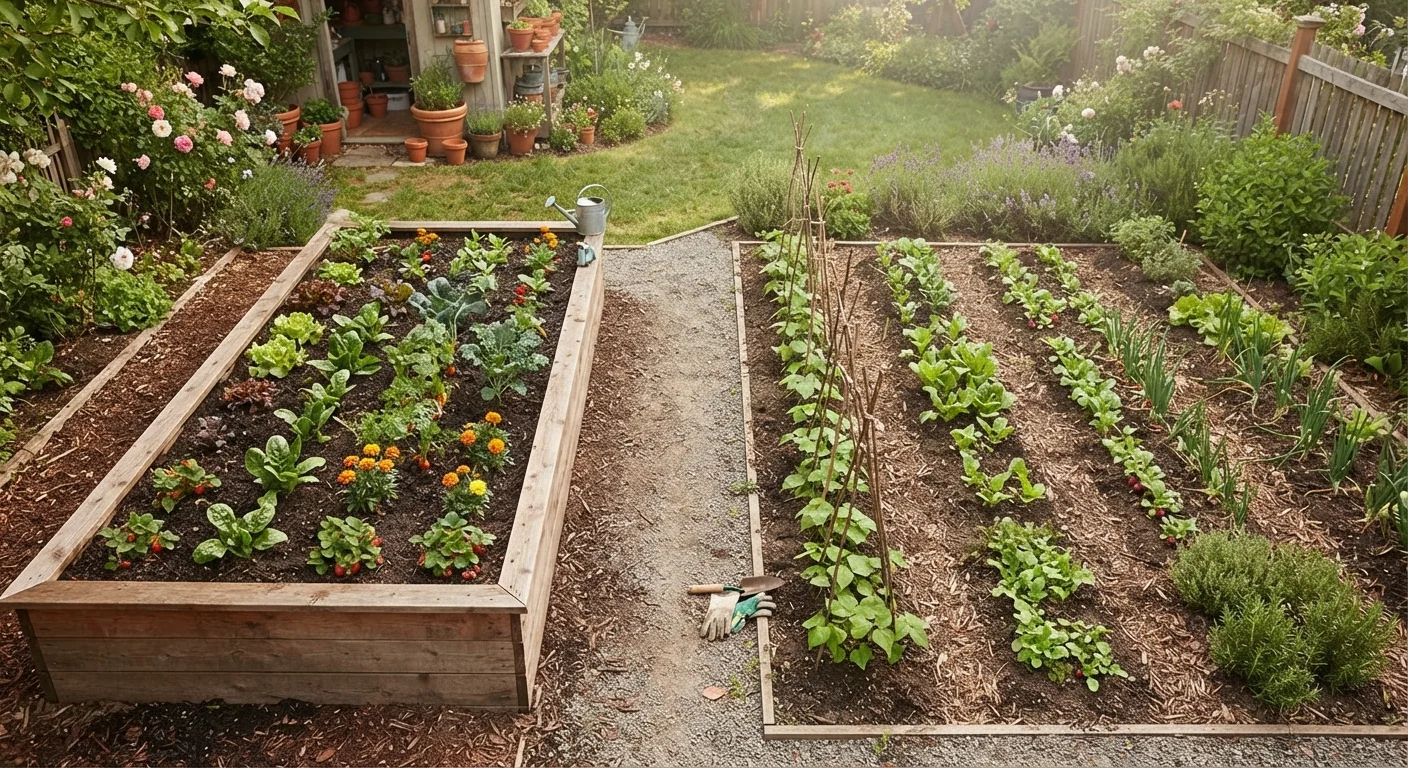
Key Takeaways
- Raised beds offer superior drainage and soil control but require meaningful upfront investment in materials.
- In-ground planting costs less to start but depends heavily on the quality of your native soil.
- Raised beds warm faster in spring, often extending the growing season by a few weeks.
- In-ground plots support larger plants and deep-rooted crops more naturally than contained beds.
- Your existing soil quality, budget, and physical needs should drive the decision more than preference alone.
Option A
Raised Beds
The controlled, accessible growing environment.
Best for: Gardeners dealing with poor native soil, limited mobility, or who want fast results with maximum control over growing conditions.
Option B
In-Ground Planting
The traditional, low-cost approach to garden growing.
Best for: Gardeners with decent existing soil who want to grow large volumes of plants across a wide area without significant upfront investment.
If your native soil is compacted, clay-heavy, or poorly draining
Raised Beds
Raised beds let you bypass problem soil entirely by filling with a custom mix. This is often more practical than years of amending stubborn ground.
If you're working with a tight budget and a large growing area
In-Ground Planting
In-ground plots require minimal materials to get started. Spreading the cost of soil improvement over time makes large-scale growing far more affordable.
If you have back, knee, or joint limitations
Raised Beds
A raised bed built to waist height significantly reduces bending and kneeling, making gardening physically manageable for longer periods.
If you want to grow deep-rooted crops like corn, squash, or asparagus at scale
In-Ground Planting
Large or deep-rooting plants thrive with unrestricted root runs. In-ground plots also accommodate the wider spacing these crops typically require.
If you're a first-time gardener wanting quick, visible success
Raised Beds
Controlled soil, fewer weeds, and good drainage give beginners a more forgiving environment that tends to produce results faster.
What You're Actually Choosing Between
When gardeners debate raised beds versus in-ground planting, they're really weighing control versus scale. A raised bed is a contained growing area - typically 6 to 12 inches deep - filled with imported or amended soil. An in-ground plot uses the native soil already present, improved over time through composting and tilling.
Neither approach is universally superior. The right choice depends on what your yard already offers, how much you want to spend upfront, and what you plan to grow. Understanding your existing soil type is genuinely the first step - it can make this decision straightforward.
| Criterion | Raised Beds | In-Ground Planting |
|---|---|---|
| Upfront cost | Moderate to high | Low |
| Soil control | Full - you fill it yourself | Limited by native conditions |
| Drainage | Excellent with proper mix | Varies by soil type |
| Weed pressure | Generally lower | Higher, especially at edges |
| Spring warm-up | Faster - earlier planting | Slower to warm |
| Water retention | Dries out faster | Retains moisture longer |
| Root depth available | Limited by bed height | Unlimited |
| Scalability | Costly to expand | Easy to extend |
| Physical accessibility | High - reduced bending | Low - requires kneeling |
Drainage, Soil Quality, and Root Health
One of the clearest advantages raised beds offer is drainage control. Because you fill them with a custom mix - typically blending topsoil, compost, and a draining component like perlite - water moves through efficiently without pooling. This matters most in regions with heavy clay soils or persistent wet spells.
In-ground planting puts you at the mercy of what's already there. If your native soil drains well and has reasonable organic content, in-ground plots can produce excellent results with relatively little amendment. If it's compacted or nutrient-poor, you're looking at multiple growing seasons of building healthier soil before things really perform.
Root depth is worth considering too. Standard raised beds cap root travel at 10-12 inches. Most vegetables - tomatoes, peppers, leafy greens, root crops like carrots - grow well within that range. But crops that want to run deep or wide, like sprawling squash vines or sweet corn planted in blocks, typically do better with the unlimited space of an in-ground plot.
6-12 in.
Typical raised bed soil depth
Most vegetable crops root within this range, though deeper beds better accommodate root vegetables like parsnips and carrots.
2-4 weeks
Earlier spring planting in raised beds
University extension resources commonly cite this range as a practical advantage of raised beds in cooler climates due to faster soil warm-up.
50%+
Reduction in weed pressure reported
Gardeners using raised beds with weed-barrier cloth and imported soil mixes frequently report substantially fewer weeds compared to adjacent in-ground plots.
Cost, Effort, and Long-Term Maintenance
Raised beds carry a higher upfront cost. Materials for a single 4×8-foot cedar bed - lumber, hardware, and soil - can range considerably depending on your region and material choices. Multiply that across several beds and the investment becomes significant. That said, the ongoing maintenance tends to be lighter: fewer weeds, less compaction, and easier access all reduce the labor load season after season.
In-ground planting costs very little to start. You're working with soil you already have, and the main inputs are time, compost, and a few basic tools. The trade-off is higher ongoing effort - weeding in particular is more demanding because weed seeds in native soil are abundant, and without the physical boundary of a raised bed, encroachment from grass edges is a recurring task.
One practical consideration that's easy to overlook: if you're also starting plants from seed, your approach to transplanting may influence which system suits you best. See our guide to starting seeds indoors for how transplant timing pairs with each method.
Season Length and Growing Conditions
Raised beds warm faster in spring because the soil mass is smaller and exposed on multiple sides. In practice, this can translate to planting two to four weeks earlier than in-ground plots in the same yard - a meaningful advantage if your growing season is already short.
That same thermal exposure cuts both ways. In drought conditions, raised beds dry out faster and may need more frequent watering. In-ground soil holds moisture longer thanks to its connection to the broader water table and greater soil mass.
Before settling on either approach, it's worth running through a pre-season readiness checklist - assessing sun exposure, water access, and frost dates helps you evaluate which system fits your specific plot rather than a general ideal.
Raised Beds and Containers Are Not the Same
Raised beds sit directly on the ground, giving roots access to the soil below and allowing natural drainage. Containers - pots, grow bags, planter boxes - are fully enclosed and behave quite differently in terms of watering, root restriction, and heat retention. If you're weighing all three options, our article on container gardening trade-offs covers what pots do well and where they fall short.