

Key Takeaways
- Autoimmune conditions occur when the immune system mistakenly attacks the body's own healthy tissue.
- There are more than 80 distinct autoimmune conditions, ranging from rheumatoid arthritis to multiple sclerosis.
- Symptoms vary widely based on which organ or tissue is targeted, making diagnosis a complex process.
- Most autoimmune conditions are chronic, meaning they require long-term management rather than a single cure.
- Treatment generally focuses on reducing immune activity, managing symptoms, and preserving quality of life.
- A healthcare provider is essential for diagnosis and developing a personalized management plan.
Autoimmune Condition
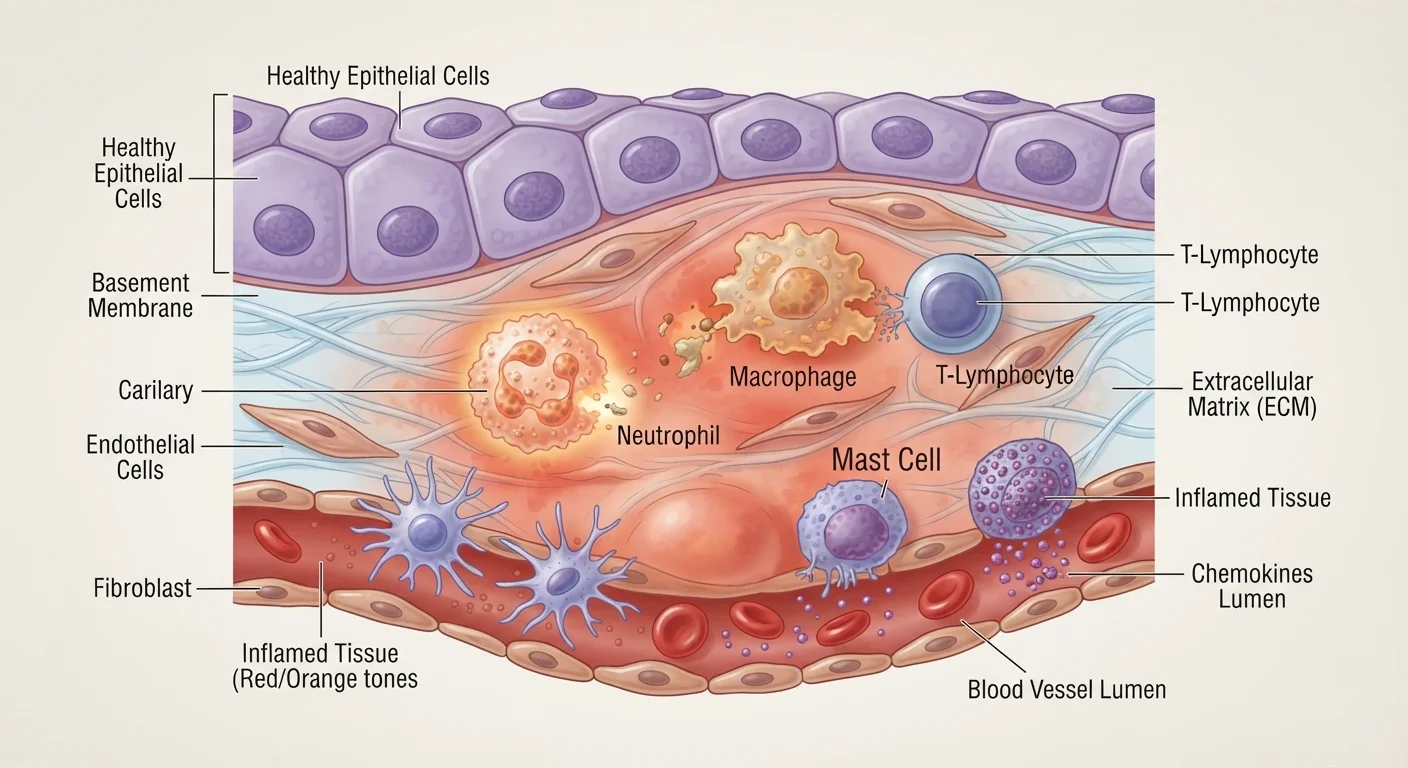
An autoimmune condition is one in which the immune system - the body's natural defense network - mistakenly identifies its own healthy cells or tissues as foreign threats and attacks them. This misdirected immune response can cause inflammation, tissue damage, and a wide range of symptoms depending on which part of the body is targeted. There are more than 80 recognized autoimmune conditions, affecting an estimated 23 to 50 million Americans.
Most autoimmune conditions involve either autoantibodies (immune proteins that target self-tissue) or autoreactive T-cells, which directly attack the body's own cells - and in some conditions, both mechanisms occur simultaneously.
How a Healthy Immune System Works - and Where It Goes Wrong
The immune system is designed to be a precise defense network. It learns to recognize what belongs in the body and what doesn't - attacking bacteria, viruses, and other foreign invaders while leaving healthy tissue alone. This process of self-recognition is learned largely in early development and requires ongoing calibration.
In autoimmune conditions, that calibration breaks down. The immune system begins treating one or more of the body's own structures - a joint, a gland, the myelin sheath around nerve fibers, or even multiple organ systems at once - as if they were dangerous pathogens. The resulting immune response causes the inflammation and tissue damage that drive symptoms.
Understanding this mechanism helps explain why inflammation is central to so many chronic conditions - in autoimmune disease, it's not an occasional response to infection, but a persistent or recurring state that can damage tissue over time.
Autoimmune Conditions Are Not the Same as Immune Deficiency
An overactive immune system in autoimmune disease is fundamentally different from an underactive or deficient immune system. Immunodeficiency conditions reduce the body's ability to fight infection, while autoimmune conditions involve an excess of misdirected immune activity. The two can coexist in some situations, but they require very different treatment approaches.
The Spectrum of Autoimmune Conditions
One of the most confusing aspects of autoimmune conditions for readers is how different they appear from one another. Rheumatoid arthritis targets joint linings. Hashimoto's thyroiditis attacks the thyroid gland. Multiple sclerosis damages the protective coating around nerve cells. Lupus can affect the skin, kidneys, joints, and other organs simultaneously.
Despite this variety, common patterns exist. Most autoimmune conditions are chronic rather than acute, meaning they persist over time and require ongoing rather than one-time treatment. Many also share overlapping symptoms - fatigue, joint pain, skin changes, and cognitive fog - which is part of why autoimmune conditions are frequently mistaken for other illnesses during initial evaluation.
80+
Recognized autoimmune conditions worldwide
The American Autoimmune Related Diseases Association identifies more than 80 distinct autoimmune diseases, with hundreds more suspected to have autoimmune components.
~80%
Autoimmune diagnoses that occur in women
According to the American Autoimmune Related Diseases Association, women account for approximately 80% of those diagnosed with autoimmune conditions in the United States.
23-50M
Americans estimated to live with autoimmune conditions
Estimates vary due to differing diagnostic criteria and underdiagnosis, but the National Institutes of Health places the range at 23 to 50 million Americans affected.
General Approaches to Management
Because there is no universal cure, management of autoimmune conditions centers on three broad goals: suppressing or modulating the immune response to reduce damage, controlling inflammation and its symptoms, and maintaining the best possible quality of life.
Treatment approaches vary significantly by condition and severity. Some people manage mild presentations through lifestyle factors - including sleep, stress reduction, and a balanced diet - alongside regular medical monitoring. Others require prescription therapies, which may include immunosuppressants or biologic agents that target specific immune pathways. A rheumatologist, neurologist, endocrinologist, or other relevant specialist typically guides these decisions.
It is also worth recognizing that self-management carries real complexity. Even with good intentions, common oversights in long-term self-management - such as inconsistent medication use or delayed symptom reporting - can affect outcomes. Staying engaged with a care team is a central part of managing any autoimmune condition effectively.
Track Symptoms Between Appointments
Keeping a simple symptom journal - noting flare frequency, severity, potential triggers, and any new developments - gives your healthcare provider valuable context that a brief office visit alone may not capture. This is especially useful for conditions with variable or fluctuating presentations, where patterns over weeks or months matter as much as any single day's experience.
This article is for general informational purposes only and does not constitute medical advice. If you are experiencing symptoms or have concerns about your immune health, please consult a qualified healthcare professional for an individualized evaluation and guidance.