

Key Takeaways
- Serving size is the foundation of every number on the label - always check it first.
- % Daily Value tells you how much a nutrient contributes to a 2,000-calorie reference diet, not your personal needs.
- Added sugars are now listed separately from total sugars, making hidden sugar easier to spot.
- Nutrients to limit include saturated fat, sodium, and added sugars; nutrients to prioritize include fiber, vitamin D, calcium, and potassium.
- Ingredient lists and nutrition labels work together - reading both gives a fuller picture of a food's quality.
Nutrition Facts Label
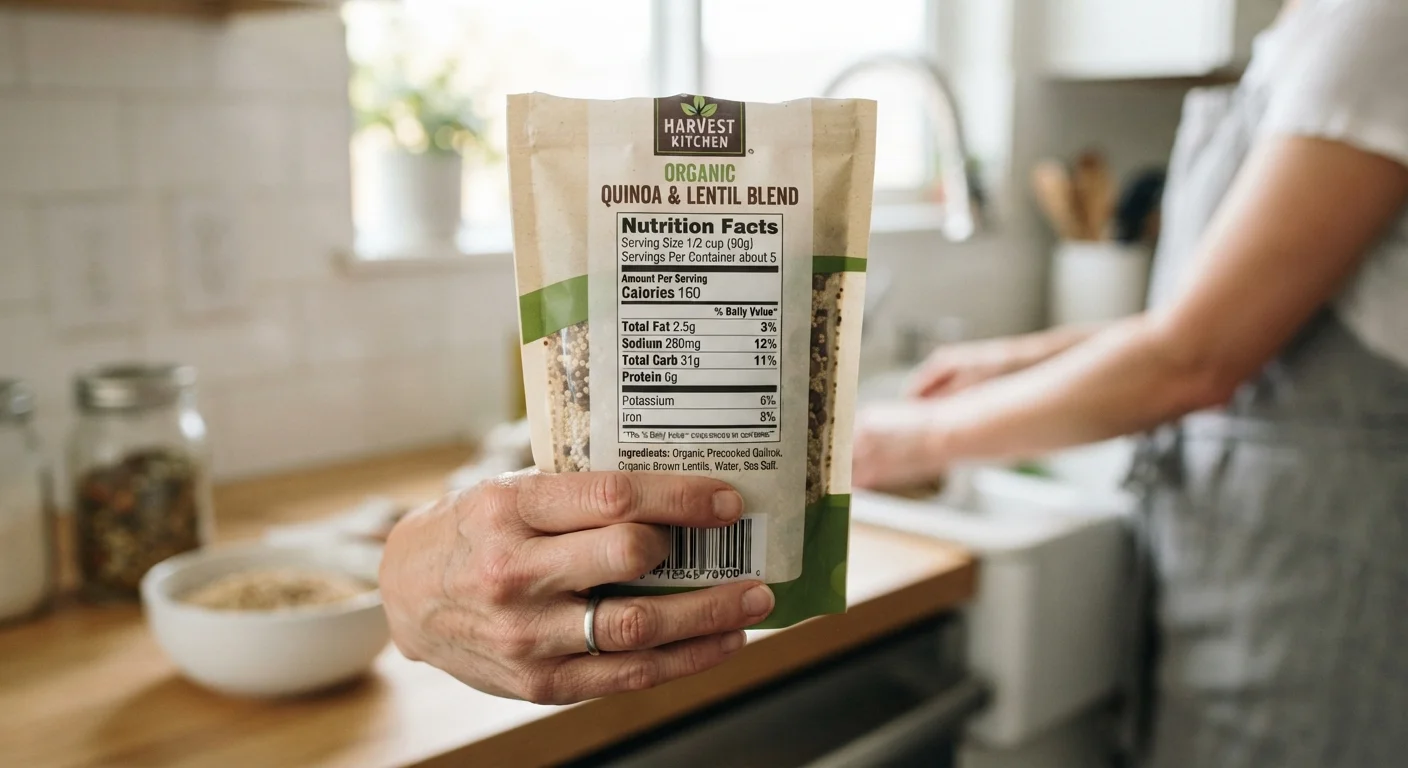
A standardized panel printed on most packaged foods in the United States, required by the FDA, that discloses serving size, calorie count, and the amounts of key nutrients per serving. It helps consumers understand what they are eating relative to a standard daily diet. The label is designed to let shoppers compare foods and make informed dietary choices without needing a nutrition degree.
The current label format - updated by the FDA in 2016 and phased in by 2020 - reflects revised scientific understanding of nutrition, including a separate line for added sugars and updated Daily Values based on newer dietary research.
Start Here: Serving Size Sets the Stage
The first thing to check on any Nutrition Facts label isn't the calories - it's the serving size. Every single figure on the label, from calories to sodium to fiber, is calculated based on that stated amount. A bag of chips might look modest at 140 calories until you notice the serving is 10 chips and you've already eaten 30.
The FDA updated serving size rules in 2016 to better reflect how Americans actually eat. Portion sizes on labels are now closer to realistic consumption amounts - for instance, a serving of ice cream was revised from half a cup to two-thirds of a cup. Even so, servings listed don't necessarily match what you'll scoop onto your plate. The habit to build: glance at the serving size, estimate how much you're actually eating, and scale the numbers accordingly.
Scale the Numbers to Your Actual Portion
If the label says one serving is 1 cup but you typically pour 1.5 cups, multiply every nutrient figure by 1.5. This simple mental math takes seconds and makes the label genuinely accurate for your eating habits rather than a manufacturer's reference estimate.
Calories and % Daily Value: The Two Anchors
Calories measure the total energy a food provides per serving. They're useful context, but a calorie count alone says nothing about nutritional quality - 200 calories of almonds and 200 calories of a cookie deliver very different nutrients.
That's where % Daily Value (% DV) comes in. This percentage tells you how much a serving contributes toward the recommended intake of each nutrient for someone eating approximately 2,000 calories a day. Use these benchmarks: 5% DV or less is low; 20% DV or more is high. Those thresholds help you make fast, meaningful comparisons between products. Keep in mind, 2,000 calories is a reference figure - your personal needs may be higher or lower depending on age, size, and activity level.
5% or less
% DV considered low for any nutrient
FDA guidance uses this threshold to help consumers identify foods low in a given nutrient per serving.
20% or more
% DV considered high for any nutrient
According to FDA label-reading guidelines, a % DV at or above this level signals a significant contribution toward daily intake.
77%
Americans who check nutrition labels when buying new foods
According to an International Food Information Council survey, the majority of U.S. consumers report reviewing nutrition information at least occasionally when making food choices.
What to Limit and What to Prioritize
The label organizes nutrients into two informal camps: those most Americans consume too much of, and those most fall short on.
Limit these:
- Saturated fat: Associated with elevated LDL cholesterol levels. Understanding your cholesterol numbers can help you see why keeping saturated fat in check matters.
- Sodium: High intake is linked to elevated blood pressure. Many packaged foods are surprisingly high in sodium even when they don't taste salty.
- Added sugars: Now listed separately from total sugars, making it easier to spot products that rely heavily on sweeteners. For more on hidden sugar sources, see how sugar hides in ingredient lists.
Prioritize these:
- Dietary fiber: Supports digestive health and helps with satiety. Most Americans fall well short of recommended amounts.
- Vitamin D, calcium, potassium, and iron: These four nutrients are highlighted because deficiencies are common in the U.S. population.
Reading Labels in Context: Beyond the Panel
The Nutrition Facts label doesn't exist in isolation. The ingredient list - printed separately, usually beneath or beside the panel - tells you what's actually in the food and in what relative order. Ingredients are listed by weight, so the first few items make up the bulk of the product.
Together, the label and ingredient list give a much fuller picture. A product can technically be low in saturated fat but still contain a long list of additives and refined ingredients. Conversely, not all processed foods are nutritionally poor - some minimally processed items carry excellent nutrient profiles.
Once you're comfortable reading labels, the next practical step is applying that knowledge to what ends up on your plate. Building a balanced plate without fixating on every number is a natural complement to label literacy. And if you want to check whether your overall diet is covering its bases, a simple weekly nutrition audit can surface gaps without requiring specialist knowledge.
This article is for general informational and educational purposes only and is not a substitute for professional medical or dietary advice. Consult a qualified healthcare provider or registered dietitian for guidance tailored to your individual health needs.