

Key Takeaways
- Processing exists on a spectrum - canned beans and breakfast cereal are not nutritionally equivalent.
- Minimally processed foods like frozen vegetables and plain yogurt retain most of their nutritional value.
- Ultra-processed foods - heavily engineered with additives - are most strongly linked to poor health outcomes.
- Whole foods generally offer more fiber, micronutrients, and fewer added sugars and sodium.
- A practical diet doesn't require avoiding all processing - context and degree matter most.
Option A
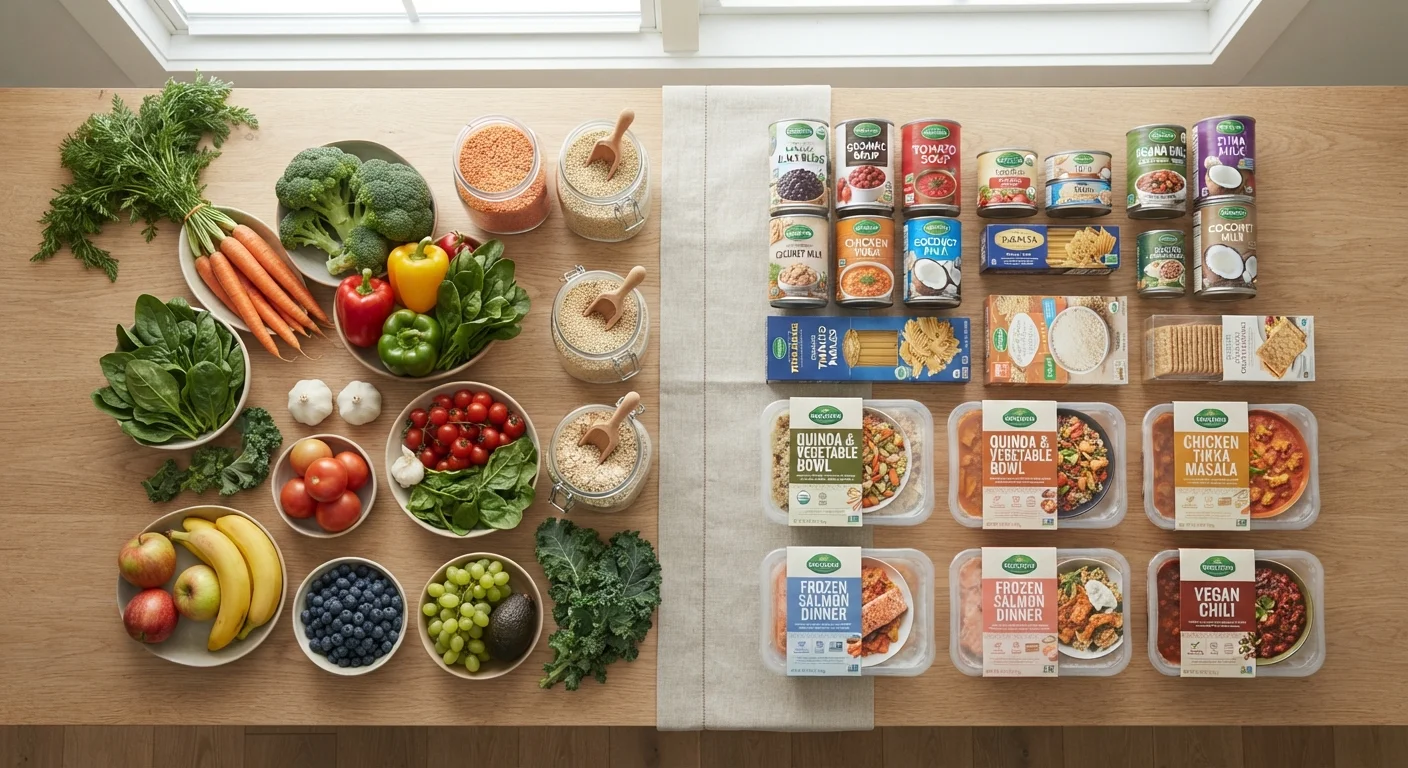
Whole Foods
Foods as close to their natural state as possible.
Best for: Maximizing nutrient density and minimizing added ingredients in everyday eating.
Option B
Processed Foods
Any food that has been altered from its original form.
Best for: Convenience, shelf stability, and filling nutritional gaps when whole options aren't available.
If you want to maximize nutrient density day to day
Whole Foods
Minimally altered foods consistently provide more fiber, vitamins, and beneficial compounds with fewer additives to navigate.
If you're managing a tight schedule or budget
Processed Foods
Minimally processed options like canned legumes, frozen vegetables, and fortified whole-grain products offer genuine nutritional value with significant time and cost advantages.
If you're trying to reduce added sugar, sodium, and saturated fat
Whole Foods
Whole foods contain these compounds only in naturally occurring amounts, making it easier to stay within generally recommended ranges without label-reading every item.
If you're building more sustainable long-term eating habits
Whole Foods
Research consistently associates diets emphasizing whole and minimally processed foods with better long-term health outcomes across multiple chronic disease categories.
What 'Processed' Actually Means
The word processed has become a stand-in for "bad for you" in popular nutrition conversation - but that framing obscures more than it reveals. Technically, any food that has been washed, cut, cooked, frozen, fermented, or packaged has been processed. That means your bag of pre-washed spinach, your plain Greek yogurt, and your can of chickpeas all qualify.
The more useful framework comes from nutrition researchers who classify foods by the degree and purpose of processing. The NOVA classification system, developed by researchers at the University of São Paulo and widely cited in nutrition literature, divides foods into four groups: unprocessed or minimally processed foods; processed culinary ingredients; processed foods; and ultra-processed foods (UPFs). That last category - UPFs - is where the bulk of health concerns are concentrated.
Ultra-processed foods are industrially formulated products that typically contain ingredients rarely found in a home kitchen: emulsifiers, artificial flavors, color additives, preservatives, and high-fructose corn syrup. Think packaged snack cakes, reconstituted meat products, and many flavored drink beverages. The concern isn't processing itself - it's the combination of low nutrient density, high caloric load, and ingredients added primarily to enhance palatability and shelf life.
If you're new to thinking carefully about food categories, a grounded introduction to core nutrition concepts can help orient you before diving into the details.
Head-to-Head: Where Whole and Processed Foods Differ
The differences between whole and ultra-processed foods are measurable across several nutritional dimensions. Fiber is among the most significant: whole grains, legumes, and vegetables retain their fibrous structure, which supports digestive health and satiety. Many ultra-processed products strip fiber out during manufacturing and don't replace it.
| Criterion | Whole Foods | Ultra-Processed Foods |
|---|---|---|
| Fiber content | High - naturally intact | Often removed or absent |
| Added sugars | None (naturally occurring only) | Frequently high |
| Sodium | Naturally low | Often a major dietary source |
| Micronutrient density | Generally high | Typically low relative to calories |
| Ingredient list | Minimal or single-ingredient | Long; includes additives and emulsifiers |
| Satiety | High - fiber and protein intact | Lower - engineered for palatability |
| Shelf life | Short | Extended via preservatives |
| Preparation required | Usually some | Minimal to none |
Sodium is another consistent divergence. Naturally occurring sodium in whole foods is generally low; processed and ultra-processed items are frequently major contributors to daily sodium intake, particularly in packaged soups, deli meats, and savory snacks. The same applies to added sugars, which are largely absent in whole foods but prevalent in flavored yogurts, breakfast cereals, and packaged sauces.
Micronutrient density also tends to favor whole foods. A whole apple delivers vitamin C, potassium, and antioxidants alongside its calories; an apple-flavored snack bar may provide calories with minimal nutritional return. Learning to read packaging critically is its own skill - understanding what nutrition labels are actually telling you can help you evaluate products accurately rather than relying on front-of-package claims.
The Middle Ground Most People Actually Live In
Framing this as a binary choice - whole foods good, processed foods bad - sets most people up for frustration. The reality is that a diet built largely around minimally processed foods, with some processed items selected thoughtfully, is both nutritionally sound and practically sustainable.
Minimally Processed Foods Are Not the Enemy
Frozen vegetables, plain canned legumes, pasteurized milk, and whole-grain bread with simple ingredients are all technically processed - but nutritionally, they function much more like whole foods than like ultra-processed products. When evaluating a processed food, consider whether the processing has added ingredients of concern or primarily served preservation and convenience. The ingredient list is usually the clearest signal.
Frozen vegetables are a clear example. Frozen within hours of harvest, they retain comparable - and in some cases superior - vitamin content to fresh produce that has traveled long distances. Canned tomatoes, plain oats, and unsweetened nut butters occupy similar territory: processed enough to be convenient, but not so altered that their nutritional value is compromised.
The foods worth limiting most deliberately are the ultra-processed ones consumed most frequently - not an occasional packaged snack, but patterns where UPFs displace more nutrient-dense options meal after meal. A simple weekly self-review can help you spot whether those displacement patterns are occurring without requiring obsessive tracking.
For those interested in shifting their overall dietary pattern, building more plant-based meals into a busy weekday schedule is one practical approach that naturally increases whole-food intake without demanding perfection. And if your intentions have been right but your results haven't been, understanding why well-meaning nutrition changes often backfire is worth exploring.
This article is for general informational purposes only and is not a substitute for professional medical or dietary advice. Consult a qualified healthcare provider or registered dietitian for guidance specific to your health situation.