

Key Takeaways
- The plate method uses visual proportions - not numbers - to guide nutritious meal assembly.
- Half your plate from non-starchy vegetables provides fiber, micronutrients, and satiety.
- Protein and whole grains anchor each meal, supporting sustained energy throughout the day.
- Variety across the week matters more than perfection at any single meal.
- Healthy fats, hydration, and mindful pacing round out a complete eating pattern.
What you will need
Why Visual Frameworks Beat Calorie Counters for Most People
Calorie counting can be a useful clinical tool, but for most people it creates friction, anxiety, and an inaccurate sense of control - calorie estimates on labels can vary by up to 20% due to regulatory tolerance and individual metabolic differences. What research does support is that dietary patterns - the overall composition and variety of what you eat - predict long-term health outcomes more reliably than any single numerical target.
The plate method sidesteps the math entirely. It works by shaping proportions rather than quantities, making it adaptable across cuisines, portion preferences, and household sizes. If you are new to thinking about nutrition intentionally, our introduction to core nutrition concepts covers the foundational ideas behind these food groups.
This Is General Nutrition Information
The guidance here is educational and intended for healthy adults. It is not a substitute for personalized medical or dietary advice. If you have a chronic health condition, food allergy, or specific nutritional concern, please consult a registered dietitian or your healthcare provider before making significant changes to your diet.
How to Build Your Balanced Plate
The six steps below take fewer than two minutes of active thought per meal. With repetition, they become automatic. Use the tools and prerequisites below as a starting point, then follow the steps.
What you will need
A standard 9-inch dinner plate
Serves as a visual guide for portioning food groups without measuring equipment.
Measuring cups (optional)
Helpful for calibrating visual estimates during an initial learning period; not needed long-term.
A registered dietitian
Provides personalized guidance for those with specific health conditions or nutritional goals.
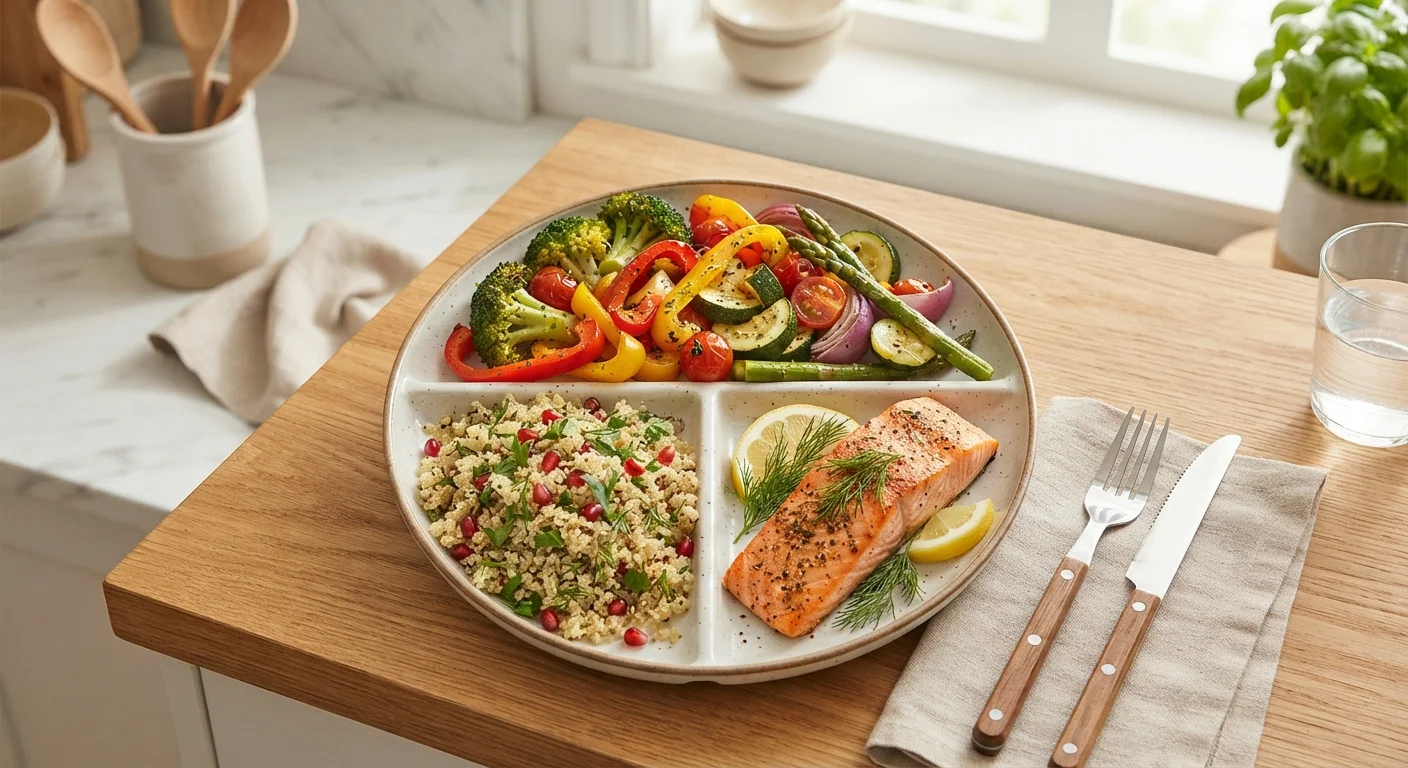
Divide your plate visually into three zones
Before serving food, mentally divide your plate in half, then split one of those halves again. You now have three zones: one large half and two smaller quarters. This simple geometry is the foundation of the plate method, a framework endorsed by nutrition researchers and widely used in dietary education.
Fill half the plate with non-starchy vegetables
The large half goes to non-starchy vegetables - think leafy greens, broccoli, peppers, zucchini, cucumbers, tomatoes, and cabbage. These foods deliver fiber, vitamins, minerals, and water content that promote satiety without a large caloric load. Cooked or raw both count; frozen vegetables are equally nutritious.
Reserve one quarter for a quality protein source
One of the two smaller quarters should contain a protein source. Options span animal and plant foods: fish, poultry, eggs, legumes (beans, lentils, chickpeas), tofu, tempeh, or dairy such as Greek yogurt or cottage cheese. Protein supports muscle maintenance, immune function, and helps regulate hunger hormones. For plant-based approaches, see plant-based eating strategies that fit a busy schedule.
Fill the remaining quarter with whole or minimally processed grains
The final quarter is for complex carbohydrates - whole grains like brown rice, quinoa, farro, whole-wheat bread or pasta, oats, or starchy vegetables like sweet potato and corn. These provide sustained energy and additional fiber. Minimally processed versions retain more nutrients than refined counterparts.
Add a small amount of healthy fat
Dietary fat is not a section on the plate - it's a complement. A drizzle of olive oil, a few slices of avocado, a small handful of nuts or seeds, or a tahini-based dressing contributes unsaturated fats that aid fat-soluble vitamin absorption and support cardiovascular health. The key is intentionality: small amounts go a long way in terms of both nutrition and flavor.
Pair the meal with water or an unsweetened beverage
Hydration is part of the complete eating pattern. Water, plain sparkling water, herbal teas, or other unsweetened drinks support digestion and help distinguish thirst from hunger. Aim to have a drink alongside your meal as a consistent habit rather than treating hydration as separate from eating. For more on embedding habits like this into your daily routine, explore evidence-informed daily nutrition habits.
Variety Is the Real Goal
Research consistently links dietary variety - especially among plant foods - with better long-term health outcomes. Rotating your vegetable choices across the week is more impactful than optimizing any single plate. Aim for different colors and types rather than the same 'safe' options every day.
Common Pitfalls and How to Stay on Track
Even straightforward frameworks can produce unexpected friction. The most common stumbling block is all-or-nothing thinking - one skipped vegetable portion becoming justification for abandoning the approach entirely. The plate method is designed to flex: a meal that is 40% vegetables instead of 50% is still a nutritious meal. Consistency across days and weeks matters far more than any single plate.
A second pitfall is substituting ultra-processed items into the grain or protein quarter simply because they technically fit the category. Whole-food choices within each zone carry more nutritional benefit. If you notice patterns where good intentions regularly lead to less helpful outcomes, the article on common nutrition missteps explores the underlying patterns in detail.
Avoid Rigid Rules Around Food
Visual frameworks are meant to reduce stress around eating, not create new anxiety. If tracking portions or food categories begins to feel compulsive or distressing, that is worth discussing with a healthcare professional. Flexibility and sustainability matter far more than hitting exact proportions every meal.
Finally, use the plate method as a starting point, not an endpoint. Once it feels natural, a weekly nutrition self-audit can help you spot gaps in variety or key food groups you might be overlooking over time.
This article is for general informational and educational purposes only and does not constitute medical or dietary advice. Consult a qualified healthcare professional or registered dietitian for guidance tailored to your individual health needs.