
Cruising with Specific Health Needs: Accessibility, Dietary Requirements, and Medical Facilities Onboard

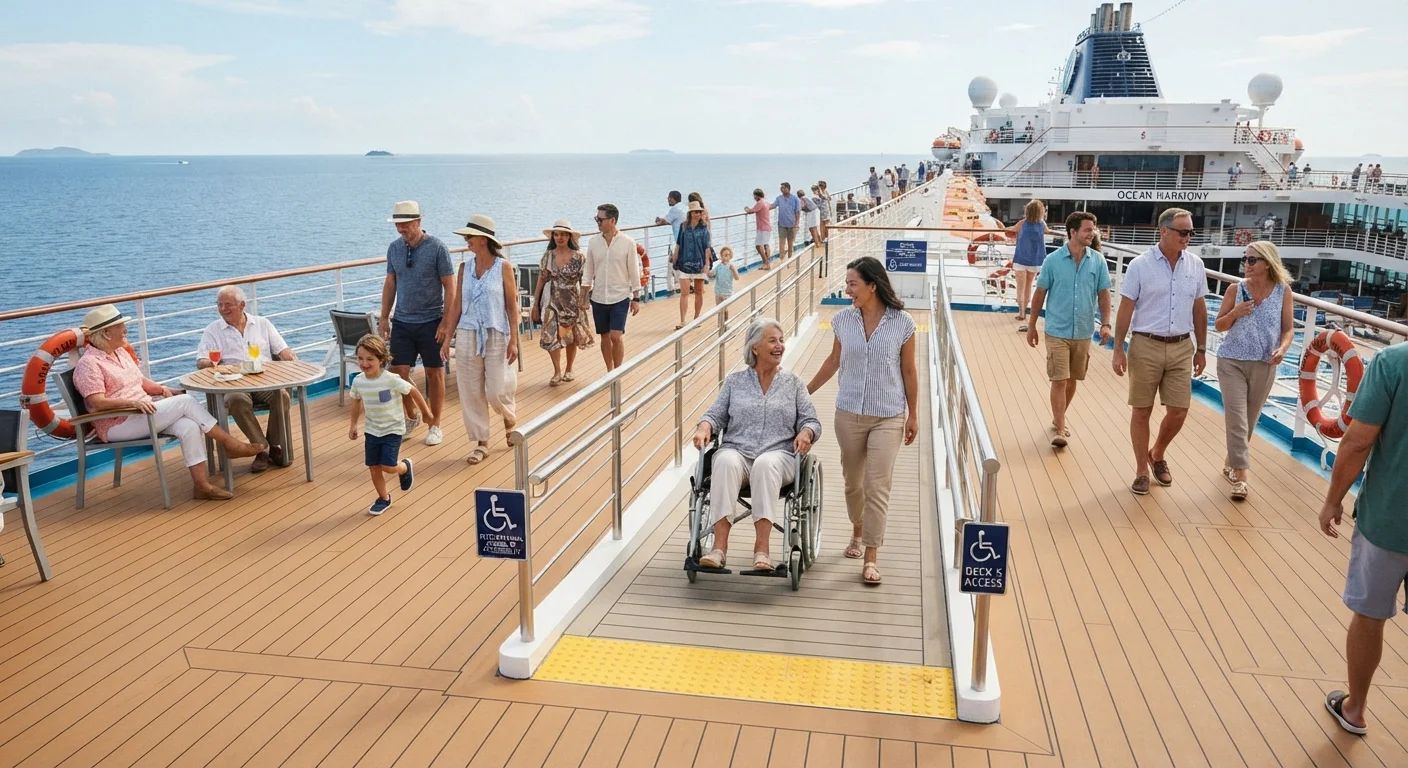
Key Takeaways
- Accessibility standards vary significantly between cruise lines and ship classes — always verify specifics in writing before booking.
- Most cruise ships carry medical staff, but facilities differ widely; passengers with complex needs should assess onboard capabilities carefully.
- Dietary needs including allergies, religious requirements, and medical diets can usually be accommodated with advance notice.
- Travel insurance that covers pre-existing conditions and medical evacuation is strongly advisable for passengers with health needs.
- Port excursions have separate accessibility considerations that the ship itself cannot guarantee.
Summary
22 items · 30–60 minutes
Why This Checklist Matters Before You Book
Cruising can be an excellent holiday format for travelers with health needs — itineraries are largely self-contained, medical staff are onboard, and you unpack only once. But the gap between what a cruise line advertises and what a specific ship actually delivers can be significant. Cabin configurations, medical equipment, dietary protocols, and shore excursion access all vary by vessel, not just by cruise line brand.
This checklist is designed for anyone managing a mobility limitation, chronic health condition, dietary restriction, or other specific need. Work through it before you book, again when you receive your booking confirmation, and once more in the weeks before departure. If you're managing a long-term condition, our structured guide to questions for your care team can help you prepare the right medical conversations ahead of travel.
This article provides general information to help you ask the right questions. It is not medical or legal advice. Always consult your healthcare provider before traveling with a health condition, and verify all details directly with your cruise line.
Verbal Assurances Are Not Enough
Cruise call centers frequently give general answers that do not reflect the reality of a specific ship or sailing. Always request confirmation in writing — ideally from the line's accessibility or special services team — and keep those records accessible during your trip. If documentation is not provided, escalate before you book, not after.
Your Pre-Cruise Health & Accessibility Checklist
Use the grouped checklist below to systematically audit each dimension of your upcoming cruise. Document responses from your cruise line in writing — email confirmation is preferable to verbal assurances from a call center agent.
Accessibility & Mobility
Medical Facilities & Onboard Care
Dietary Requirements
Insurance, Documentation & Contingency
For help understanding cabin terminology referenced in accessibility conversations — such as "obstructed view" or "connecting cabin" — the Cruise Cabin Categories Explained article breaks down exactly what each designation means in practice.
If you're also thinking through what to pack — including medications, mobility aids, and medical documentation — our cruise packing guide covers what's commonly overlooked. For passengers prone to motion sensitivity, our overview of seasickness management provides clear, honest context on when it's a realistic concern.
Medical Evacuation Costs Can Be Severe
Helicopter or vessel evacuation from a cruise ship in international waters can cost tens of thousands of dollars and is almost never covered by standard health insurance. Travel insurance with explicit medical evacuation coverage is not optional for passengers with significant health needs — it is a fundamental part of trip planning. Read the policy document carefully, paying attention to pre-existing condition clauses and what constitutes a covered emergency.
New to cruise terminology? The cruise terminology glossary is a useful plain-language reference for words you'll encounter throughout the booking and boarding process.