

Key Takeaways
- A customs declaration is a legally binding statement, not a routine bureaucratic formality.
- Every arriving international traveler must declare goods above established duty-free thresholds.
- Certain items — including many foods, plants, and animal products — must be declared regardless of value.
- Failing to declare can result in fines, seizure of goods, or more serious legal consequences.
- Honest mistakes are treated differently than deliberate concealment, but ignorance is not a full defense.
- When in doubt, declare — officers can clear an item that poses no problem far more easily than they can overlook an undisclosed one.
Customs Declaration
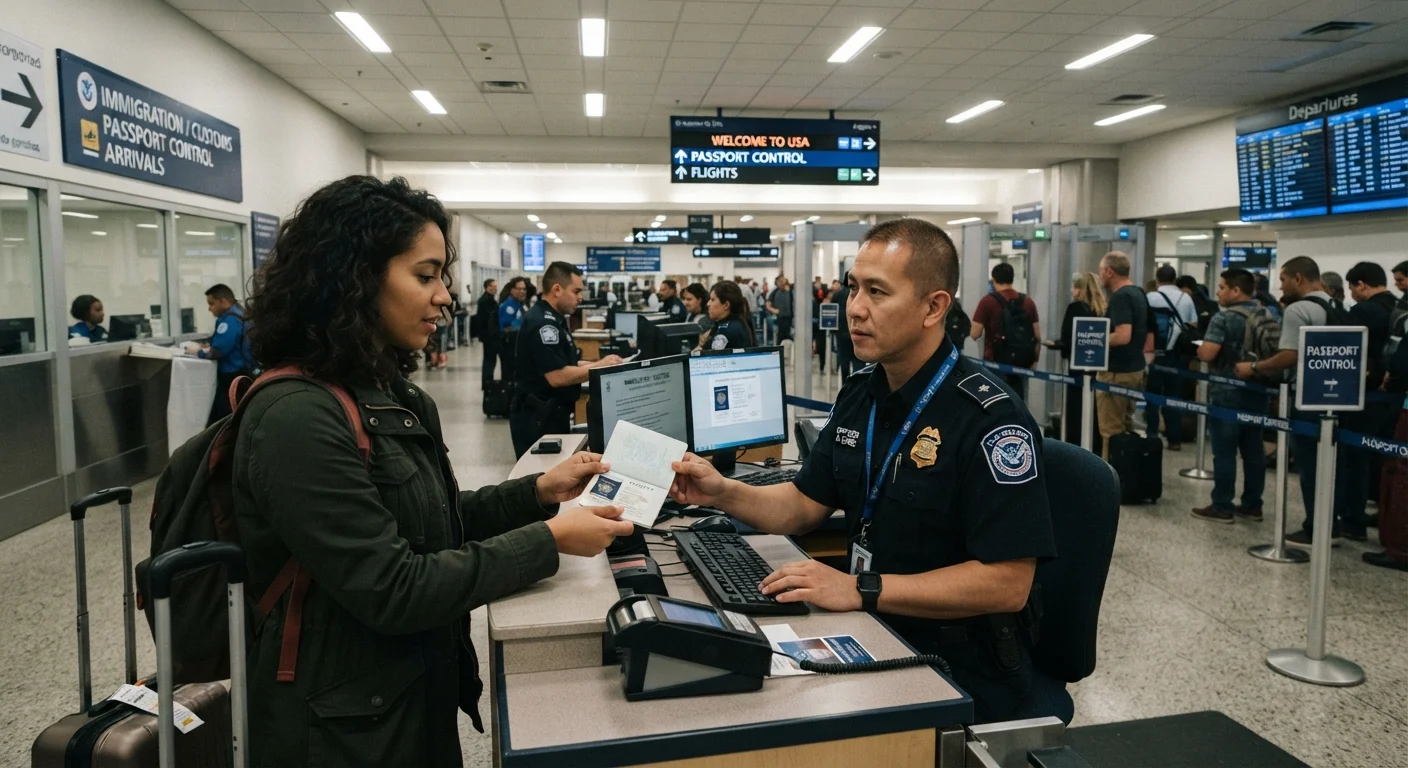
A customs declaration is an official statement made by a traveler entering a country, disclosing what goods they are bringing in — including purchases, gifts, food, and large sums of cash. It gives border authorities the information they need to assess whether duties are owed, whether items are prohibited, and whether any further inspection is warranted. Signing the form means you are attesting, under penalty of law, that your answers are truthful and complete.
In the United States, U.S. Customs and Border Protection (CBP) administers this process. The primary document for arriving international travelers is CBP Form 6059B, though many airports now use automated kiosk systems that fulfill the same legal function.
What the Form Is Actually Asking You to Certify
Most travelers treat the customs declaration card as airport paperwork — something to fill out quickly before landing and hand over without much thought. That framing carries real risk. The declaration is a sworn statement. When you sign it, you are certifying to a federal officer that the information is accurate and complete to the best of your knowledge.
The form typically asks three categories of questions: what goods you are bringing in and their total value, whether you are carrying controlled items such as large amounts of currency, and whether you have visited any farms or handled livestock abroad. Each category reflects a different enforcement priority — revenue collection, financial crime prevention, and agricultural biosecurity respectively.
If you are planning your first trip abroad and want a broader picture of what to expect at the border, our first-time international traveler's guide covers the full arrival process in practical terms.
When in Doubt, Declare It
If you are unsure whether an item needs to be declared, put it on the form. Declaring something that turns out to be fully admissible has no downside — the officer will clear it and you move on. Failing to declare something that is later found during inspection is a different matter entirely, with consequences that are difficult to undo.
Why These Rules Exist — and What They Protect
Customs systems serve three distinct functions that are easy to overlook when you are tired and just want to collect your bags. The first is revenue: duties on imported goods fund government operations and protect domestic industries from artificially cheap foreign competition. The second is security: border inspections intercept weapons, counterfeit goods, and substances that would otherwise enter the country unchecked. The third — often underestimated — is biosecurity.
Agricultural restrictions exist because a single invasive pest or plant disease introduced on a piece of undeclared fruit can devastate entire farming regions. The U.S. Department of Agriculture works alongside CBP specifically to prevent this. It is why a seemingly harmless apple can be treated as a serious compliance issue at the border.
$800
U.S. duty-free exemption per returning traveler
U.S. Customs and Border Protection sets this threshold for goods acquired abroad for personal or household use by most returning residents.
$10,000
Cash reporting threshold for international travelers
Federal law requires travelers entering or leaving the U.S. to declare currency and monetary instruments at or above this amount to CBP.
Over 1 million
Travelers processed by CBP daily at U.S. ports of entry
CBP reports processing more than one million travelers on an average day, underlining why the self-declaration system is central to border management.
Understanding what the rules protect helps reframe the declaration process. It is not designed to catch travelers; it is designed to filter what enters the country in a way that a self-reporting system — honest reporting — makes possible at scale.
What Counts as a Declarable Item
The duty-free exemption for most U.S. residents returning from abroad sits at $800 in goods for personal use. Anything above that threshold is potentially subject to duties. But the exemption does not mean items under $800 go undeclared — you still report the total value, and the form determines whether duty applies.
Beyond dollar amounts, certain categories must be declared regardless of value. These include: all food items (even if commercially packaged), plants, seeds, soil, live animals, and animal products. Currency and monetary instruments totaling $10,000 or more must also be reported — not because carrying that amount is illegal, but because international financial transparency rules require disclosure.
Gifts count toward your exemption as well. A common misunderstanding is that items purchased for other people don't need to be declared. They do. What matters is that the goods entered the country in your possession.
If you are managing what you bring home after a cruise, it is worth knowing that cruise-specific purchases — jewelry, spirits, duty-free goods — follow the same customs rules as any other international travel. Our guide on what cruise packing rules actually mean covers the luggage side; customs governs what happens at re-entry.
What Getting It Wrong Actually Means
The consequences for non-compliance range in severity. At the lower end, an honest omission of a low-value item may result in the item being confiscated and a warning issued. Civil fines, however, can reach into the thousands of dollars for undeclared goods, and the amount often bears little relationship to the value of the item itself — it reflects the violation, not the merchandise.
Deliberate concealment is treated more seriously and can result in criminal referral. CBP officers are trained to identify inconsistencies, and secondary inspection — the deeper search that follows when something triggers concern — is thorough. Items discovered during secondary inspection that were not declared on the form shift the situation from administrative to potentially criminal.
There is a useful parallel to other contexts where people unknowingly sign away rights or protections through inattention. Understanding what you certify before you sign is a principle that applies well beyond the customs hall.
The practical guidance that experienced travelers consistently offer holds: when in doubt, declare. A declared item that turns out to be permissible costs you nothing but a moment of inspection time. An undeclared item that is discovered costs considerably more.
This article provides general educational information about customs declaration procedures. Rules, thresholds, and enforcement practices are subject to change. Always verify current requirements with U.S. Customs and Border Protection or the relevant authority of the country you are entering before you travel.