

Key Takeaways
- You don't need to go fully vegan - adding more plants to existing meals delivers meaningful health benefits.
- Batch-prepping a few core plant proteins on Sunday dramatically reduces weekday friction.
- Legumes, whole grains, and dark leafy greens are the nutritional backbone of practical plant-based eating.
- Vitamin B12, iron, and omega-3s deserve attention when animal foods are significantly reduced.
- Small, consistent shifts outperform strict overhauls that are hard to maintain long-term.
What you will need
Why Plant-Forward Eating Is Worth the Adjustment
A plant-based diet - one centered on vegetables, legumes, whole grains, nuts, and seeds - is consistently associated in large-scale research with lower rates of cardiovascular disease, type 2 diabetes, and certain cancers, according to bodies including the American Heart Association and the World Health Organization. Importantly, the evidence points to benefit across a spectrum, not just for those who eliminate all animal products.
For most working adults, the practical obstacle isn't motivation - it's the gap between intention and a realistic weeknight routine. The steps below are designed to close that gap by reducing decision fatigue and front-loading the effort that matters most.
For a complementary framework on assembling nutritious meals without tracking every gram, see our visual plate-building guide. And if you want a broader view of how plant-based choices fit into overall eating patterns, our article on whole foods versus processed foods provides useful context.
Start With Meals You Already Enjoy
Instead of hunting for entirely new recipes, look at what you already eat and ask which animal ingredients could be reduced or replaced with a plant-based alternative. Swapping half the ground meat in a chili for lentils, or using white beans in a soup you already make, lowers the learning curve considerably. Familiar flavors make consistency far easier to sustain.
What You'll Need Before You Start
Plant-based weekday eating doesn't require a specialty grocery store or an elaborate kitchen setup. The foundation is a modest pantry and a willingness to spend a short window of time on preparation before the week begins.
What you will need
Large lidded storage containers
Store batch-cooked grains and legumes in the refrigerator for quick weekday assembly.
Instant pot or stovetop pressure cooker
Cuts legume and grain cooking times significantly, reducing prep burden.
Sheet pan
Roast vegetables in bulk, producing versatile components for multiple weekday meals.
Watch Your Protein and Key Nutrients
Reducing or eliminating animal products can lower intake of vitamin B12, heme iron, zinc, calcium, and long-chain omega-3 fatty acids. These gaps are manageable through thoughtful food choices and, where appropriate, supplementation - but they're worth actively monitoring rather than ignoring. If you have a chronic health condition or are pregnant, consult a registered dietitian before making significant dietary changes.
Step-by-Step: Making It Work Around a Busy Week
The following steps move from assessment to habit-building in a logical sequence. You don't need to implement everything at once - working through steps one to three in the first week, then adding steps four through six over the following two weeks, is a reasonable approach.
Audit your current weekday meals
Before changing anything, spend a few minutes mapping out what a typical weekday looks like for you. Note which meals already happen to be plant-heavy (many breakfast and lunch choices already are) and where animal products play a starring role. This gives you a realistic picture rather than an idealized one.
You're looking for two or three meals per week where a plant-based swap would require minimal effort. That's enough to start building momentum.
Pick two or three anchor plant proteins
Plant-based eating gets easier when you work with a small rotation of familiar proteins rather than constantly trying new ingredients. Good anchors include lentils (red or green), canned chickpeas, black beans, edamame, tofu, and tempeh. Each provides protein and fiber, and all are inexpensive and widely available.
Choose the two or three that you're most comfortable cooking or that require the least preparation - canned legumes, for example, need only draining and rinsing.
Batch-cook grains and legumes on the weekend
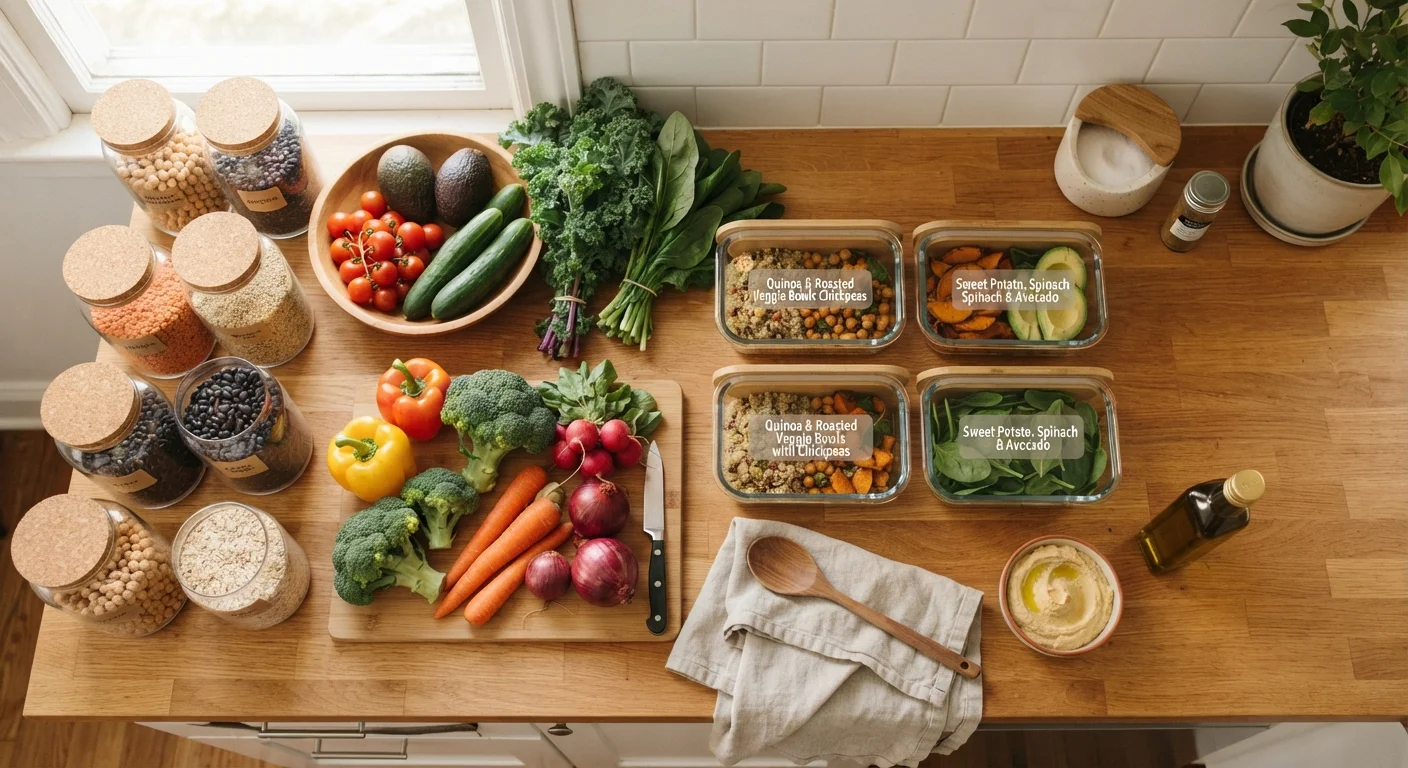
Set aside 30-45 minutes on a Saturday or Sunday to cook a large batch of one grain (brown rice, farro, or quinoa) and one legume (lentils or dried beans). Portioned into lidded containers, these will keep refrigerated for up to five days and become the backbone of multiple weekday meals - grain bowls, soups, wraps, and stir-fries.
This single habit removes the most common weekday barrier: the time required to cook from scratch after a long day.
Build your weekday meals around the batch components
With cooked grains and legumes in the fridge, weekday assembly becomes a straightforward exercise. A few practical combinations that come together in under ten minutes:
- Grain bowl: cooked farro + canned chickpeas + pre-washed arugula + olive oil and lemon
- Wrap: warmed black beans + roasted frozen vegetables + salsa in a whole-wheat tortilla
- Quick soup: lentils + store-bought low-sodium vegetable broth + canned diced tomatoes + cumin
The goal isn't culinary creativity every night - it's reliable, nourishing food that fits around a real schedule.
Address key nutrient gaps proactively
When animal foods drop in frequency, a handful of nutrients deserve deliberate attention. Vitamin B12 is found almost exclusively in animal products and is typically the most important consideration for those significantly reducing meat and dairy. Iron from plant sources (non-heme iron) is less readily absorbed than iron from meat - pairing iron-rich foods like lentils or spinach with a source of vitamin C improves absorption. Calcium and omega-3 fatty acids (from sources such as walnuts, flaxseed, and chia seeds) are also worth consciously including.
A registered dietitian can help you assess whether supplementation is appropriate for your specific situation.
Review and adjust after two weeks
After two weeks, take stock of what's working and what isn't. Are you finding the meals satisfying? Are there specific days where the plan falls apart? Adjust accordingly - maybe that's adding a backup fast option (a can of lentil soup) for especially chaotic evenings, or rotating in a new grain to prevent boredom.
Sustainable eating patterns are iterative. What works is what you'll actually do consistently. See our guide on common nutrition missteps for patterns to watch for as you build new habits.
This Is General Nutrition Information
The guidance in this article is educational and does not constitute personalized medical or dietary advice. Individual nutritional needs vary based on age, health status, activity level, and other factors. Always consult a qualified healthcare professional or registered dietitian before making significant changes to your diet, especially if you manage a chronic condition.
Keeping the Habit Going
The most durable dietary shifts share one characteristic: they don't ask for perfection. Missing a week, falling back on convenience foods during a stressful period, or occasionally skipping the Sunday prep session doesn't undermine progress - it's a normal part of how habits form.
Use our weekly nutrition self-audit to check in periodically on whether your meals are covering the full range of food groups you're aiming for. And our piece on evidence-informed daily nutrition habits offers additional practices that layer well alongside a plant-forward approach.
This article is for general informational and educational purposes only and does not constitute medical or dietary advice. Consult a qualified healthcare professional or registered dietitian before making significant changes to your diet.