

| Calories per gram - Protein | 4 kcal/g (National Academies of Sciences, Engineering, and Medicine) |
| Calories per gram - Carbohydrates | 4 kcal/g (National Academies of Sciences, Engineering, and Medicine) |
| Calories per gram - Fat | 9 kcal/g (National Academies of Sciences, Engineering, and Medicine) |
| Protein baseline (sedentary adults) | 0.8 g per kg of body weight/day (Dietary Reference Intakes, National Academies) |
| Brain's preferred fuel | Glucose (from carbohydrates) |
| Fat-soluble vitamins requiring dietary fat | A, D, E, K (NIH Office of Dietary Supplements) |
What Are Macronutrients?
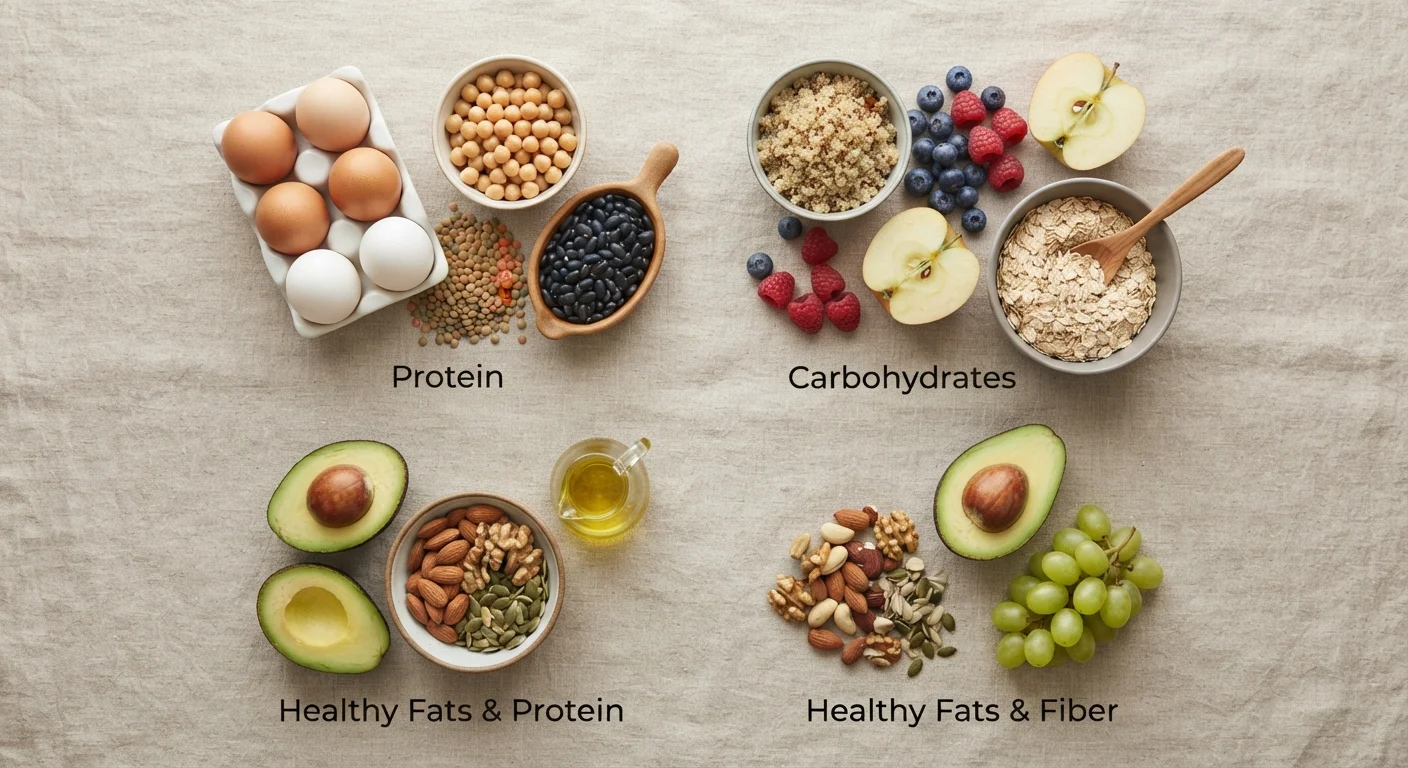
Protein, carbohydrates, and fats are collectively called macronutrients - the three categories of nutrients your body requires in relatively large amounts to sustain energy, growth, and basic physiological function. Unlike vitamins and minerals (see micronutrients and what they do), macronutrients are measured in grams and provide the calories that fuel everything from breathing to exercise.
Understanding what each one actually does - rather than what a trending diet says about it - helps you make more confident, less reactive choices at every meal.
| Calories per gram - Protein | 4 kcal/g (National Academies of Sciences, Engineering, and Medicine) |
| Calories per gram - Carbohydrates | 4 kcal/g (National Academies of Sciences, Engineering, and Medicine) |
| Calories per gram - Fat | 9 kcal/g (National Academies of Sciences, Engineering, and Medicine) |
| Protein baseline (sedentary adults) | 0.8 g per kg of body weight/day (Dietary Reference Intakes, National Academies) |
| Brain's preferred fuel | Glucose (from carbohydrates) |
| Fat-soluble vitamins requiring dietary fat | A, D, E, K (NIH Office of Dietary Supplements) |
Protein: Building, Repairing, Regulating
Protein is made up of amino acids, often described as the body's building blocks. Of the 20 amino acids involved in human metabolism, nine are classified as essential - meaning your body cannot synthesize them and must obtain them from food. Animal sources (meat, fish, eggs, dairy) typically supply all nine, while most plant sources supply only some; combining varied plant proteins over the course of a day covers the full spectrum for most people.
Beyond muscle synthesis, protein is central to enzyme production, immune function, hormone regulation, and oxygen transport via hemoglobin. It also has the highest thermic effect of any macronutrient - meaning the body expends more energy digesting it - which contributes to its reputation for supporting satiety.
The Dietary Reference Intake (DRI) established by the National Academies sets a baseline of 0.8 grams of protein per kilogram of body weight per day for sedentary adults, though needs rise with physical activity, age, illness, and pregnancy. Always consult a healthcare professional for guidance specific to your situation.
Macronutrient
A nutrient required in large amounts that provides calories and supports fundamental physiological processes. The three macronutrients are protein, carbohydrates, and fat.
Essential amino acids
Nine amino acids the human body cannot produce on its own and must obtain through dietary protein. They are histidine, isoleucine, leucine, lysine, methionine, phenylalanine, threonine, tryptophan, and valine.
Glucose
A simple sugar that is the body's primary fuel source, derived mainly from the digestion of carbohydrates and transported through the bloodstream to cells.
Thermic effect of food
The energy the body expends to digest, absorb, and metabolize nutrients. Protein has a higher thermic effect than carbohydrates or fat, meaning more calories are burned processing it.
Fat-soluble vitamins
Vitamins A, D, E, and K, which require dietary fat to be absorbed in the small intestine and transported through the body. They are stored in fatty tissue and the liver.
Trans fats
A type of unsaturated fat created through industrial hydrogenation of liquid oils, associated with increased cardiovascular risk. Mostly eliminated from the US food supply following FDA action.
Carbohydrates: The Body's Preferred Fuel
Carbohydrates are the body's primary and most readily available energy source. When you eat carbs, your digestive system breaks them down into glucose, which enters the bloodstream and powers cells - particularly in the brain and red blood cells, which rely almost exclusively on glucose for fuel.
Carbohydrates divide broadly into two groups: simple carbohydrates (sugars found in fruit, dairy, and refined foods) and complex carbohydrates (starches and fiber found in whole grains, legumes, and vegetables). Complex carbs digest more slowly, producing a more gradual rise in blood glucose and sustained energy. Dietary fiber - a subset of complex carbohydrates - is not digested for energy but supports gut health, blood sugar regulation, and satiety in important ways (learn more about fiber's broader role).
The idea that carbohydrates are inherently fattening is a persistent myth. What matters most is the type and overall dietary context - a point explored in detail in our look at nutrition myths that refuse to die.
45-65%
Recommended share of daily calories from carbohydrates
According to the Dietary Guidelines for Americans, issued jointly by the USDA and HHS.
10-35%
Recommended calorie range from protein daily
Per the Dietary Reference Intakes set by the National Academies of Sciences, Engineering, and Medicine.
20-35%
Recommended calorie range from fat daily
Per the Dietary Guidelines for Americans; emphasis placed on unsaturated fat sources.
Fats: Essential, Not Optional
Dietary fat has a complicated public image, but it is physiologically indispensable. Fats serve as the primary energy reserve during rest and low-intensity activity, provide structural material for every cell membrane in the body, and enable absorption of fat-soluble vitamins - A, D, E, and K - which cannot enter the bloodstream without fat present in the gut.
Fats are categorized by their chemical structure: unsaturated fats (found in olive oil, nuts, avocado, and fatty fish) are generally associated with cardiovascular benefit in research; saturated fats (found in red meat and full-fat dairy) are recommended in moderation by most major dietary guidelines; and trans fats (industrially produced) are widely advised against and have largely been removed from the US food supply following regulatory action.
Fat also plays a central role in hormone synthesis - including sex hormones and cortisol - and in nerve conduction. Eliminating fat entirely is not a sound strategy and can impair these functions. The goal is choosing fat sources wisely within an overall balanced pattern, not avoiding the macronutrient altogether.
When reading packaged foods, the fat breakdown by type is listed on the Nutrition Facts label - see what nutrition labels are actually telling you for a plain-language guide to interpreting those numbers.
This Is General Information, Not Personal Advice
The nutrient ranges and functions described here reflect established dietary guidelines for healthy adults. Individual needs vary significantly based on age, activity level, health status, medications, and other factors. Speak with a registered dietitian or your healthcare provider before making significant changes to your eating pattern, especially if you have a chronic condition or are pregnant.