

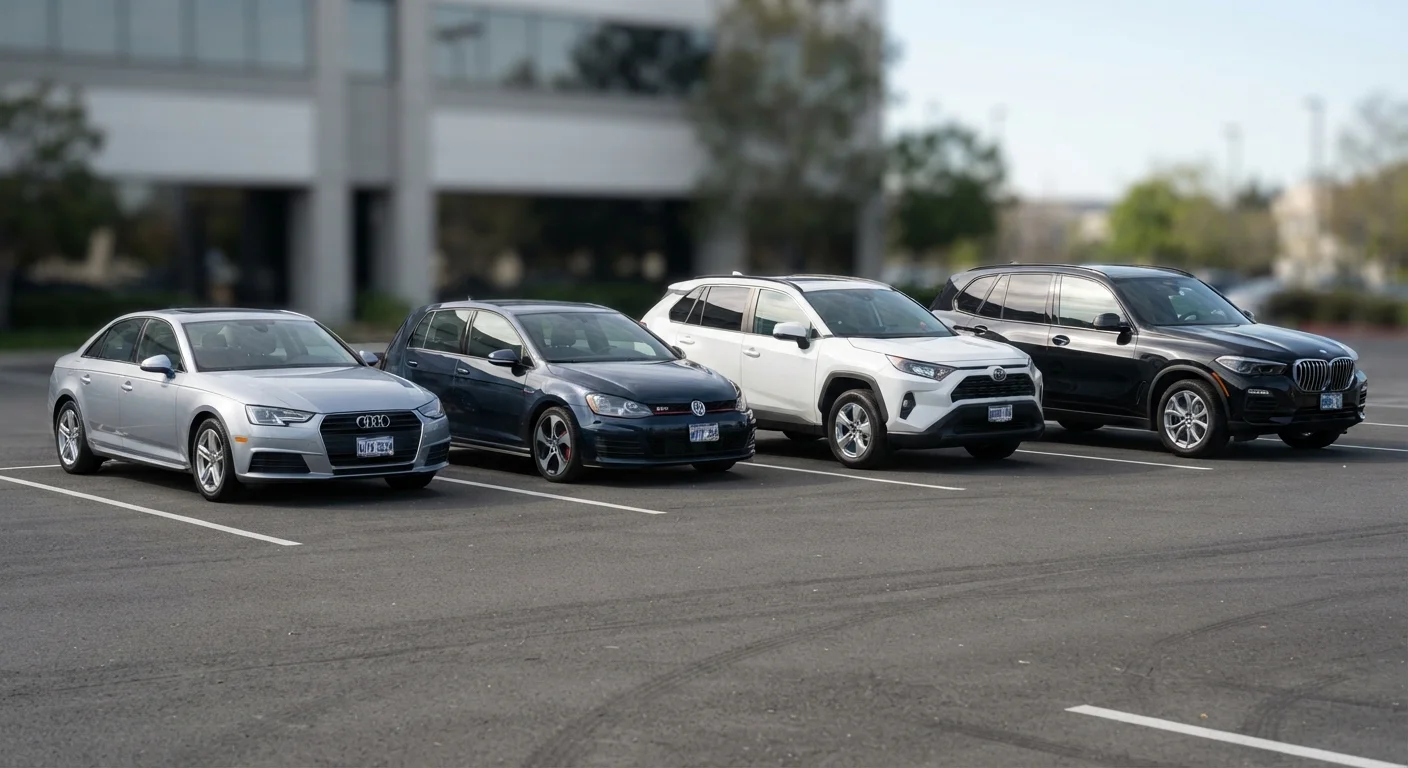
Key Takeaways
- Sedans prioritize a low, sleek profile with a separate trunk compartment and typically offer better fuel economy.
- SUVs are built on truck-like platforms and offer greater ground clearance, towing capacity, and available four-wheel drive.
- Hatchbacks share a sedan's footprint but replace the trunk lid with a rear liftgate, unlocking more flexible cargo space.
- Crossovers look and feel like SUVs but ride on car-based platforms, offering a smoother drive with less off-road capability.
- Body style affects resale value, insurance costs, and how the vehicle handles - not just how it looks.
Car Body Style
A car's body style refers to its overall structural shape and configuration - how many doors it has, where the roofline ends, and how cargo and passenger space are arranged. Common body styles include sedans, SUVs, hatchbacks, and crossovers. These categories reflect physical design choices that directly affect interior room, cargo capacity, driving dynamics, and fuel efficiency.
Body styles are sometimes confused with vehicle segments (compact, midsize, full-size), which describe size class. A crossover, for example, can be compact or midsize - the body style and the segment are separate classifications.
Why Body Style Is Your Starting Point
Before comparing engine specs, trim packages, or color options, body style is the framework that shapes everything else about a vehicle. It determines how many people ride comfortably, how much cargo you can carry, how the vehicle handles corners, and even what you'll pay at the fuel pump. If you're new to the car research process, the car market overview guide offers useful context for how body styles fit into the broader landscape of segments and brands.
The four body styles most shoppers encounter - sedan, SUV, hatchback, and crossover - each make different trade-offs. None is universally superior. The right choice depends on how you actually use a vehicle day to day.
~40%
U.S. new vehicle sales that are crossovers/SUVs
Crossovers and SUVs have consistently represented a large share of U.S. new vehicle registrations in recent years, reflecting a broad shift away from traditional sedans.
3-5 MPG
Typical fuel economy gap between sedans and SUVs
EPA data generally shows sedans returning several more miles per gallon in combined driving than comparable-sized SUVs, though individual results vary by model and drivetrain.
20-30%
More cargo volume in hatchbacks vs. sedans of same length
Because hatchbacks combine the trunk and cabin into one continuous space, the usable volume with rear seats folded can significantly exceed a same-footprint sedan's trunk.
Sedans: The Classic Three-Box Design
A sedan features three distinct compartments: engine up front, passengers in the middle, cargo in a separate trunk at the rear. The closed trunk keeps noise and fumes out of the cabin and gives the car a lower, sleeker roofline. That shape typically translates to better aerodynamics and fuel efficiency compared to taller vehicles.
Sedans tend to handle more nimbly at highway speeds, with a lower center of gravity that reduces body roll in corners. The trade-off is a fixed trunk opening - bulky or oddly shaped items can be harder to load than in vehicles with a rear liftgate. Trunk capacity is measured in cubic feet and is generally competitive with similarly sized hatchbacks, but the access point is smaller.
Sedans remain a strong choice for commuters, highway drivers, and anyone prioritizing fuel costs over cargo flexibility. For a deeper look at how sedans stack up against compact SUVs in everyday scenarios, see the midsize sedans vs. compact SUVs comparison.
SUVs: High Rides Built for Capability
Traditional SUVs are built on body-on-frame platforms - the same structural approach used in pickup trucks. This construction gives them genuine off-road durability, high towing ratings, and significant ground clearance. They seat more passengers (often three rows), and their elevated ride height makes entry and exit easier for many drivers.
The downsides are real: traditional SUVs are heavier, less fuel-efficient, and more expensive to purchase and maintain than most sedans or hatchbacks. Their higher center of gravity also means more body roll in corners compared to lower vehicles. That said, for drivers who tow trailers, navigate unpaved roads regularly, or need to move large groups, the capability gap is meaningful.
Hatchbacks: Sedans That Open Up
A hatchback uses the same basic footprint as a compact or midsize sedan but replaces the separate trunk lid with a rear liftgate that opens upward - combining the passenger and cargo areas into one continuous space. Fold down the rear seats, and the usable cargo area expands significantly.
This flexibility is the hatchback's defining advantage. The same vehicle that carries four adults comfortably on Monday can haul a flat-pack bookcase on Saturday. Hatchbacks typically return fuel economy close to their sedan counterparts because the overall vehicle size and weight are similar.
Measure Before You Commit
Before deciding between a hatchback and a sedan, measure the specific items you carry most often - bicycles, strollers, sports equipment. Then compare the cargo dimensions (in cubic feet, with seats up and folded) of the models you're considering. Manufacturer websites and independent spec databases publish these figures. What looks like a minor difference on paper can matter significantly in practice.
Hatchbacks are particularly popular in urban environments where parking is tight and versatility matters more than raw cargo volume. They're worth considering if you regularly move items that don't fit a conventional trunk.
Crossovers: The Practical Middle Ground
Crossovers - sometimes labeled CUVs (crossover utility vehicles) - look like smaller, car-friendlier versions of SUVs. The critical distinction is underneath: crossovers use unibody construction, the same approach used in sedans and hatchbacks. This makes them lighter and more car-like to drive, with better fuel economy than body-on-frame SUVs.
Most crossovers offer available all-wheel drive, a liftgate rear opening, a raised seating position, and more cargo room than a typical sedan. What they generally don't offer is the towing capacity or serious off-road durability of a traditional SUV. For the majority of drivers who never leave paved roads, this is an acceptable trade-off.
Understanding how a specific crossover's trim levels affect features like AWD availability or cargo organization is worth investigating. The trim levels and packages guide explains how those designations work across common naming conventions.
Making the Right Call for Your Situation
Body style shapes your daily experience more than most spec sheets suggest. Once you've narrowed down which structure fits your life - a sedan's efficiency, an SUV's capability, a hatchback's flexibility, or a crossover's balance - you can start comparing specific models on factors like reliability history, safety ratings, and ownership costs.
For a structured approach to that next step, the guide to comparing two specific car models covers specs, features, and trade-offs that broad reviews often overlook. And if you're curious how a particular model has changed over its production run, understanding generation changes explains what those redesigns actually mean for buyers.
“The body style question isn't about which vehicle looks better - it's about which structural trade-offs you can actually live with over years of ownership.”
— Cars Editorial Team, Automotive Research and Buying Guidance