

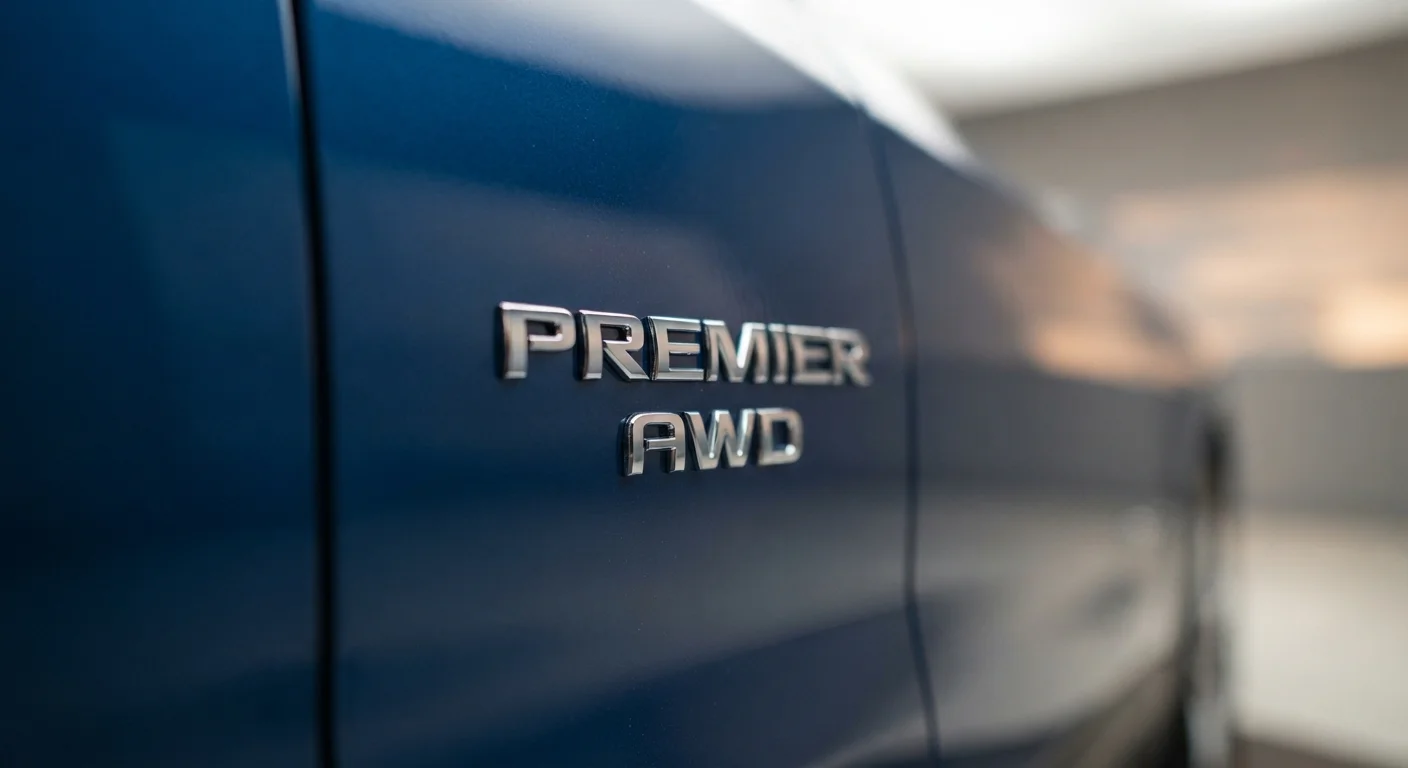
| What trim levels control | Standard features, materials, technology, and powertrain options |
| Typical number of trims per model | 3-6 tiers, depending on the manufacturer |
| Can you mix individual options across trims? | Generally no - most features are bundled by trim or package |
| Do trim names mean the same thing across brands? | No - naming conventions are brand-specific and vary widely |
| Where to verify exact trim content | Manufacturer's configurator tool or the vehicle's Monroney label |
What a Car's Full Name Actually Tells You
When you see a listing for a Honda Accord Sport 2.0T or a Ford F-150 XLT SuperCrew 4x4, every part of that name is doing work. The make, model, trim, package, and drivetrain descriptor each narrows down exactly which vehicle - and which feature set - you're looking at. Ignoring any one of those pieces can mean comparing prices on cars that aren't actually alike.
Trim levels are the manufacturer's way of offering the same underlying vehicle at multiple price points with different standard features. A base trim typically delivers the minimum required equipment, while higher trims layer in upgraded audio, safety technology, interior materials, and performance hardware. The jump from one trim to the next can be a few hundred dollars or several thousand - and it can include features that aren't available as standalone add-ons.
Understanding this structure is foundational whether you're shopping for a vehicle or simply trying to compare models side by side. See also our guide on understanding body style differences for the broader context of how vehicles are categorized before trim even enters the picture.
| What trim levels control | Standard features, materials, technology, and powertrain options |
| Typical number of trims per model | 3-6 tiers, depending on the manufacturer |
| Can you mix individual options across trims? | Generally no - most features are bundled by trim or package |
| Do trim names mean the same thing across brands? | No - naming conventions are brand-specific and vary widely |
| Where to verify exact trim content | Manufacturer's configurator tool or the vehicle's Monroney label |
Common Trim Naming Conventions by Manufacturer
Automakers use their own internal logic - and sometimes their own alphabet - to designate trims. Here are the most common patterns:
- Alphanumeric tiers (Honda, Toyota, Nissan): Entries like LX, EX, EX-L (Honda) or L, LE, SE, XLE, XSE (Toyota) follow a rough progression from base to premium. The letters don't always stand for intuitive words - LE means Luxury Edition for Toyota, while Honda's EX simply denotes a mid-range tier.
- Word-based tiers (Ford, Chevrolet, Ram): Names like XL, XLT, Lariat, King Ranch, Platinum (Ford F-Series) or WT, LT, LTZ, High Country (Chevy Silverado) evoke aspiration rather than abbreviation. These are easier to rank intuitively once you learn the brand's hierarchy.
- Sport and performance suffixes: Designations like Sport, S, SS, GT, R/T, or Type S typically signal a sporty appearance package, a performance engine, or both. They don't always mean identical things across brands - a Sport trim on one vehicle may only add cosmetic changes, while on another it upgrades the powertrain.
- Luxury sub-brand tiers: Brands like Lincoln, Cadillac, and Genesis use names like Reserve, Platinum, Prestige or alphanumeric codes like 250, 350, 450h to signal both tier and powertrain simultaneously.
For a broader look at how brand positioning affects what you get at each tier, see our breakdown of luxury vs. mass-market brands.
Trim level
A manufacturer-defined version of a model that specifies a fixed set of standard features and equipment. Trims are ordered from base (least equipped) to top (most equipped), each carrying its own price point.
Base trim
The entry-level version of a model, offering the minimum standard equipment required by the manufacturer. It typically carries the lowest price but may omit comfort, safety, or technology features found on higher trims.
Option package
A bundled group of features available as an add-on to a specific trim level. Packages are typically all-or-nothing - buyers cannot usually select individual items from within them.
Monroney label
The federally required window sticker on new vehicles, listing the MSRP, standard equipment, optional packages, fuel economy ratings, and safety data. Named after the senator who mandated it.
Drivetrain descriptor
A suffix indicating how power is distributed to the wheels - such as FWD (front-wheel drive), RWD (rear-wheel drive), AWD (all-wheel drive), or 4WD/4x4 (four-wheel drive). Often included in the full model name.
Regional variant
A version of a model tailored for a specific geographic market, which may differ in standard equipment, engine options, or safety features from the same nameplate sold elsewhere.
Packages, Options, and Regional Variants
Trim levels set the baseline, but option packages let buyers customize further - within limits. A Technology Package might add adaptive cruise control, a larger infotainment screen, and a surround-view camera to a mid-tier trim that doesn't include them by default. A Towing Package adds trailer wiring and a hitch receiver. Packages are almost always bundled: you can't typically pick individual items from them.
Some features are also dealer-installed accessories rather than factory options - these may not appear on the window sticker's main options section. The Monroney label guide explains exactly where to find factory versus dealer add-ons in that document.
Regional variants add another layer. A model sold in the U.S. may be available with different standard features than the same nameplate in Canada or Europe, reflecting different safety regulations, emissions standards, or consumer preferences. When comparing international reviews or specifications, always verify against U.S.-market documentation.
Used-Car Caveat: Trim Verification Matters
On used vehicles, the stated trim level isn't always reliable - previous owners may have added aftermarket features or removed factory equipment. When evaluating a used car, cross-reference the vehicle's VIN through the manufacturer's decoder or a vehicle history report to confirm what it left the factory with. This is especially important with certified pre-owned vehicles, where trim affects value and warranty eligibility.
Once you've decoded the trim, you'll encounter this language again at the contract stage. Our companion piece on key terms in every car sale contract helps translate what you agree to in writing.