

Key Takeaways
- Brand headquarters and manufacturing location are two separate factors that both shape a car's classification.
- Transplant vehicles are built on US soil by foreign-headquartered automakers, employing American workers.
- A "domestic" brand vehicle may contain a significant percentage of foreign-sourced parts.
- Federal labeling law requires new cars to disclose their parts content and assembly location.
- These classifications have real implications for trade policy, tariffs, and consumer perception.
- No single label fully captures a modern vehicle's complex global supply chain.
Domestic, Import, and Transplant Cars
These three terms describe how cars are classified by brand origin and manufacturing location. A "domestic" car traditionally refers to a vehicle built by a US-headquartered automaker. An "import" is a car from a foreign-headquartered brand, often assembled outside the US. A "transplant" is a vehicle from a foreign-headquartered brand that is assembled inside the United States at a local factory.
The American Automobile Labeling Act (AALA) requires new passenger cars to display the percentage of US and Canadian parts content, along with the final assembly point - offering a more precise measure of a vehicle's domestic content than brand origin alone.
Why These Classifications Exist
For most of the twentieth century, the automotive world divided neatly along national lines: American brands built cars in America, and foreign brands built cars abroad and shipped them to the United States. The terms domestic, import, and transplant emerged from that simpler era - and while the industry has grown far more complex, these labels remain part of everyday car conversation.
Understanding what each term actually means helps cut through the noise when you're evaluating a vehicle's heritage, its economic footprint, or how trade policy might affect its price. These classifications are also baked into federal regulations and consumer labeling requirements, so knowing the distinctions has practical value beyond brand loyalty debates.
If you're just beginning to navigate the car market, our first-timer's roadmap to understanding the car market covers the broader landscape of segments, brands, and terminology.
What Each Term Actually Means
Domestic
In the US context, "domestic" traditionally refers to vehicles produced by automakers headquartered in the United States - historically General Motors, Ford, and Stellantis (formerly Chrysler). The implication is that profits, design decisions, and corporate leadership flow through American institutions. However, these vehicles are frequently assembled using parts sourced from Mexico, Canada, and elsewhere around the world.
Import
An import is a vehicle manufactured by a foreign-headquartered automaker and assembled outside the United States before being shipped here. Japanese, Korean, German, and other international brands selling US-bound cars assembled in their home countries fall into this category. Import tariffs and trade agreements directly affect the retail pricing of these vehicles.
Transplant
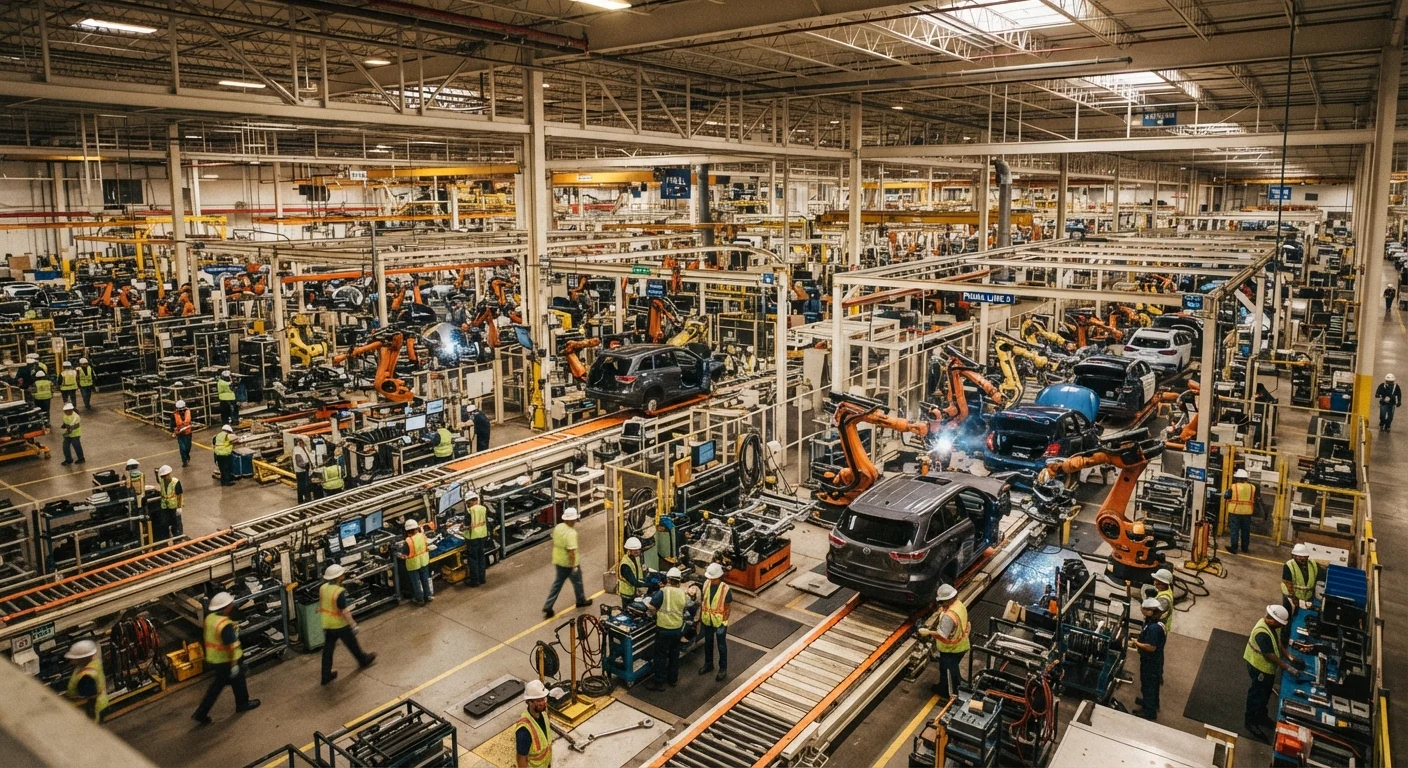
Transplants occupy the middle ground: vehicles from foreign-headquartered automakers that are assembled inside the United States. Toyota's Kentucky plant, Honda's Ohio facilities, and BMW's South Carolina factory are well-known examples. These plants employ American workers and contribute to local economies, even though the parent companies are based abroad.
~50%
Average domestic parts content threshold for AALA disclosure
The American Automobile Labeling Act requires disclosure when US/Canadian parts content meets or exceeds certain thresholds, helping consumers assess true domestic content beyond brand origin.
10+
Foreign-brand US assembly plants operating
Multiple foreign-headquartered automakers operate assembly facilities across US states, collectively employing hundreds of thousands of American workers in manufacturing and related roles.
2.5%
US passenger vehicle import tariff rate (standard)
The standard US tariff on imported passenger vehicles has historically been 2.5%, though policy changes and trade agreements can alter effective rates for specific countries and vehicle types.
The Reality of Modern Global Supply Chains
Even the clearest-sounding label gets complicated fast. A vehicle assembled in Michigan by a US-headquartered automaker might use an engine built in Mexico, a transmission sourced from Germany, and electronics manufactured in Asia. Conversely, a transplant assembled in Tennessee might carry a domestic parts content percentage that rivals or exceeds some traditionally "American" vehicles.
The American Automobile Labeling Act was designed to give consumers a more honest picture. By law, new passenger cars must display the percentage of US and Canadian parts content, the country of final assembly, and the origin of the engine and transmission. This label - usually found on the window sticker - is far more informative than brand origin alone.
What the Window Sticker Actually Tells You
Under the American Automobile Labeling Act, new passenger vehicles must display their US and Canadian parts content percentage, engine and transmission country of origin, and final assembly location. This information appears on the Monroney label (the official window sticker) and gives a more grounded view of a vehicle's actual domestic content than the brand's country of headquarters alone. Reviewing this label is one of the simplest ways to look past marketing labels when comparing vehicles.
These complexities also mean that buying a "domestic" brand isn't a guaranteed way to maximize American manufacturing content, and buying a "foreign" brand doesn't necessarily mean you're supporting overseas factory jobs. The same model can vary significantly across markets, adding yet another layer to these distinctions.
Why It Matters When Comparing Models
Origin classifications carry real-world consequences in a few areas. Tariffs and pricing: vehicles assembled abroad and imported into the US may be subject to duties that affect their retail price, though trade agreements often complicate this. Parts availability and service: the location of a vehicle's assembly can influence how quickly replacement parts reach dealerships and independent shops. Resale value perception: consumer sentiment around brand origin still influences resale market dynamics, even if the underlying quality differences have largely narrowed.
When you're comparing specific models side by side, origin is one piece of a broader picture that includes body style differences, trim level variations, and generational changes over a model's lifecycle. No single factor tells the whole story.