

Key Takeaways
- Engine oil does at least five distinct jobs, not just one.
- Oil helps cool engine components that coolant cannot reach directly.
- Detergent additives in oil actively clean internal engine surfaces.
- Oil forms a protective film that prevents metal-on-metal contact and corrosion.
- Oil degrades over time, losing its ability to perform these functions effectively.
- Regular oil changes preserve all five functions, not just lubrication.
Engine Oil
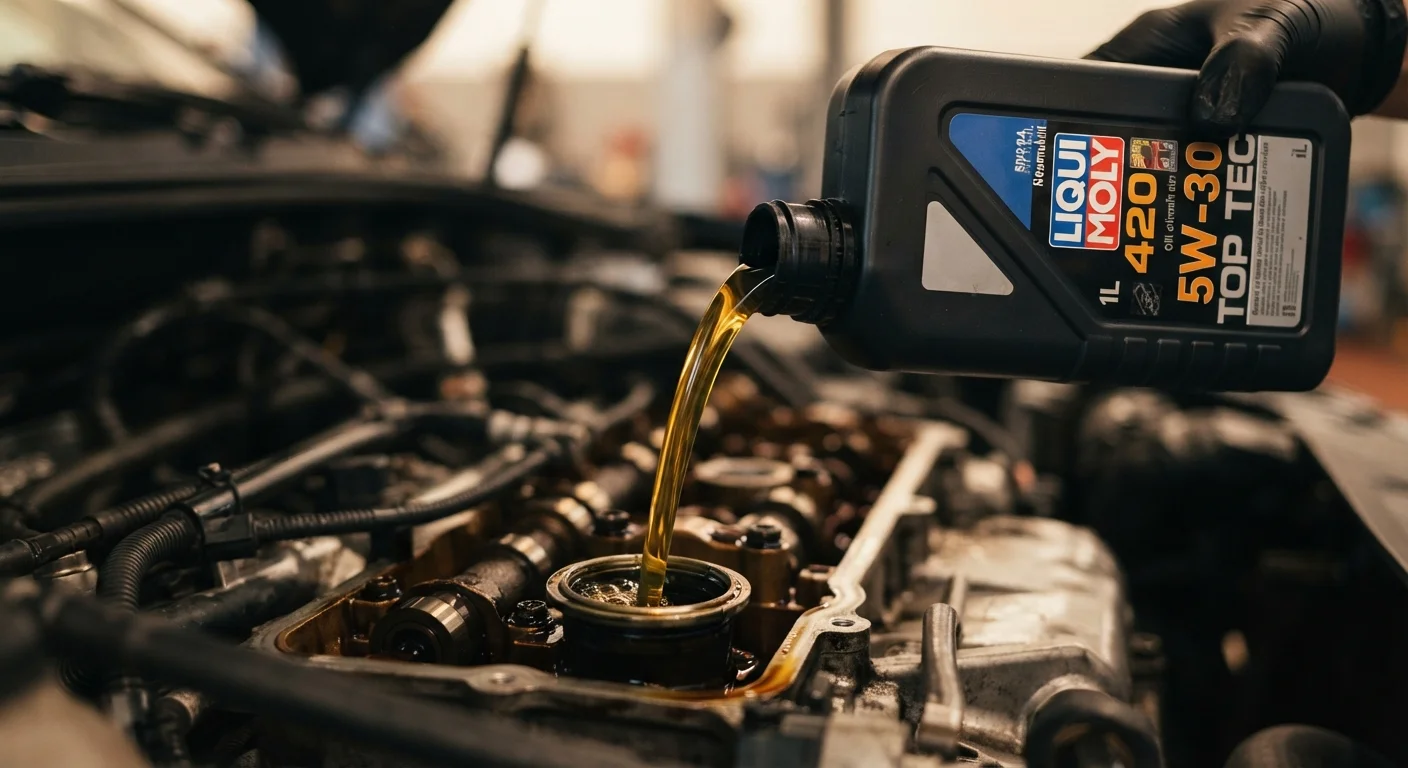
Engine oil is a fluid that circulates continuously through a running engine, serving as a protective barrier between moving metal parts. While most people think of it purely as a lubricant, oil also carries heat away from engine components, suspends contaminants so they can be filtered out, and helps prevent corrosion. It is one of the most critical fluids in any vehicle.
Modern motor oils are blended with additive packages - including detergents, dispersants, antioxidants, and viscosity modifiers - that enable each of these functions beyond base-oil lubrication.
The Five Jobs Engine Oil Actually Does
Ask most drivers what engine oil does, and they'll say it keeps things lubricated. That's true - but it's only one part of the story. Engine oil is a multi-function fluid, and understanding its full range of duties helps explain why maintaining it properly matters so much.
Here are the five primary roles engine oil plays every time your engine runs:
- Lubrication: Oil forms a thin film between moving metal surfaces - crankshaft bearings, camshaft lobes, piston rings - preventing direct contact and the friction that would otherwise wear them down rapidly.
- Cooling: Oil absorbs heat from components that the engine's coolant system cannot reach. Pistons, in particular, are cooled almost entirely by oil splash and circulation, not by the coolant jacket.
- Cleaning: Detergent and dispersant additives in modern oils lift combustion deposits, soot, and varnish off internal surfaces, holding them in suspension until the oil is drained. This is why used oil looks dark.
- Corrosion protection: Moisture and acids can form inside an engine as byproducts of combustion. Alkaline additives in oil neutralize these acids, protecting metal surfaces from chemical attack.
- Sealing: Oil fills microscopic gaps between piston rings and cylinder walls, helping maintain compression and preventing combustion gases from blowing past the rings into the crankcase.
These roles work together. When oil degrades or runs low, it doesn't just fail at lubrication - it begins failing at all five functions simultaneously. That's why the consequences of skipping an oil change tend to compound quickly.
~40%
Engine heat removed by oil circulation
Engineering estimates suggest oil handles roughly a third to half of the heat dissipation that coolant cannot reach in many internal combustion engines.
5 roles
Distinct functions performed by motor oil
Lubrication, cooling, cleaning, corrosion protection, and sealing - each depends on a healthy additive package and proper oil level.
7,500-10,000 mi
Typical synthetic oil change interval
Many modern vehicles using full synthetic oil can safely extend beyond older 3,000-mile guidelines, per manufacturer specifications.
How Oil Loses Its Ability to Protect
Engine oil is not infinitely durable. Heat, oxygen exposure, and accumulated contaminants chemically degrade both the base oil and its additives over time. The antioxidant package gets depleted. Detergents become saturated with the debris they've captured. Viscosity modifiers break down, causing the oil to thin at high temperatures when it needs to hold its film strength most.
This is why mileage-based or time-based oil changes exist - not as a marketing gimmick, but because degraded oil genuinely cannot perform all five functions at full effectiveness. Modern oil change intervals reflect advances in both oil chemistry and engine design, meaning many vehicles can safely go longer between changes than the old 3,000-mile guideline suggested - but the principle of periodic replacement remains sound.
Check Your Oil Between Changes
You don't need to wait for a service appointment to monitor your oil. Pull the dipstick when the engine is cool, wipe it clean, reinsert it fully, then withdraw it to read the level and assess the color. Dark brown oil is normal; black, gritty, or milky oil warrants closer attention from a qualified mechanic.
It's also worth noting that engine oil works alongside other fluids, not instead of them. Coolant handles the bulk of temperature management, for instance, while oil handles the areas coolant can't reach. Our plain-English guide to car fluids covers how each fluid fits into the bigger picture.
What This Means for Everyday Maintenance
Once you understand what engine oil is actually doing, routine maintenance decisions become less arbitrary. Checking your oil level regularly isn't pedantic - it ensures the cooling, cleaning, and sealing functions remain effective, not just lubrication. Using the grade specified in your owner's manual matters because viscosity directly affects film thickness at operating temperature.
The type of oil also plays a role. Synthetic and conventional oils differ in how well they maintain their additive packages and viscosity stability under stress, which affects how effectively they perform all five functions over the course of a drain interval.
Ultimately, engine oil is one of the highest-leverage maintenance inputs you can control. Keeping it clean, at the right level, and changed on schedule is among the most reliable ways to protect long-term engine health - and it's covered in more detail as part of keeping a car reliable over the long term.
“The oil is the lifeblood of the engine. It does far more than reduce friction - it's the system that keeps combustion byproducts from destroying the engine from the inside out.”
— SAE International, Global engineering society setting standards for automotive lubricant performance