

Key Takeaways
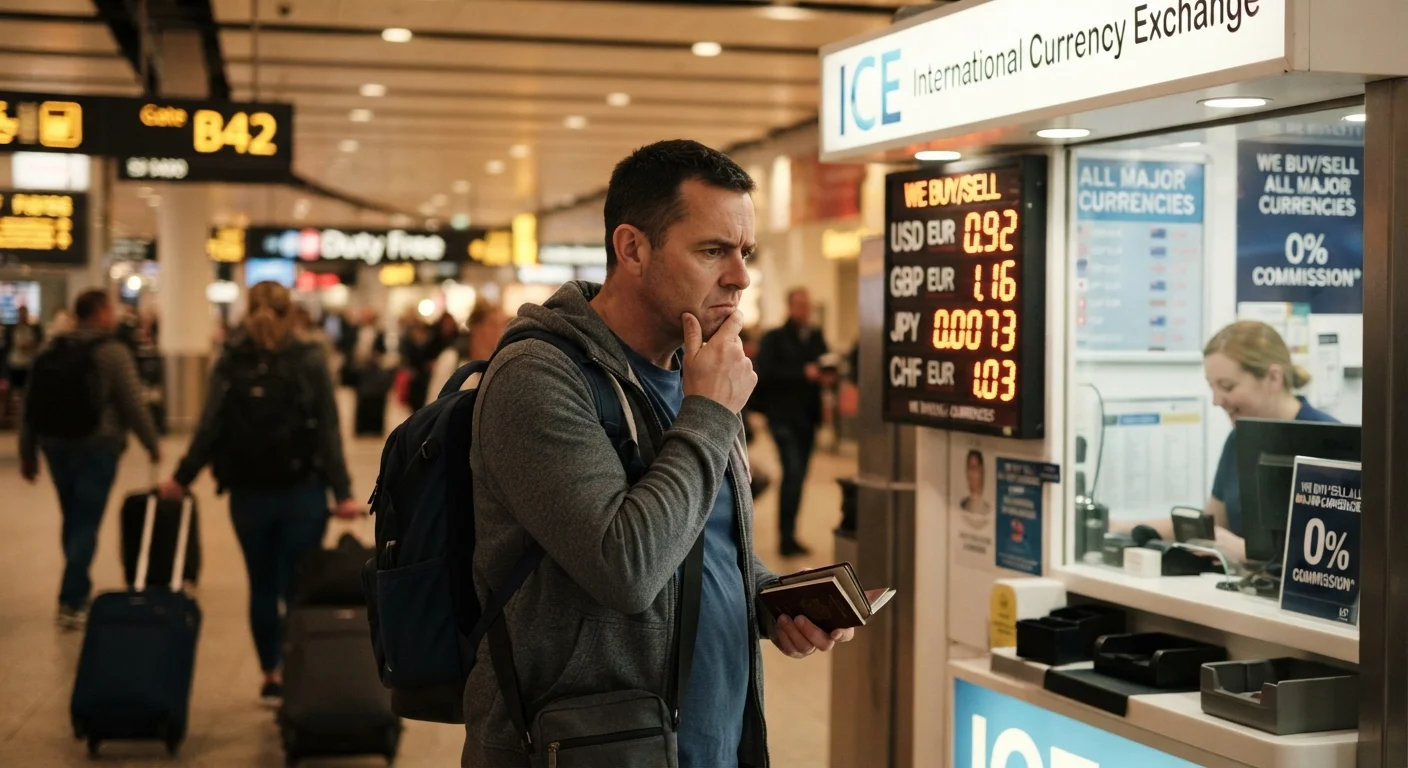
- Airport and hotel currency exchange desks consistently offer the worst exchange rates available.
- ATMs abroad usually deliver competitive rates, but foreign transaction and ATM fees can erode savings.
- Dynamic currency conversion at point of sale is almost always the more expensive option — decline it.
- Carrying a small amount of local currency before departure reduces pressure to accept bad rates on arrival.
- Notify your bank before travelling to prevent cards being blocked when used abroad.
Why Currency Exchange Decisions Cost More Than Travellers Expect
For most travellers, currency exchange feels like a minor logistical detail — something to handle quickly at the airport or deal with on the fly. That instinct is exactly why it tends to be expensive. Exchange rates vary widely depending on where and how you convert your money, and the margin between the best and worst options can quietly subtract a meaningful percentage from your entire travel budget.
Understanding the mechanics — the spread between buy and sell rates, the difference between interbank and retail rates, and where fees are hidden — gives you enough footing to make smarter choices without becoming a currency trader. This article focuses on the decisions that most commonly go wrong, and what to do instead. For a broader look at how money gets spent on the road, see why travellers underestimate trip costs.
Exchanging currency at the airport on arrival without any local cash already in hand.
Why it happens: Most travellers assume they can simply sort it out when they land, and airport kiosks are the most visible option in that moment.
Accepting dynamic currency conversion (DCC) when paying by card at a foreign merchant.
Why it happens: Payment terminals frame DCC as a convenience — you see the charge in your home currency immediately, which feels reassuring. Many travellers don't realise this transfers the conversion to the merchant's processor at an inflated rate.
Using a debit or credit card abroad without checking the card's foreign transaction and ATM fees first.
Why it happens: Travellers assume their everyday card works the same abroad as it does at home, not realising that foreign transaction fees (typically 1–3%) and per-withdrawal ATM fees can apply on top of the exchange rate.
Failing to notify the bank before travelling, resulting in a frozen card abroad.
Why it happens: Banks flag unusual foreign transactions as potential fraud, and a card blocked in another country is a serious inconvenience that can strand travellers without access to funds.
Exchanging large amounts of cash at hotel front desks or tourist-area exchange bureaus.
Why it happens: These venues are convenient and feel trustworthy. Travellers often don't realise how wide the spread is on the rates being offered.
Bringing home large amounts of unspent foreign currency and converting it back at the end of the trip.
Why it happens: Travellers over-budget for cash and then absorb a second round of exchange fees and spread when converting back — paying twice for the privilege.
Practical Steps That Change the Outcome
Getting currency exchange right doesn't require obsessive planning — it requires a few decisions made before you leave home rather than under pressure at the airport.
10–15%
Typical airport exchange rate markup over interbank rate
Currency analysts and consumer finance organisations consistently find that airport kiosks and hotel exchange desks charge spreads significantly above the mid-market rate.
3–7%
Common dynamic currency conversion surcharge
Research from payment industry groups suggests DCC transactions routinely cost cardholders several percentage points more than paying in the local currency.
Contact your bank before departure. Ask specifically about foreign transaction fees, ATM withdrawal fees abroad, and whether your card has partnerships with overseas networks that reduce costs. Some accounts are designed for international use and waive these fees entirely — worth knowing about in advance.
Order a modest amount of local currency from your bank before you travel. This removes the urgency to exchange at the airport on arrival, which is consistently where the worst rates are found. You don't need much — enough to cover a taxi, a meal, or an initial transport pass.
Standalone ATMs in Tourist Areas Carry Higher Fees
ATMs operated by independent companies — common in airports, hotels, and high-traffic tourist zones — frequently charge flat fees of $5–$10 or more per withdrawal, regardless of the amount. Always prefer ATMs inside or directly attached to a recognised local bank branch where possible. Check the fee disclosure on the machine's screen before confirming the transaction.
At your destination, use ATMs attached to established local banks rather than standalone machines in tourist areas, which often carry high flat fees. When your card is presented at a shop or restaurant and the terminal asks whether you want to pay in your home currency, always select the local currency — that choice hands the conversion back to your bank, not to the merchant's payment processor.
Currency decisions feed directly into how your overall travel budget performs. Pairing these habits with realistic cost forecasting — especially for categories travellers routinely undercount — is covered in our guide to how travel budgets actually break down. If this is your first international trip, the first-time international traveller's orientation covers the full picture of what to expect at borders and beyond.
This article provides general financial and travel information for educational purposes. It is not personalised financial advice. Rates, fees, and card policies vary by provider and change over time — verify current details directly with your bank or card issuer before travelling.