

Key Takeaways
- Rainy season in Southeast Asia rarely means all-day downpours — showers are typically short and intense.
- Different countries experience monsoon patterns at different times, so there's no single 'avoid' window.
- Lower crowds and reduced costs during wet season can make it an appealing option for some travelers.
- Flooding and safety risks are real in specific locations and should be researched by destination.
- Packing smart and adjusting daily timing matters more than avoiding the season entirely.
The Monsoon Misconception That Costs Travelers the Most
Ask most first-time visitors to Southeast Asia when they're planning to go and many will say: not during rainy season. The logic seems obvious — why pay to sit in a hotel watching rain fall? But that reasoning is built on a misunderstanding of what monsoon conditions actually look like on the ground, and it causes travelers to either over-plan around weather or dismiss genuinely excellent travel windows.
The reality is more nuanced. Southeast Asia's rainy season isn't a monolithic event. It varies by country, by coast, by elevation, and even by month — meaning a blanket avoidance strategy often backfires. Thailand's west coast, Vietnam's central region, and the Philippines can each be in entirely different weather phases at the same time. Understanding this is the foundation of confident planning.
See our guide to planning trips around seasons for a broader framework on factoring climate into destination timing.
Myth
It rains all day, every day during rainy season, making outdoor travel impossible.
Fact
Monsoon rainfall in most of Southeast Asia tends to arrive in concentrated bursts — often an hour or two — rather than all-day gray drizzle.
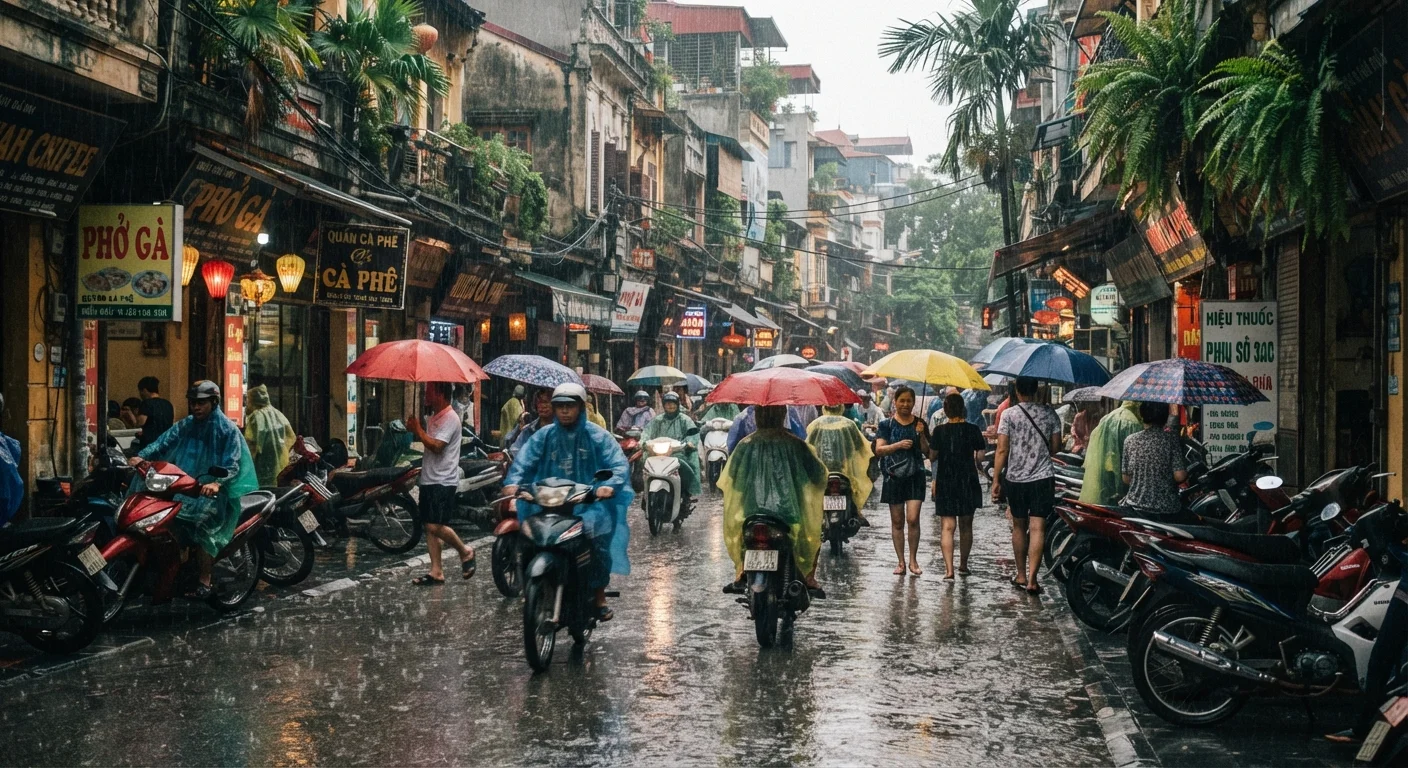
The image of an unrelenting tropical downpour is largely a myth. In most of Southeast Asia's monsoon-affected destinations, the pattern is intense, short showers — typically in the afternoon or evening — followed by clearing skies. Mornings are often sunny and perfectly functional for sightseeing, beaches, or trekking. The rain is heavy when it comes, but rarely all-day. Travelers who plan outdoor activities in the morning and embrace indoor time in the afternoon find the experience far more manageable than they expected.
Myth
There's one unified rainy season across all of Southeast Asia.
Fact
Monsoon timing varies significantly by country and even by coastline — different regions peak at completely different months.
Southeast Asia spans multiple climate zones and coastlines that face different prevailing winds. Thailand's Andaman coast (Phuket, Krabi) experiences its wettest months roughly from May through October, while Thailand's Gulf coast (Koh Samui, Koh Phangan) has a different wet season peaking around November and December. Vietnam's weather shifts as you move from north to south. The Philippines is subject to typhoon patterns that vary by island group. There is no single calendar window to avoid — destination-specific research is essential.
Myth
Rainy season means you'll have beaches and attractions to yourself because it's deserted.
Fact
Some wet-season destinations remain popular with domestic tourists or budget travelers, and shoulder periods can still draw significant crowds.
While international tourist numbers typically drop during low season, the assumption of total solitude doesn't always hold. Major cultural sites, urban destinations, and popular backpacker routes still attract visitors year-round. Some festivals and public holidays also coincide with wetter months, drawing large domestic crowds. That said, the general pattern of reduced congestion at well-known beaches and temples is real — just don't expect guaranteed isolation.
Myth
Rainy season is simply a bad time to visit — experienced travelers always avoid it.
Fact
Many experienced travelers deliberately choose shoulder or wet season for lower costs, fewer crowds, and vivid green landscapes.
Lower-season travel has real advantages that seasoned visitors actively seek out. Accommodation rates often decrease, popular sites are less crowded, and the landscape — rice paddies, jungles, waterfalls — is at its most lush and dramatic. For travelers with flexibility, some destinations are genuinely more appealing in the wet season. The caveat is knowing which specific location you're visiting and understanding its flood or weather risk honestly, rather than assuming it's universally unpleasant.
How to Actually Plan Around Monsoon Conditions
Rather than avoiding rainy season entirely, travelers do better by understanding a few practical realities. First, showers typically arrive in the late afternoon or evening — mornings are often clear enough for beaches, temples, and outdoor activities. Adjusting your daily itinerary to front-load outdoor plans is one of the most effective adaptations.
Second, not all destinations in Southeast Asia are equally affected at the same time. Vietnam's weather, for example, runs roughly counter to Thailand's — when the Gulf of Thailand coast is wet, parts of Vietnam may be dry. Island-hopping between countries during shoulder or wet months is entirely viable with research.
~1–3 hrs
Typical duration of a monsoon shower
Meteorological observations across Southeast Asian destinations indicate most monsoon rain events are concentrated bursts rather than sustained all-day precipitation.
10–40%
Common accommodation price drop in low season
Hotel and guesthouse pricing across popular Southeast Asian destinations frequently decreases during off-peak monsoon months, though exact figures vary by property and location.
Third, flooding is a genuine risk in low-lying urban areas and river deltas during peak monsoon months. This isn't alarmist — it's practical. Research specific destinations and check advisories from your government's official travel guidance before finalizing plans. Being aware of which areas face seasonal flood risk can shape where you stay and which routes you take.
Budget travelers should note that accommodation and tour prices often decrease noticeably during low season. If cost is a constraint, the wet season can open up itineraries that would otherwise stretch a budget. See our breakdown of where travel costs sneak up on you for more on managing spend realistically.
Flooding Risk Is Real in Specific Areas
Low-lying coastal towns, river delta cities, and certain island communities can experience serious flooding during peak monsoon months. This is not the same as a passing shower — flooded roads and disrupted transport are genuine hazards. Always check official government travel advisories and local news for your specific destination before and during travel, particularly if visiting areas known for seasonal inundation.
The underlying truth is this: weather is a factor to plan around, not a veto on an entire region for months at a time. The travelers who return most satisfied from Southeast Asia tend to be those who researched their specific destination's seasonal quirks — not those who picked dates based on a generalized idea of "good" and "bad" seasons. For a broader look at planning myths, see common travel planning misconceptions.