

Key Takeaways
- Tokyo is a collection of distinct neighborhoods, not a single city center — your base location matters enormously.
- The rail network is comprehensive and reliable, but understanding operator differences prevents costly confusion.
- Most visitors underestimate how walkable individual neighborhoods are once you exit the right station.
- Seasonal timing significantly affects crowds, costs, and what you'll actually experience on the ground.
- Cash remains important in Tokyo despite growing card acceptance — plan accordingly.
- Cultural expectations around noise and space in public are consistent and easy to respect once you know them.
Start here
Understanding Tokyo's True Scale
Next
How the Transit System Actually Works
Then
Neighborhoods Worth Orienting Around
When you're ready
Cultural Rhythms and Practical Etiquette
Before you go
Logistics Before You Arrive
Understanding Tokyo's True Scale
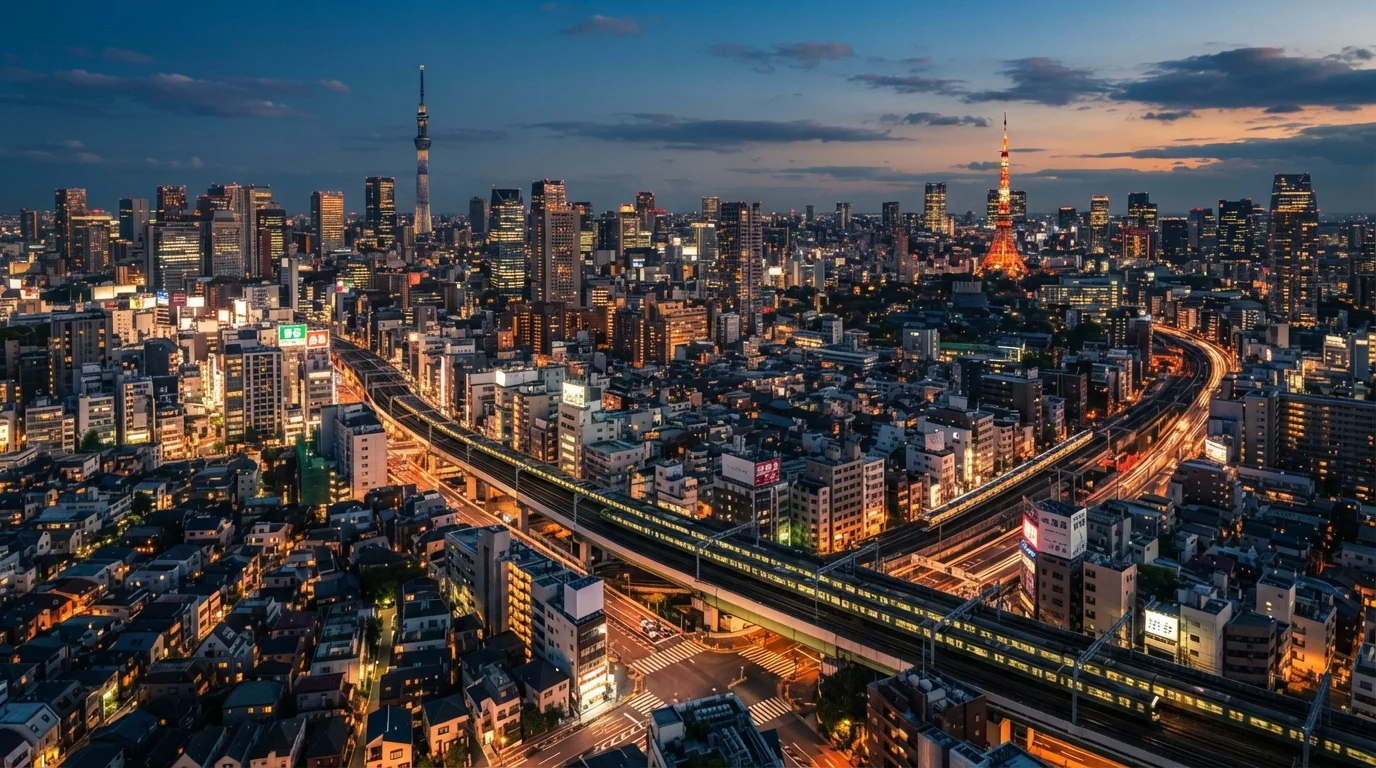
Tokyo is not a city in the way most Western travelers understand the word. The Greater Tokyo Area is home to more than 37 million people across interconnected municipalities — a figure that exceeds the entire population of many countries. What is officially called Tokyo Metropolis alone covers roughly 2,200 square kilometers. First-timers who arrive expecting a navigable European capital are routinely caught off guard.
The practical consequence of this scale is that there is no single downtown. Tokyo functions more like a constellation of urban villages — each ward or major neighborhood operating as a semi-self-contained hub with its own commercial strips, transit interchanges, dining culture, and character. Shinjuku, Shibuya, Ueno, Asakusa, and Ginza are all plausible "centers" depending on what you're doing. This is a feature, not a flaw. Understanding it early changes how you plan. See how to build a genuine picture of a destination before committing to an itinerary.
IC Card
A prepaid contactless transit card (such as Suica or Pasmo) used to pay rail, subway, and bus fares across multiple operators by tapping in and out. Also works at many shops and vending machines.
Yamanote Line
A JR rail loop that circles central Tokyo and connects most major hubs including Shinjuku, Shibuya, Harajuku, Ueno, and Akihabara. It is the backbone of surface transit for tourists.
Ward (ku)
Tokyo Metropolis is divided into 23 special wards — administrative units roughly comparable to boroughs — each functioning as a semi-independent municipality with its own character.
Ryokan
A traditional Japanese inn featuring tatami floors, futon bedding, communal baths, and often multi-course meals. A distinctly different accommodation experience from a standard hotel.
Konbini
Short for convenience store (7-Eleven, Lawson, FamilyMart). In Tokyo, these are genuinely useful — stocking quality food, ATMs, transit card top-ups, and basic travel supplies around the clock.
Narita vs. Haneda
Tokyo is served by two major international airports. Narita is further from the city center (roughly 60–90 minutes by express train); Haneda is closer (30–40 minutes) and increasingly handles international routes.
How the Transit System Actually Works
Tokyo's rail network is genuinely world-class — punctual, extensive, and clean. It is also operated by multiple companies simultaneously, which is the source of most newcomer confusion. Japan Railways (JR) runs the famous Yamanote Line loop that connects most major hubs. Private operators such as Tokyu, Odakyu, and Keio serve outlying neighborhoods and suburbs. The Tokyo Metro and Toei Subway systems cover the underground network and are two separate entities with different fare structures.
The practical implication: a ticket or pass valid on one operator may not cover another. IC transit cards — prepaid contactless cards — are the most efficient way to bridge this. You load credit onto the card and tap in and out; the correct fare is deducted automatically regardless of operator. These cards also work at convenience stores and many vending machines, making them an essential daily tool.
Load your IC card before the morning rush
Topping up at a ticket machine during peak hours at Shinjuku or Shibuya is possible but slow. If you arrive the evening before a busy day, load sufficient credit onto your IC card immediately. Most machines have an English-language mode. Starting the day with a charged card removes one source of morning stress.
Journey planning apps with live Tokyo transit data are highly recommended. Google Maps handles Tokyo's multi-operator system well. Always verify major transfers and allow buffer time at unfamiliar stations — some, like Shinjuku Station, are among the busiest and most complex rail terminals on earth.
Neighborhoods Worth Orienting Around
Rather than trying to "do" Tokyo district by district, experienced visitors pick two or three neighborhoods as anchors and let adjacency guide exploration. A few reference points that are commonly useful for first-timers:
- Shinjuku — major transit hub, dense nightlife in Kabukicho, calmer traditional pockets in the west. Good base for access across the city.
- Asakusa — older downtown feel, Senso-ji temple precinct, craft markets, and proximity to the Sumida River. More atmospheric, less commercial.
- Shibuya and Harajuku — adjacent, walkable, anchored by the famous crossing and the Meiji Shrine respectively. Dense retail, youth culture, quieter residential backstreets.
- Yanaka — a neighborhood that survived wartime bombing, preserving an older Tokyo streetscape. Often overlooked by first-timers and worth the diversion.
Where you stay affects your daily experience significantly. Consider transit access to your planned activities over proximity to a single landmark. And remember that Tokyo's seasons shape the experience profoundly — Japan's seasonal rhythms are worth understanding before you choose your dates.
Cultural Rhythms and Practical Etiquette
Tokyo's public culture has a distinctive logic that becomes intuitive within a day or two. Noise on trains is kept to a minimum — phone calls are avoided, and voices are low. Queuing is orderly and consistent, including marked queue lines on station platforms. Rubbish bins are scarce on streets; carrying a small bag for personal waste is common practice.
Tipping is not customary in Japan and is sometimes considered awkward in traditional settings. Service is simply expected to be excellent — and it almost always is. In restaurants, particularly ramen shops or sushi counters, turnover is part of the rhythm; lingering indefinitely is less expected than in some cultures.
Tattoos and onsen access — know before you go
Many traditional public baths (onsen) and some ryokan communal baths maintain policies that prohibit visible tattoos. Policies vary by establishment, and some venues have become more flexible in recent years. If onsen access matters to your trip, verify individual venue rules in advance rather than assuming access will be available.
Shoes that slip on and off easily are genuinely useful — traditional ryokan accommodations, some restaurants, and many temples require removing footwear. Socks without holes are a running joke among Japan travelers for good reason.
Logistics Before You Arrive
Before landing, a few practical decisions will meaningfully affect your first hours. Connectivity is the most pressing: pocket Wi-Fi devices or a Japan-compatible SIM card should be arranged in advance or collected at the airport. Transit apps, maps, and translation tools all depend on it. Review the broader travel know-how essentials if you are new to international trip logistics.
Currency is the next consideration. While card acceptance has grown — particularly since 2020 — cash remains expected at smaller restaurants, shrines, local markets, and older establishments. Arriving with some yen or planning an immediate ATM stop (7-Eleven and Japan Post ATMs reliably accept foreign cards) prevents early friction.
Visa requirements for US passport holders currently allow short-stay tourism without a pre-arranged visa, but entry conditions can change. Always verify current entry requirements with the Japanese Embassy or official government sources before traveling — do not rely on third-party summaries for this. For a broader framework on pre-departure planning, a structured international trip planning guide walks through every stage systematically. If this is your first international journey overall, the first-time international traveler orientation is a useful companion read.
Japan Tourism Agency Official Site
The official English-language resource from Japan's national tourism body, covering entry requirements, regional guides, and practical visitor information. Useful for verifying official policy.
Hyperdia or Google Maps (Tokyo Transit)
Both tools provide multi-operator rail route planning for Tokyo with fare estimates. Google Maps handles real-time delays well; Hyperdia offers detailed line-by-line breakdowns for complex journeys.
Tokyo Metropolitan Government Visitor Information
The Tokyo Metropolitan Government maintains an English-language visitor portal with neighborhood guides, seasonal event calendars, and accessibility information for travelers with specific needs.