

Key Takeaways
- The Southwest spans parts of Arizona, Utah, New Mexico, Colorado, Nevada, and beyond — it is a region, not a single destination.
- Desert conditions vary widely: temperatures, elevations, and terrain shift dramatically across short distances.
- Indigenous nations have continuously inhabited the Southwest for millennia and remain active, sovereign communities today.
- Popular national parks now require timed entry reservations during peak season — check official sources before planning.
- A reliable car is essential for most Southwest travel; distances between points of interest are routinely measured in hours.
Start here
What the Southwest Actually Is
Build context
The Land: Geography and Climate Basics
Go deeper
Indigenous Heritage and Cultural Context
Explore options
National Parks and Public Lands
Get practical
Planning Realities: What to Expect
What the Southwest Actually Is
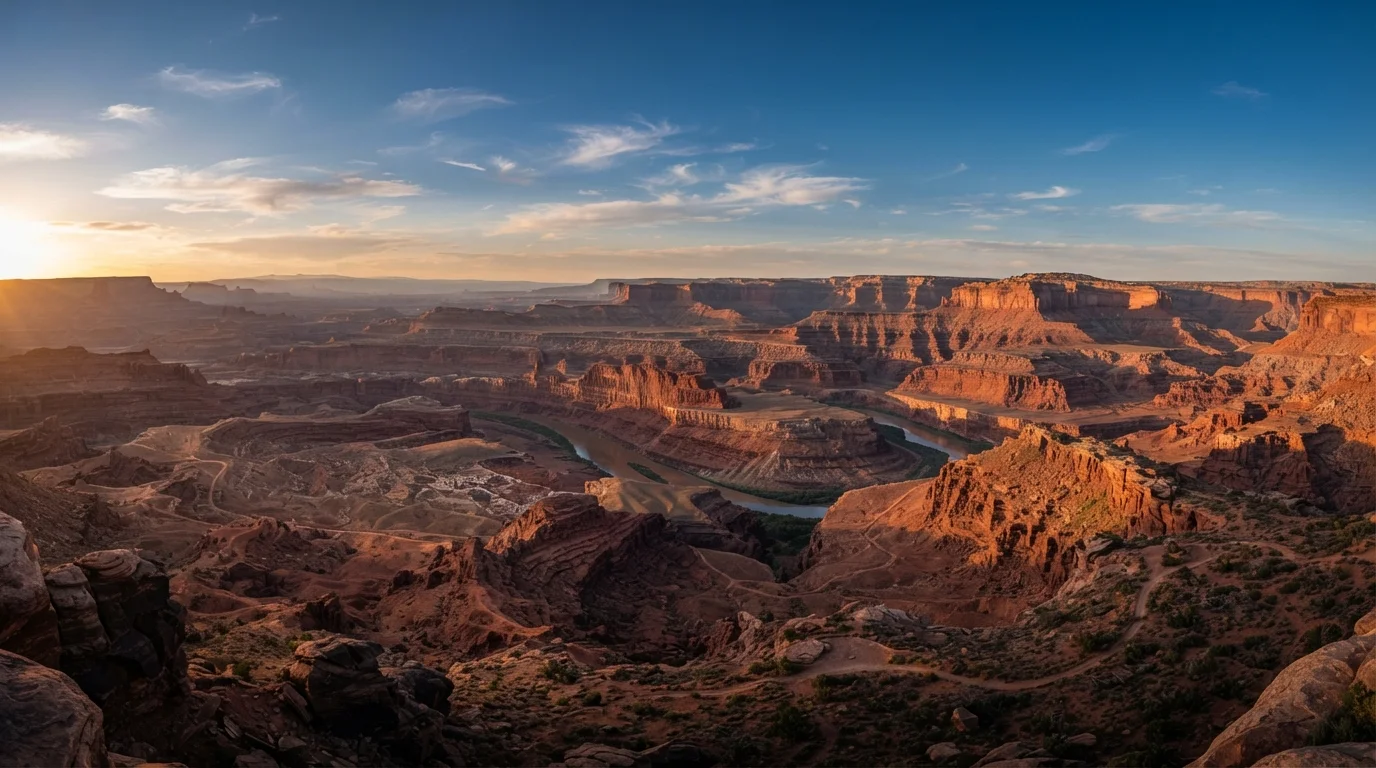
The American Southwest resists a clean definition. It is not a state or an administrative unit — it is a region shaped by shared geology, climate, and cultural history. Most working definitions include Arizona, Utah, New Mexico, and Nevada, with parts of Colorado and southeastern California frequently folded in. If you are trying to plan a trip and someone says "go to the Southwest," they are pointing you toward a vast swath of high desert, canyon country, and mountain plateaus covering hundreds of thousands of square miles.
Understanding this scale matters before you start booking. Many first-time visitors underestimate distances. The drive from Las Vegas to the South Rim of the Grand Canyon takes roughly four hours; getting from the Grand Canyon to Monument Valley adds another two. Planning to see everything in a long weekend is one of the most common — and most disappointing — approaches. A focused itinerary covering one region well is almost always more satisfying than racing between icons. Building a realistic itinerary around two or three anchor destinations is a stronger foundation than an ambitious list of twelve.
Colorado Plateau
A large elevated region of layered sedimentary rock covering parts of Utah, Arizona, Colorado, and New Mexico, famous for its canyons, mesas, and dramatic erosion features.
Sonoran Desert
A hot desert spanning southern Arizona and northwestern Mexico, known for its iconic saguaro cacti and among the hottest climates in North America.
Timed-entry permit
A reservation that grants access to a national park or area during a specific window of time, used to manage visitor numbers at high-demand sites.
Navajo Nation
The largest Native American territory in the US by land area, a semi-sovereign nation with its own government spanning parts of Arizona, Utah, and New Mexico.
America the Beautiful Pass
An annual interagency pass issued by the federal government that covers entrance fees at most national parks, monuments, and recreation areas for one year.
Flash flood
A sudden, rapid flood caused by heavy or distant rainfall, common in desert slot canyons where water can surge with little local warning.
The Land: Geography and Climate Basics
The Southwest's defining feature is variety masquerading as sameness. From a plane window it can look like unbroken desert, but on the ground the differences are profound. The Colorado Plateau, which covers much of southern Utah and northern Arizona, is canyon country — layers of sedimentary rock eroded into mesas, buttes, and gorges over millions of years. The Sonoran Desert, centered in southern Arizona, is lower, hotter, and home to the saguaro cactus. The Chihuahuan Desert stretches across New Mexico and Texas. High elevation areas like Flagstaff, Arizona (nearly 7,000 feet above sea level) can receive significant snowfall in winter while Phoenix, just two hours south, rarely drops below freezing.
Heat is real and serious. Summer temperatures in low-elevation desert areas routinely exceed 110°F. Hiking in those conditions without adequate water — at least one liter per hour in hot weather — and sun protection is genuinely dangerous. The region's monsoon season, roughly July through September, brings dramatic afternoon thunderstorms that can cause flash flooding in slot canyons with little warning. These are not reasons to avoid the Southwest; they are realities to plan around.
Desert Heat and Flash Floods Are Serious Hazards
Extreme heat and sudden flash floods cause injuries and fatalities in the Southwest every year. Carry significantly more water than you think you need — rangers commonly advise a minimum of one liter per hour of hiking in hot conditions. Check weather forecasts and canyon conditions before entering slot canyons, and never enter a narrow canyon if rain is forecast upstream, even if skies look clear where you are standing.
Indigenous Heritage and Cultural Context
The Southwest has been continuously inhabited for thousands of years. The Ancestral Puebloans built sophisticated stone communities at sites now preserved in places like Mesa Verde National Park in Colorado and Chaco Culture National Historical Park in New Mexico. The Navajo Nation — the largest Native American territory in the United States by land area — spans parts of Arizona, Utah, and New Mexico and is a semi-sovereign entity with its own government, laws, and entry requirements for some areas. The Hopi, Zuni, Acoma, and dozens of other nations and pueblos maintain living cultures, languages, and traditions that predate European contact by centuries.
Engaging with this history responsibly means approaching it as a living reality rather than a historical curiosity. Many pueblos and tribal parks are open to visitors under specific conditions: entrance fees, behavioral guidelines, and photography restrictions are common. Some ceremonies and sites are closed to the public entirely. Researching a destination beyond the highlights means reading what tribal tourism offices and cultural organizations actually say about how visitors should engage — not just what travel aggregators assume.
National Parks and Public Lands
The Southwest contains a remarkable concentration of federally protected land. Grand Canyon, Zion, Bryce Canyon, Arches, Canyonlands, Capitol Reef, and Saguaro are among the national parks. Beyond them are dozens of national monuments, recreation areas, and Bureau of Land Management (BLM) parcels that receive far fewer visitors and offer more solitude. The America the Beautiful pass — an annual interagency pass covering entrance fees at most federal sites — is worth considering for anyone visiting multiple parks on one trip.
Reservation systems have reshaped park access in recent years. Zion Canyon requires a shuttle or a timed-entry vehicle permit during most of the year. Arches implemented a timed-entry reservation pilot that has continued in various forms. Wave permits at Coyote Buttes in Arizona are issued by lottery months in advance. Always verify current requirements directly through the National Park Service website; these systems change and third-party sites do not always reflect updates accurately.
Use Recreation.gov and NPS.gov as Primary Sources
Permit systems, reservation windows, and entry requirements for Southwest parks change frequently. The National Park Service website (nps.gov) and Recreation.gov are the only authoritative sources for current rules. Third-party booking and travel sites often lag behind official updates, which can lead to real problems at the gate.
Planning Realities: What to Expect
Most Southwest travel is car-dependent. Gateway cities — Las Vegas, Phoenix, Albuquerque, and Salt Lake City — offer good flight connections and serve as natural starting points for regional road trips. Some less-obvious gateway cities like Flagstaff or Moab offer direct access to multiple park clusters and a different pace than major metros. Once you leave the cities, services thin out quickly. Gas stations can be 50 or more miles apart in some stretches. Cell coverage is inconsistent across large areas. Download offline maps before you go.
Accommodation ranges from developed campgrounds inside parks (book months ahead for peak season) to motels in gateway towns to upscale properties in cities like Santa Fe and Scottsdale. Campground reservations through Recreation.gov open on a rolling window and fill fast for popular sites. Budget travelers who are flexible can often find same-day walk-up campsites by arriving early in the morning, but this strategy is unreliable during holidays and peak summer weekends.
The Southwest rewards travelers who arrive with honest expectations and a willingness to slow down. The landscape is not a backdrop — it is the point. The most memorable experiences here tend to come from sitting with a view long enough to actually see it, rather than checking it off and moving on.