

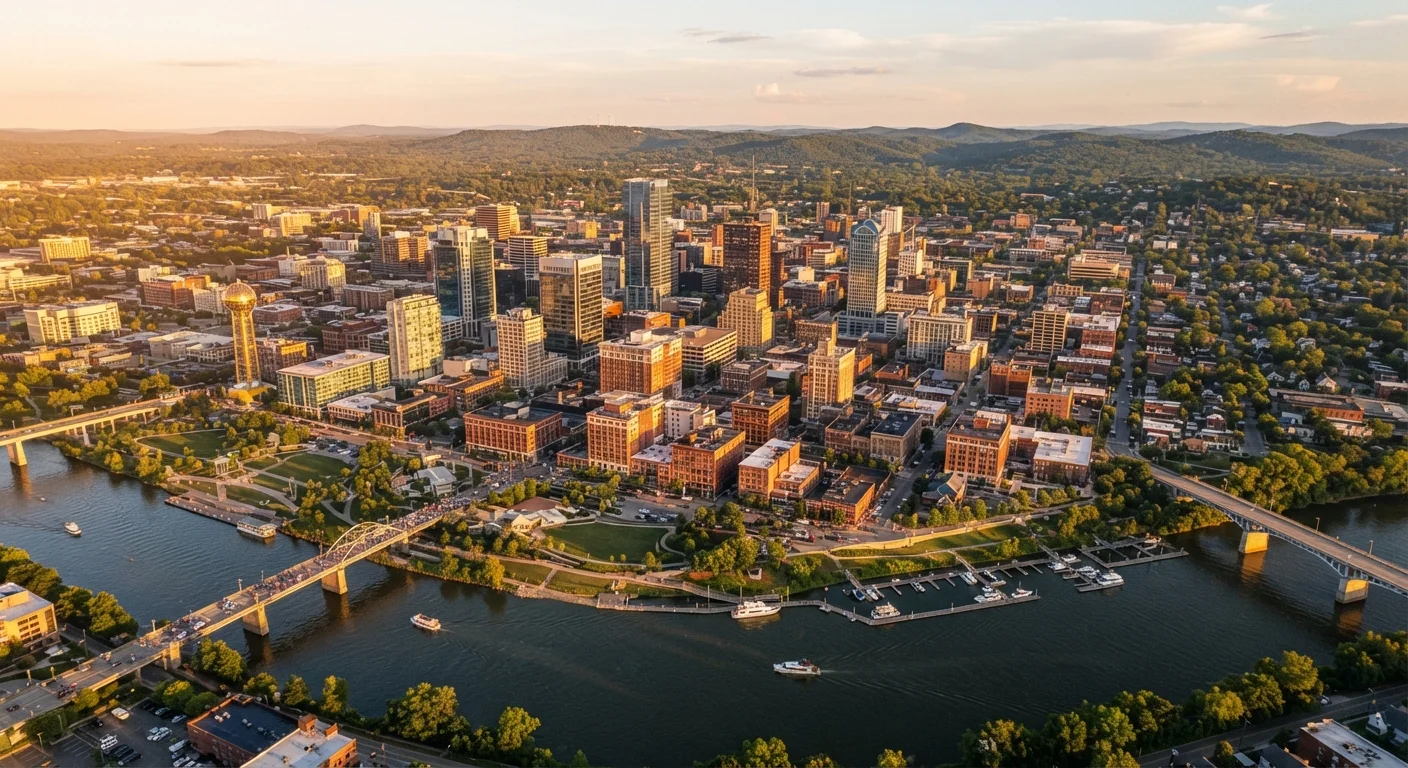
Key Takeaways
- Several mid-sized US cities offer stronger regional access than classic gateway hubs like New York or Los Angeles.
- Choosing a lesser-used entry point can reduce congestion, lower transit friction, and open up surrounding regions quickly.
- Each overlooked hub has a distinct character worth exploring in its own right, not just as a logistics stopover.
- Flight connections, Amtrak routes, and interstate highway networks vary significantly by city — these differences matter for trip planning.
- Understanding a city's geographic position relative to your intended destinations is the most practical planning starting point.
Why Your Entry Point Shapes the Whole Trip
Most US travelers default to New York, Los Angeles, Chicago, or Miami as their American entry points or domestic hubs. These are logical choices — major airports, dense transit, name recognition. But defaulting to the obvious hub can mean longer connections, higher congestion, and a geography that works against your actual itinerary.
The cities below aren't consolation prizes. Each has genuine transport infrastructure, a meaningful cultural identity, and a geographic position that makes it a smarter launch pad for specific kinds of trips. Choosing one intentionally — rather than arriving there by accident — can reframe what a US trip looks like entirely.
When you're building an itinerary around one of these cities, it helps to think carefully about itinerary structure from the start, rather than retrofitting logistics around a hub choice made on autopilot.
Pittsburgh, Pennsylvania
Pittsburgh sits at the confluence of three rivers in western Pennsylvania, giving it a dramatic topography that most visitors don't anticipate. It's within a day's drive of New York, Philadelphia, Washington D.C., Cleveland, and Columbus — making it one of the most centrally connected cities in the northeastern US without carrying the cost or congestion of those larger markets.
Pittsburgh International Airport has historically offered competitive fares and manageable terminals. The city's neighborhoods — Lawrenceville, the Strip District, Shadyside — have distinct personalities, and the food and arts scenes have developed well beyond what the city's industrial reputation suggests. For travelers planning to explore Appalachian landscapes or Pennsylvania's rural interior, Pittsburgh is a genuinely logical anchor.
Pittsburgh sits within a day's drive of five major northeastern cities — yet carries none of their congestion.
Kansas City, Missouri
Kansas City occupies a geographic center point that makes it underrated as a US road-trip hub. It's roughly equidistant between Denver and St. Louis, and serves as a natural starting point for routes heading into the Great Plains, the Ozarks, or toward the American Southwest via Route 66 country.
The city itself rewards staying: the 18th & Vine jazz district, the Nelson-Atkins Museum of Art, and the city's well-documented barbecue culture all make it a place worth exploring rather than rushing through. Its airport is compact by major-hub standards. For travelers planning a Southwest itinerary, Kansas City can serve as a natural eastern anchor before heading toward Oklahoma, Texas, or New Mexico.
Kansas City's central geography makes it a natural anchor for road trips in almost any direction.
Salt Lake City, Utah
Salt Lake City is consistently underestimated as a travel base. Its airport — recently rebuilt and efficient to navigate — connects well to both coasts, and its position at the foot of the Wasatch Range puts world-class ski terrain within 45 minutes. More importantly for year-round travelers, it's within a few hours of five national parks: Zion, Bryce Canyon, Arches, Canyonlands, and Capitol Reef.
The city itself has a compact, walkable downtown, a growing restaurant and arts scene, and a distinctly western character that doesn't feel performed. Travelers who treat it as a pure transit stop rather than a destination miss something real. Season matters here: timing your visit around shoulder seasons can significantly change park access and crowd levels in the surrounding region.
Salt Lake City puts five national parks within driving range — few cities in the US match that geographic value.
New Orleans, Louisiana
New Orleans is known but rarely used as a base for exploring the broader Gulf South — the Mississippi Delta, the bayou country of Acadiana, the Gulf Coast beaches of Mississippi and Alabama, and the hill towns of central Louisiana. Most visitors treat it as a destination unto itself, which it is, but the surrounding region is culturally rich and largely off the tourist trail.
The city's Louis Armstrong New Orleans International Airport serves a reasonable number of direct routes, and the city's position at the mouth of the Mississippi makes it a logical anchor for anyone interested in Southern foodways, music history, or landscape. The French Quarter aside, neighborhoods like Tremé, Bywater, and Mid-City offer a less compressed version of the city's culture.
Beyond Bourbon Street, New Orleans is a gateway into one of America's most culturally layered regions.
Albuquerque, New Mexico
Albuquerque sits at a high-desert elevation of roughly 5,300 feet in the Rio Grande valley, with the Sandia Mountains rising sharply to the east. It's often overlooked in favor of Santa Fe — which is an hour north — but Albuquerque's airport is larger, fares are generally more accessible, and the city has its own distinct identity worth spending time in.
The Old Town district, the Indian Pueblo Cultural Center, and the Route 66 corridor through Central Avenue all offer genuine depth. As a base, Albuquerque covers a wide radius: Taos, White Sands National Monument, Carlsbad Caverns, and the broader American Southwest are all reachable within a day's drive. For travelers researching this region, it's worth building the itinerary before assuming Santa Fe must be the hub.
Albuquerque offers practical airport access and a wide regional radius that Santa Fe simply cannot match.
Detroit, Michigan
Detroit's resurgence over the past decade has produced a city with genuine character — Midtown's museum district, the Eastern Market, the Corktown neighborhood, and a food scene that has attracted serious national attention. Detroit Metropolitan Airport is a Delta hub with strong domestic connectivity and solid transatlantic service.
Geographically, Detroit is an underused entry point for exploring the Great Lakes region: Ann Arbor is 45 minutes west, Traverse City and the Leelanau Peninsula are about four hours north, and the Upper Peninsula — one of the more dramatic and overlooked American landscapes — is accessible by a long but rewarding drive. For travelers interested in travel know-how for US regional exploration, Detroit rewards more research than most travelers bother to give it.
Detroit's airport connectivity and position make it a practical gateway to the entire Great Lakes region.
Making the Most of a Less-Traveled Base
One consistent advantage of these cities is the lower tourist pressure in the city itself — you can spend a genuine half-day exploring without fighting for space at overcrowded attractions. That changes the texture of the trip. Instead of racing through a checklist, you're actually experiencing a place.
Research Beyond the City Limits
When evaluating any city as a trip base, spend time mapping the surrounding region before committing to the hub choice. A city that seems less exciting on its own can become the obvious choice once you see what's within a two- or three-hour drive. Cross-reference airport connections, driving distances, and regional highlights before deciding where to anchor your trip.
For travelers who find large transit systems anxiety-inducing, several of these cities offer simpler, more navigable public networks than their major-hub counterparts. The strategies for navigating unfamiliar transit are the same regardless of city size, but a more compact system reduces the stakes considerably.
If you're combining multiple stops around one of these cities, route logic becomes especially important — a well-chosen hub can eliminate backtracking entirely. And don't underestimate the value of spending a day or two researching your destination beyond the highlights before you arrive; lesser-known cities reward that kind of preparation more visibly than well-documented ones.