

Key Takeaways
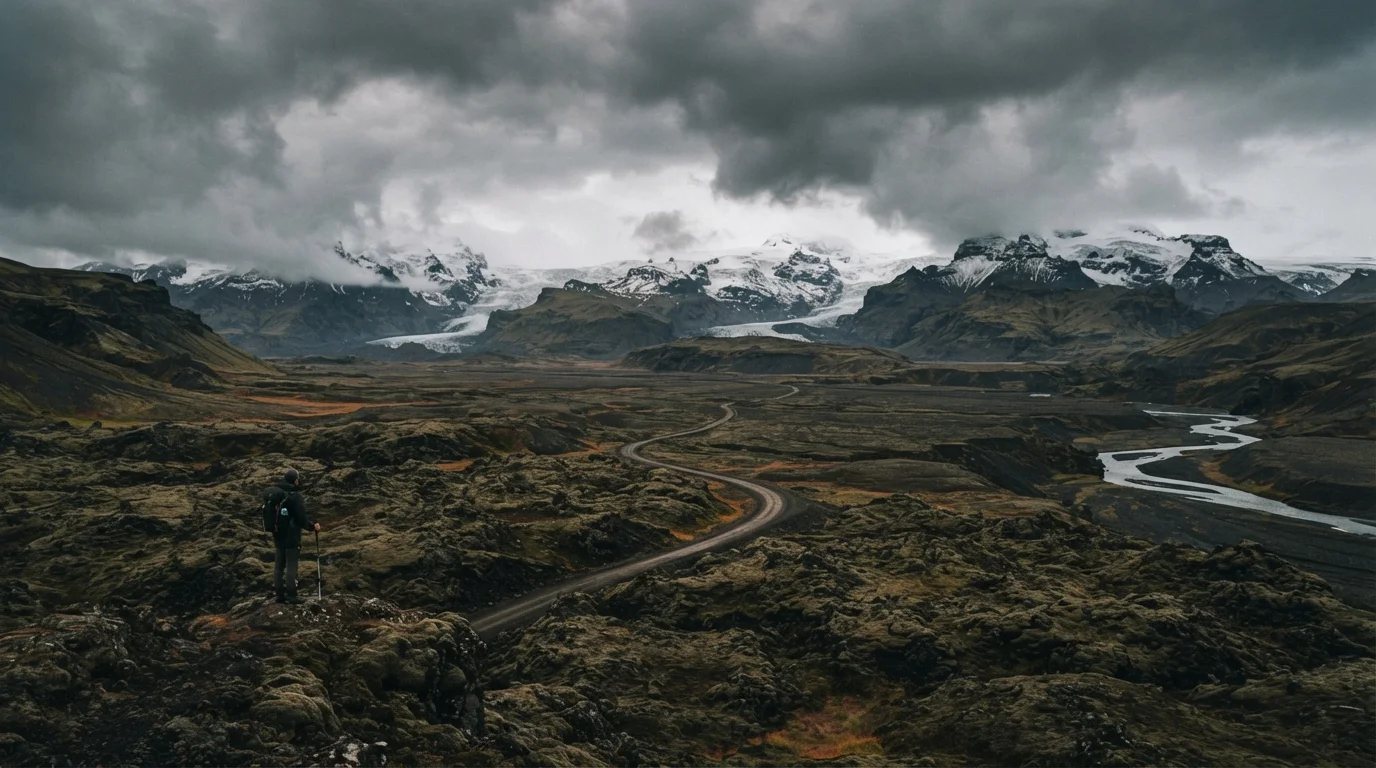
- Most first-time visitors follow only the Ring Road and miss entire regions with distinct landscapes.
- The Westfjords and Highlands offer experiences the southern circuit simply cannot replicate.
- Season, road conditions, and daylight hours dramatically shape what's actually accessible.
- Crowd timing at famous sites matters as much as choosing which sites to visit.
- Iceland rewards travelers who research beyond top-ten lists before booking.
Why the Ring Road Is Both a Gift and a Limitation
Iceland's Route 1 — the Ring Road — is genuinely remarkable. It loops the entire country, connects major towns, and gives travelers access to glaciers, waterfalls, and volcanic landscapes with relative ease. For a first visit, it's a logical anchor. But it's also a filter, and most travelers don't realize what it quietly leaves out.
The Ring Road hugs Iceland's coastline, which means the rugged interior Highlands, the remote Westfjords peninsula, and the deeply fjorded Eastfjords all require deliberate detours or entirely separate itineraries. When travelers spend eight or ten days driving the full loop, they often arrive home feeling they've seen Iceland — when in reality they've seen one carefully paved corridor of it.
If you're still building your planning foundation, a solid international trip planning framework can help you structure Iceland research before route decisions lock you in.
Treating the Ring Road as a complete Iceland experience rather than a starting point.
Why it happens: Marketing materials and itinerary templates heavily favor the southern and western coasts, making the Ring Road seem comprehensive when it's actually a perimeter route.
Booking summer dates without accounting for midnight sun and peak-season crowds.
Why it happens: Travelers associate Iceland's highlights — Northern Lights, dramatic skies — with any visit, without realizing that June and July bring near-continuous daylight and the country's highest visitor volumes.
Renting a standard 2WD vehicle and discovering it can't legally access key interior routes.
Why it happens: Many booking platforms default to economy vehicles, and travelers assume they can reach all listed destinations once they arrive.
Underestimating driving distances and daylight windows outside summer.
Why it happens: Iceland looks compact on a map, but road speeds are limited by terrain, weather, and road quality. In winter, usable daylight can be as short as five hours.
Skipping the Eastfjords because they're harder to reach from Reykjavík.
Why it happens: The East requires either flying into Egilsstaðir or committing to the full Ring Road loop, which many short-trip itineraries can't accommodate.
The Specific Mistakes That Shape What Visitors Actually Experience
Iceland's geography and infrastructure create specific traps for first-timers. The mistakes below aren't about bad judgment — they're about incomplete information, which is exactly what advance research can correct.
~2.3M
Annual visitors to Iceland pre-pandemic
Iceland's Tourism Board reported that visitor numbers exceeded the country's population by roughly six times in recent peak years, concentrating heavily on southern and western routes.
~8%
Visitors reaching the Westfjords
Industry estimates have consistently suggested that only a small fraction of Iceland visitors reach the Westfjords, despite it covering roughly 11% of the country's land area.
Understanding these patterns before you book is the difference between a trip that meets expectations and one that genuinely surprises you. For a deeper look at how to research any destination without defaulting to highlight reels, see how to research a destination without falling into the highlights trap.
F-Roads Are Closed for Significant Portions of the Year
Iceland's highland interior F-roads are typically closed from October through late May or June, depending on conditions. Driving on a closed F-road can void your rental insurance and result in fines. Do not rely on itineraries you find online without checking current road status through official Icelandic sources before and during your trip.
Setting Realistic Expectations Before You Land
Iceland is not a destination that rewards passive travel. Roads in the Highlands — including the famous F-roads to the Landmannalaugar area and Þórsmörk — require 4WD vehicles with high clearance and are closed entirely outside summer months. Rental agreements often restrict which roads certain vehicles can legally travel. Verifying those terms before you book a car is essential, not optional.
Weather compounds everything. A forecast that looks favorable in Reykjavík can mean something entirely different in the Snæfellsnes Peninsula an hour away. Coastal conditions shift rapidly, and summer crowds at the most photographed sites — Skógafoss, Seljalandsfoss, the Jökulsárlón glacier lagoon — peak in mid-summer and can undercut the solitude many travelers are seeking.
The same honest tradeoff thinking that applies to choosing a less-visited Caribbean island applies here: going off the beaten path in Iceland changes infrastructure access, dining options, and emergency response times in ways worth understanding in advance.
If this is your first time traveling internationally, the practical orientation in a first-time international traveler's orientation covers the logistics — SIMs, customs, layovers — that Iceland-specific guides tend to skip.
Travel conditions, road access, and entry requirements in Iceland can change. Always verify current information with official Icelandic government sources and your rental or tour provider before traveling.