

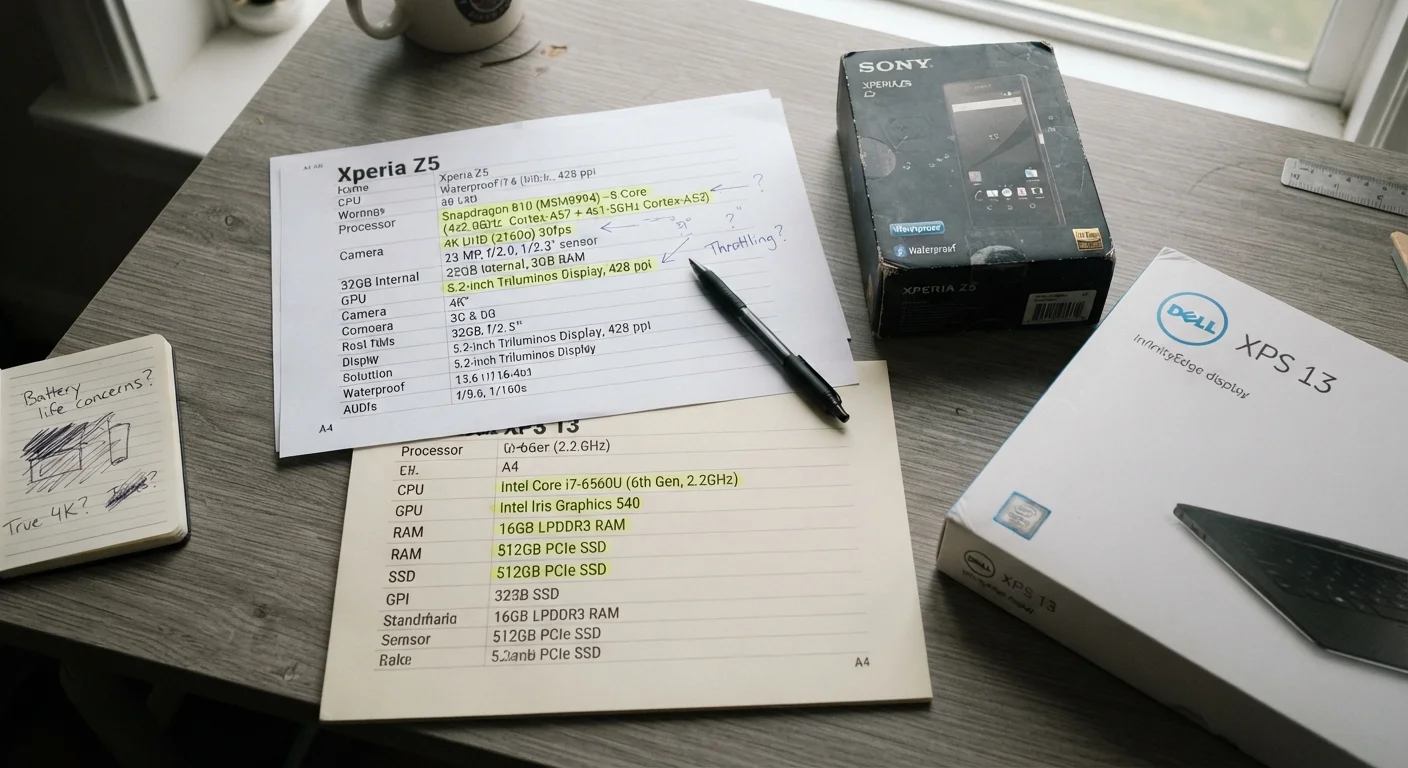
Key Takeaways
- Marketed specs like battery life and processor speed are often measured under ideal lab conditions, not real use.
- More megapixels, higher RAM, and faster processors don't automatically translate to a better user experience.
- Independent reviews and real-world benchmarks reveal what spec sheets routinely leave out.
- Matching a device's specs to your actual use case matters far more than chasing the highest numbers.
The Gap Between the Number on the Box and the Device in Your Hand
Spec sheets are a form of marketing. That's not cynical — it's simply how consumer electronics are sold. Manufacturers measure performance under conditions that favor the product: screens dimmed, wireless radios off, nothing running in the background. The result is a figure that's technically accurate but practically misleading for most people's daily use.
Understanding where this gap opens up is the first step toward making a smarter purchase. The mistakes below are the ones that trip up even careful shoppers — not because they're careless, but because the framing around specs makes it easy to trust the wrong signals.
Treating advertised battery life as an accurate prediction of daily use.
Why it happens: Manufacturers test battery life under controlled conditions — low screen brightness, minimal app activity, no background sync — that rarely match how people actually use a device.
Assuming more megapixels means better photos.
Why it happens: Megapixel counts are easy to compare and heavily promoted, so they become a shorthand for camera quality — even though sensor size, lens quality, and computational processing have a far larger effect on real-world image output.
Conflating processor benchmark scores with how fast a device feels in normal use.
Why it happens: Synthetic benchmark tests measure peak performance in isolated tasks, which doesn't reflect the experience of switching apps, loading a browser with multiple tabs, or running a navigation app alongside music.
Overlooking software update commitments when evaluating a device.
Why it happens: Software support timelines aren't prominently featured in spec comparisons, so buyers focus on hardware figures and discover only later that their device stopped receiving security updates within a year or two of purchase.
Interpreting storage capacity without accounting for operating system overhead.
Why it happens: A device marketed as having a certain amount of storage will have noticeably less available out of the box, because the operating system, pre-installed apps, and system files consume a significant portion before the user touches it.
What to Look for When the Numbers Aren't Enough
Once you recognize the limits of spec-sheet comparisons, better signals become available. Independent reviews from tech publications run devices under consistent, real-world conditions — testing battery life with screens at typical brightness, measuring camera output across different lighting, and timing everyday tasks rather than synthetic benchmarks. These tests won't be perfect, but they're far more predictive than manufacturer claims.
~50%
Typical real-world battery life gap vs. rated
Independent testing across multiple device categories consistently shows real-world battery duration running 40–60% below manufacturer-rated figures under typical usage conditions.
10–20%
Storage lost to OS and pre-installed software
Out-of-the-box available storage on smartphones and laptops is commonly 10–20% lower than the marketed capacity due to system software, firmware, and bundled applications.
User forums and long-term reviews (posted weeks or months after a device launches) surface issues that don't show up in initial lab tests: thermal throttling during sustained workloads, software updates that affect performance, and battery degradation curves. For cameras specifically, our guide to reading camera specs breaks down which numbers matter and which are noise.
It's also worth thinking about longevity. A device that performs brilliantly on day one but slows noticeably within 18 months is a different value proposition than one with moderate specs that stays snappy. Why gadgets slow down over time explains the real culprits behind that fade. And if you want to protect any device you buy, habits that extend device lifespan covers the evidence-backed practices that help.
Specs Vary by Region and Retailer
The same device model sold in different markets can carry different processors, modem configurations, or RAM amounts depending on regional supply chains and carrier requirements. Always verify the specific configuration available where you're purchasing, not just the global or flagship spec. This is especially common with smartphones sold through carriers versus unlocked versions.
For connected devices — smart speakers, streaming sticks, smartwatches — specs matter even less than ecosystem fit and software quality. See our overviews on what to know before buying a smart speaker and smartwatch categories and capabilities for a fuller picture of what actually shapes the experience.