

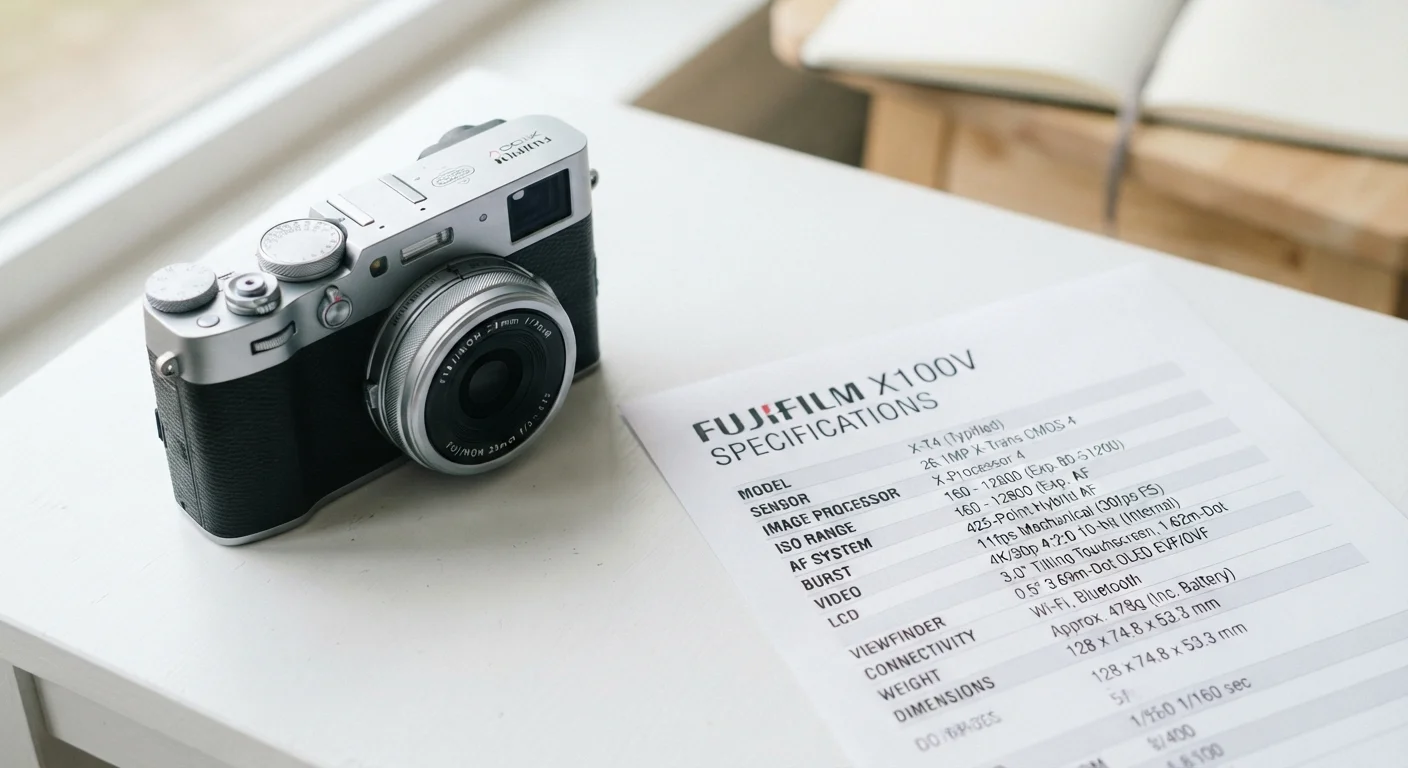
Key Takeaways
- Megapixel count matters far less than sensor size for real-world image quality.
- Aperture (f-number) determines how much light a lens lets in — lower is brighter.
- Optical zoom uses physical lens movement; digital zoom just crops and enlarges pixels.
- Image stabilization type and video frame-rate specs have a bigger practical impact than raw resolution.
- No single spec tells the whole story — use specs as a shortlist filter, not a final verdict.
What you will need
Why Camera Specs Feel So Confusing
Camera specification sheets are written for a mixed audience: retailers, enthusiasts, and everyday buyers all read the same list. The result is a dense column of figures — sensor format, f-stop ranges, ISO sensitivity, stabilization modes, burst rate — that can feel more like an engineering document than a buying guide.
The core problem is that specs describe capability in isolation. A 50MP sensor sounds impressive, but without knowing the sensor's physical size, the lens aperture, or the processing engine behind it, that number tells you very little about the photos you'll actually get. This same issue appears across consumer electronics — the earbud specs guide illustrates the same disconnect between numbers and real-world experience.
The steps below walk you through the six most consequential spec categories, in the order that best builds your understanding. You don't need to master every figure — you just need to know which ones to weight most heavily for the kind of shooting you want to do.
What you will need
Putting It All Together
After working through the steps, you should have a clearer picture of how each figure relates to a real shooting situation rather than an abstract benchmark. The practical hierarchy looks like this: sensor size shapes everything else; aperture determines light-gathering and background blur; megapixels set your ceiling for cropping and large prints; optical zoom is real reach while digital zoom is artificial; stabilization type matters most for handheld and low-light use; and video specs only need to match your actual output format.
Use Specs as a Filter, Not a Scorecard
Rather than trying to find the highest number in every column, identify which two or three specs match your primary use case — low-light portraits, sports, travel — and focus there. A camera that excels at one relevant metric in your context will outperform a generalist with bigger numbers across the board.
If you find that specs still leave you uncertain, that's a reasonable response — manufacturers have strong incentives to present their numbers favorably. Our companion piece on when gadget specs mislead you covers the broader patterns worth watching for across consumer electronics.
Marketing Numbers Can Mislead You
Manufacturers often highlight the highest-sounding numbers — megapixels, zoom ratios — regardless of whether they translate to better photos. A 108MP smartphone sensor crammed onto a tiny chip can produce noisier images than a 12MP camera with a larger sensor. Always read specs as a system, not a single headline figure. See our guide on misleading gadget specs for a broader look at this pattern across devices.