

Key Takeaways
- Grout is rigid and designed for flat tile fields; caulk is flexible and belongs at corners and transitions.
- Using grout where caulk is needed leads to cracking because rigid material cannot absorb movement.
- Every inside corner - floor-to-wall, wall-to-wall - should be caulked, not grouted.
- Sanded grout suits joints wider than 1/8 inch; unsanded grout is used for narrower joints.
- Silicone caulk resists moisture better than latex; latex caulk is easier to tool and clean up.
- Color-matched caulk products exist specifically to blend with standard grout colors for a seamless look.
Option A
Grout
The rigid, durable filler for flat tile fields.
Best for: Filling the joints between tiles on flat, stable surfaces like walls, floors, and countertops.
Option B
Caulk
The flexible sealant for movement-prone joints.
Best for: Sealing corners, changes in plane, transitions between tile and fixtures, and any joint that must flex.
If you're filling joints between tiles on a flat wall or floor field
Grout
Grout bonds rigidly to create a hard, consistent surface that holds tile spacing and resists abrasion across flat, stable planes.
If you're sealing an inside corner where two tiled surfaces meet
Caulk
Corners experience constant movement as the building shifts and temperatures change; only caulk can flex with that movement without cracking.
If you're finishing the joint where tile meets a tub, sink, or toilet base
Caulk
Fixture-to-tile joints move independently of the wall; caulk creates a watertight, flexible seal that grout cannot maintain long-term.
If you're working in a high-moisture area like a shower floor or steam room
Caulk
Silicone caulk provides superior moisture resistance at joints most exposed to standing water and steam, reducing the risk of water infiltration.
Why the Distinction Actually Matters
Grout and caulk look similar when freshly applied, and both fill the gaps between tile surfaces - so it's easy to assume they're interchangeable. They are not. Each material is engineered for a specific type of joint, and using the wrong one almost always leads to visible cracking, water infiltration, or both within a year or two.
The core difference is flexibility. Grout is a cement-based compound that cures rigid. That rigidity is an asset on a flat field of tile where there's no meaningful movement. But every structure shifts slightly with temperature changes, settling, and seasonal moisture. Joints at corners, edges, and fixture interfaces absorb that movement, and a rigid material in those locations will crack.
Caulk is an elastomeric sealant - it stretches and compresses without breaking. That property makes it the right tool for any joint that spans a change in plane or that sits adjacent to a surface moving independently of the tile.
| Criterion | Grout | Caulk |
|---|---|---|
| Material composition | Cement-based (or epoxy) | Silicone or latex elastomer |
| Flexibility when cured | Rigid | Flexible, stretches and compresses |
| Primary use location | Flat tile field joints | Corners, transitions, fixture edges |
| Water resistance | Moderate (improves with sealer) | High (especially silicone) |
| Handles movement | No - cracks under flex | Yes - designed for movement |
| Color matching | Wide color range available | Color-matched products available |
| Ease of DIY application | Moderate - requires mixing, timing | Moderate - tooling takes practice |
Where to Use Grout
Grout belongs in the joints between tiles across flat, stable surfaces. That includes the field of a shower wall, a bathroom floor, a kitchen backsplash, and countertop tile. These joints don't need flexibility - they need hardness, dimensional stability, and the ability to resist foot traffic, cleaning products, and light impact.
Two main types of grout cover most residential tile work:
- Sanded grout contains fine sand aggregate and is used for joints wider than about 1/8 inch. The sand prevents excessive shrinkage during curing.
- Unsanded grout is smoother and used for narrow joints under 1/8 inch. It's also preferred on polished stone tile where sand could scratch the surface.
Epoxy grout is a third option - more stain-resistant and harder than cement-based grout, but significantly more difficult to work with and typically reserved for commercial applications or countertops subject to heavy staining.
1/8"
Joint width threshold for sanded vs. unsanded grout
The Tile Council of North America guidelines recommend sanded grout for joints wider than 1/8 inch to prevent cracking during cure.
8-12 ft
Recommended spacing for soft expansion joints in tile floors
Industry installation standards call for caulk-filled expansion joints at regular intervals in large tiled floor fields to accommodate movement.
Where to Use Caulk - and Which Type
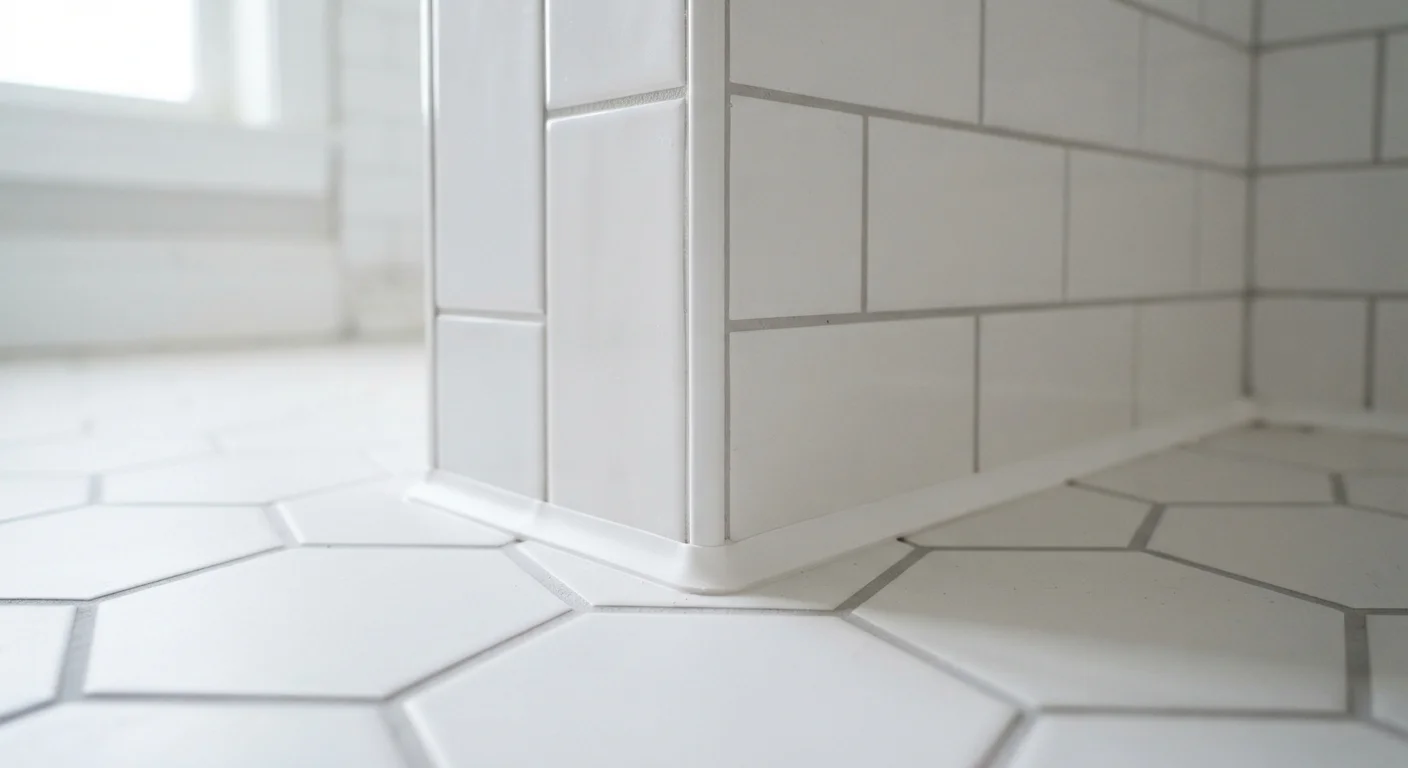
A simple rule covers most situations: anywhere two surfaces meet at an angle, caulk goes there instead of grout. That means every inside corner in a tiled shower or tub surround - floor-to-wall and wall-to-wall - should be filled with caulk. The same applies where tile meets a fixture like a bathtub deck, sink rim, or toilet base.
Expansion joints in large floor tile installations also call for caulk. When tiles span a long run, a soft joint every 8 to 12 feet (following tile installation industry guidelines) allows the floor to expand and contract without buckling.
Two caulk types are most common in tile work:
- Silicone caulk is highly water-resistant and durable, making it ideal for wet areas. It's harder to tool smoothly and requires mineral spirits for cleanup.
- Latex (acrylic) caulk is easier to apply and cleans up with water, but is slightly less moisture-resistant than silicone. Many products labeled "siliconized latex" blend both properties.
For a seamless finish, color-matched caulk products are formulated to coordinate with standard grout colors. See our bathroom caulking walkthrough for detailed application guidance, including how to prep surfaces so the caulk bonds correctly and stays in place.
Sealing Grout Is a Separate Step
Cement-based grout is porous and will absorb stains and moisture unless sealed. Grout sealer is a separate product applied after the grout has fully cured - typically 48 to 72 hours after installation. Caulk does not require a separate sealer. Re-sealing grout every one to two years is generally recommended in wet areas, though frequency depends on usage and the specific sealer used.
The Most Common Mistake - and How to Fix It
The most frequent error in DIY tile work is grouting inside corners. It looks fine at first. Within months, a crack appears along the corner line. This isn't a grouting technique failure - it's a materials failure. Grout cannot flex, and corners flex. The solution is to rake out the old grout with a grout saw or oscillating tool, clean the joint thoroughly, and replace it with color-matched caulk.
The second common mistake is caulking across a flat tile field when grout has failed in spots. A caulk bead over a flat joint won't wear the same way grout does and will look uneven and discolored within a short period. Spot repairs in a tile field should use matching grout, not caulk.
When in doubt about a specific joint, ask yourself: does this joint span two surfaces that could move independently, or sit at a change in plane? If yes, caulk. If the joint is between two tiles on the same flat surface, grout.