

Key Takeaways
- Type 2 diabetes develops when cells become resistant to insulin, forcing the pancreas to overcompensate until it can no longer keep up.
- Elevated blood sugar over time damages blood vessels and nerves throughout the body.
- The condition develops gradually, often without obvious symptoms in early stages.
- Lifestyle factors like physical activity and diet significantly influence both risk and progression.
- Early detection and management can meaningfully reduce the risk of serious complications.
Type 2 Diabetes
Type 2 diabetes is a chronic condition in which the body either doesn't produce enough insulin or doesn't use insulin effectively - causing blood sugar (glucose) levels to rise higher than normal. Unlike type 1 diabetes, it develops gradually and is strongly influenced by lifestyle and genetic factors. It is the most common form of diabetes in adults worldwide.
In clinical terms, type 2 diabetes is characterized by progressive beta-cell dysfunction combined with peripheral insulin resistance, eventually impairing the body's ability to maintain glucose homeostasis.
The Role of Insulin: Your Body's Blood Sugar Manager
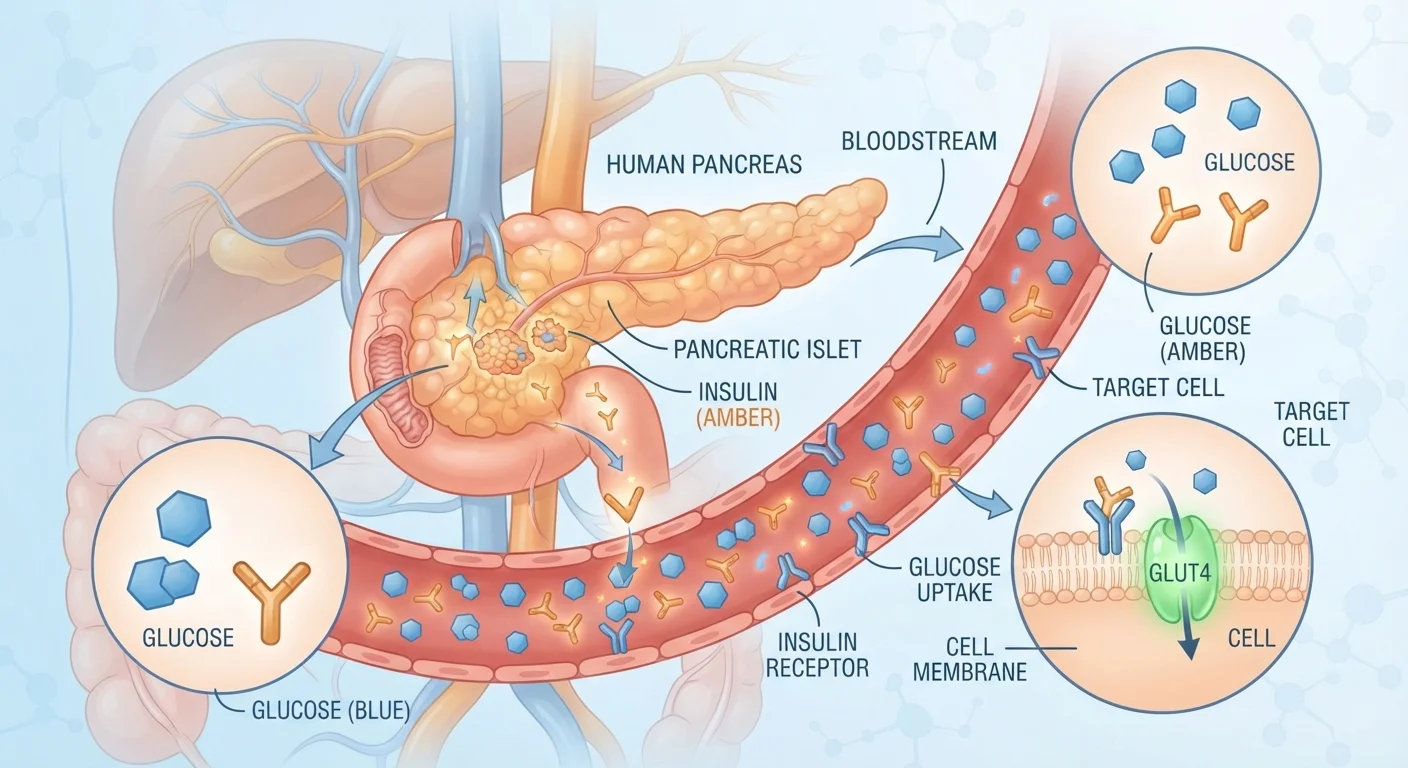
Every time you eat carbohydrates, your digestive system breaks them down into glucose - the body's primary fuel source. That glucose enters the bloodstream, triggering the pancreas to release a hormone called insulin. Insulin acts like a key, unlocking cells so they can absorb glucose and use it for energy.
In a healthy body, this system operates as a finely tuned feedback loop: blood sugar rises after a meal, insulin is released, cells absorb glucose, and blood sugar returns to a stable baseline. The pancreas constantly adjusts output to match demand.
In type 2 diabetes, that loop breaks down - not all at once, but gradually over time.
What Insulin Resistance Actually Means
Insulin resistance is the central mechanism behind type 2 diabetes. It occurs when cells in the muscles, liver, and fat tissue stop responding normally to insulin's signal. The "lock" becomes harder to turn, so even with insulin present, glucose struggles to enter cells and accumulates in the bloodstream instead.
In response, the pancreas compensates by producing more insulin - often for years - to overcome this resistance. Initially, this keeps blood sugar in a manageable range. But the beta cells (the insulin-producing cells in the pancreas) eventually become exhausted. As output declines and resistance persists, blood glucose levels rise consistently into the diabetic range.
38 million
Americans estimated to have diabetes
According to CDC data, approximately 38 million Americans have diabetes, with type 2 accounting for 90-95% of all cases.
1 in 3
U.S. adults estimated to have prediabetes
The CDC estimates that roughly 98 million U.S. adults have prediabetes - and more than 80% are unaware of it.
10-15 years
Typical progression window before diagnosis
Research suggests insulin resistance can be present for a decade or more before blood sugar reaches diagnostic thresholds for type 2 diabetes.
This progression from normal glucose regulation to prediabetes to full type 2 diabetes can span a decade or more, frequently without noticeable symptoms.
Why Chronically High Blood Sugar Is Harmful
Glucose is essential for cell function, but too much circulating in the blood is damaging. Over time, elevated blood sugar degrades blood vessels and nerves throughout the body - a process driven largely by inflammation and a buildup of byproducts from abnormal glucose metabolism.
The consequences are wide-ranging. Small blood vessel damage (microvascular disease) affects the eyes (diabetic retinopathy), kidneys (diabetic nephropathy), and peripheral nerves (diabetic neuropathy). Large vessel damage (macrovascular disease) raises the risk of heart attack and stroke - which is why cardiovascular risk management is a central part of diabetes care. Managing other conditions that share cardiovascular risk factors is also important; our article on living with high blood pressure covers related considerations.
Know Your Key Numbers
Fasting blood glucose, HbA1c (hemoglobin A1c), and blood pressure are three values that give your healthcare provider a meaningful picture of how your body is managing blood sugar over time. Asking about these at routine checkups is one of the most practical steps toward early detection. Regular monitoring also helps identify trends before they become complications.
Risk Factors and What Influences Progression
Type 2 diabetes arises from a combination of genetic predisposition and environmental factors. Key risk factors identified by organizations such as the CDC and the American Diabetes Association include:
- Family history of type 2 diabetes
- Excess body weight, particularly abdominal fat, which amplifies insulin resistance
- Physical inactivity, since muscle activity improves glucose uptake independent of insulin
- Age - risk increases after 45, though younger adults and even adolescents are increasingly affected
- Certain ethnicities, including Black, Hispanic, Native American, and Asian American populations, who face higher prevalence rates
- History of gestational diabetes or prediabetes
Sleep quality is another underappreciated factor. Chronically poor sleep alters cortisol and growth hormone levels, both of which affect insulin sensitivity. Our article on how poor sleep affects existing conditions covers this relationship in depth.