

Key Takeaways
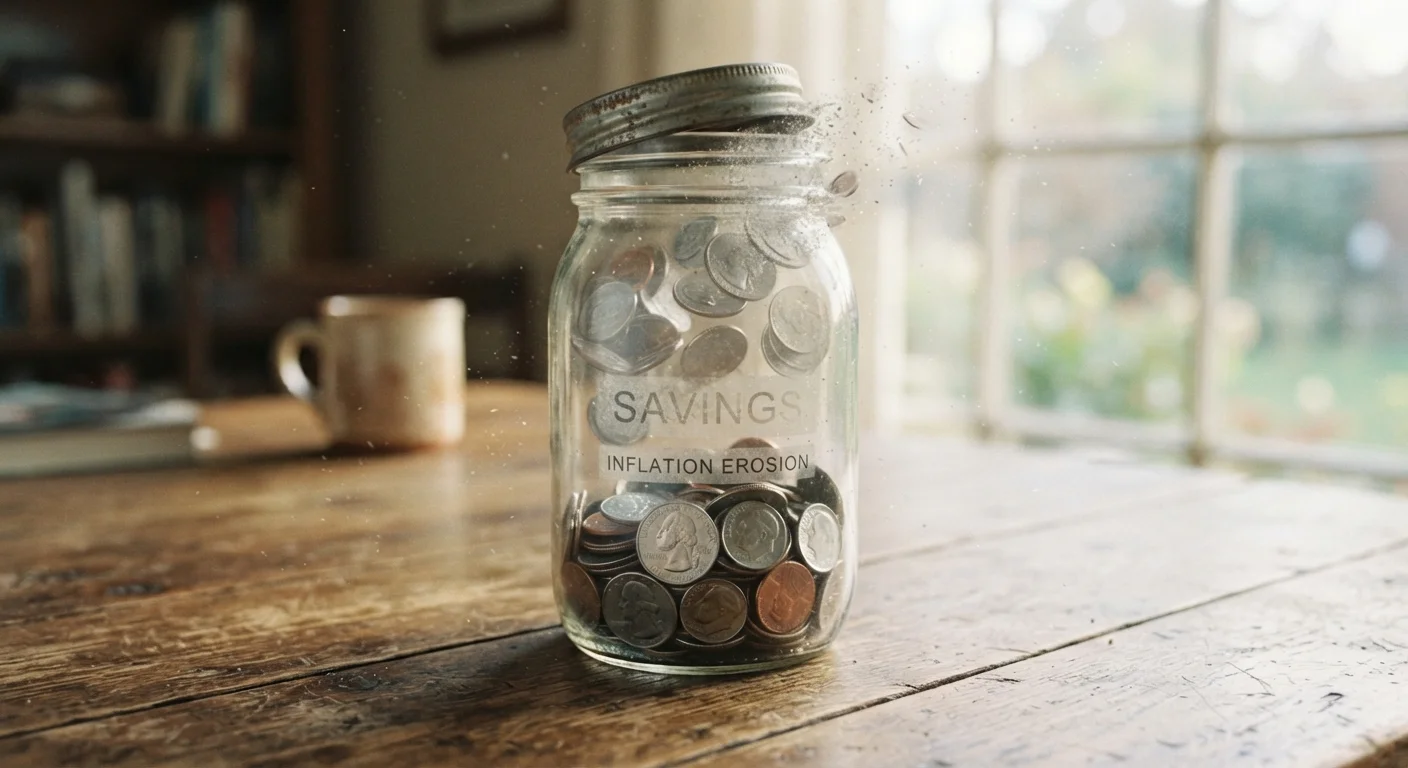
- A growing savings balance does not automatically mean your wealth is growing in real terms.
- Inflation reduces purchasing power, meaning the same dollar buys less over time.
- The real return on savings equals the interest rate minus the inflation rate.
- Low-yield savings accounts often fail to keep pace with even moderate inflation.
- Understanding this gap is the first step to making more intentional decisions about your money.
Inflation and Purchasing Power
Inflation is the general rise in prices across an economy over time. Purchasing power is how much your money can actually buy. When inflation outpaces the interest your savings earn, each dollar in your account buys less than it did before - even if the number on your statement is higher.
The real rate of return on savings is calculated by subtracting the inflation rate from the nominal interest rate. A savings account earning 1% annually during a period of 3% inflation yields a real return of approximately -2%.
The Illusion of a Growing Balance
Watching your savings account balance climb feels good - and it should. Setting money aside is a disciplined, valuable habit. But there's a quiet dynamic at work that many people don't realize until they do the math: a higher number in your account doesn't always mean you're building wealth.
The reason comes down to purchasing power - what your money can actually buy in the real world. If prices rise faster than your savings earn interest, you end up with more dollars that buy fewer things. Your balance grows, but your financial position, in practical terms, may be standing still or moving backward.
This isn't a reason to panic or to stop saving. It's a reason to understand the full picture of what's happening to your money - and to make more intentional decisions as a result.
Inflation Affects Everyone Differently
The Consumer Price Index measures price changes across a broad basket of goods and services, but your personal inflation rate depends on your own spending habits. Those who spend more on housing, healthcare, or education may experience price pressures that exceed the headline CPI figure. Keep this in mind when estimating what inflation means for your specific finances.
How Inflation Quietly Erodes Savings
Inflation is the rate at which the general price level of goods and services rises over time. The U.S. Federal Reserve targets an average inflation rate of around 2% per year, though actual rates vary and have been significantly higher in some periods.
Here's where it matters for savers: if your savings account pays 0.5% annual interest and inflation is running at 3%, your real rate of return is approximately -2.5%. That negative number isn't a bank error - it's a measure of how much purchasing power you're losing each year, even as your balance technically grows.
Over a decade, this gap compounds. A dollar that could buy a full basket of groceries today might only cover part of that same basket years from now, if prices have risen and your savings haven't kept pace.
~3%
Average U.S. inflation rate over the past 30 years
The U.S. Bureau of Labor Statistics' Consumer Price Index data reflects an average annual inflation rate of approximately 2.5-3% over the past three decades, with significant peaks in certain periods.
0.01%-0.5%
Typical interest range for standard savings accounts
Many large national banks have historically offered savings account rates in this range, often well below prevailing inflation, according to FDIC national rate data.
-2%+
Potential real return loss per year during high inflation
When inflation significantly outpaces savings yields, the gap between the nominal balance and actual purchasing power can widen by 2% or more annually - a substantial drag over time.
Why Traditional Savings Accounts Often Fall Short
Standard savings accounts - including many offered by large national banks - have historically paid interest rates well below the rate of inflation. This means that for savers who park long-term money in these accounts, inflation silently transfers real value away over time.
High-yield savings accounts and other cash-equivalent instruments can offer better rates, though they still may not always outpace inflation in every environment. The point isn't that savings accounts are bad - they're essential for short-term goals, emergency funds, and money you need to access quickly. The concern arises when they become the default home for all of your money, including the portion that could be working harder over a longer time horizon.
Compound interest can work powerfully in your favor - but only when the rate you're earning meaningfully exceeds inflation. Understanding this distinction is central to building a sound financial plan.
Know What Your Money Is For
Before evaluating whether your savings are keeping up with inflation, clarify each dollar's purpose. Money earmarked for emergencies or near-term goals should prioritize access and stability over returns. Money you won't need for years may warrant a different approach. Segmenting your savings by time horizon can help you make clearer, less reactive decisions.
Putting It Into Perspective
None of this means you should abandon your savings account or make sudden moves with your money. Emergency funds, short-term goals, and money you'll need within the next year or two belong in stable, accessible accounts - the protection they offer is worth accepting a lower return.
The key insight is this: different financial tools serve different purposes. Savings protect and preserve. Investing - with its associated risks - has historically offered greater potential to grow wealth above inflation over long periods. Knowing which tool fits which need is the foundation of a healthy financial approach.
If you're thinking about how saving and investing fit together across your life, your financial priorities evolve over time and it's worth understanding how each stage calls for a different balance between the two.
Building consistent saving habits is a strong first step - and a saving habit that actually sticks can set you up for more confident financial decisions down the road.
This article is for general informational and educational purposes only and does not constitute personalized financial, investment, or tax advice. Consult a licensed financial professional before making decisions about your own financial situation.